
Judge blocks Trump’s latest effort to narrow birthright citizenship
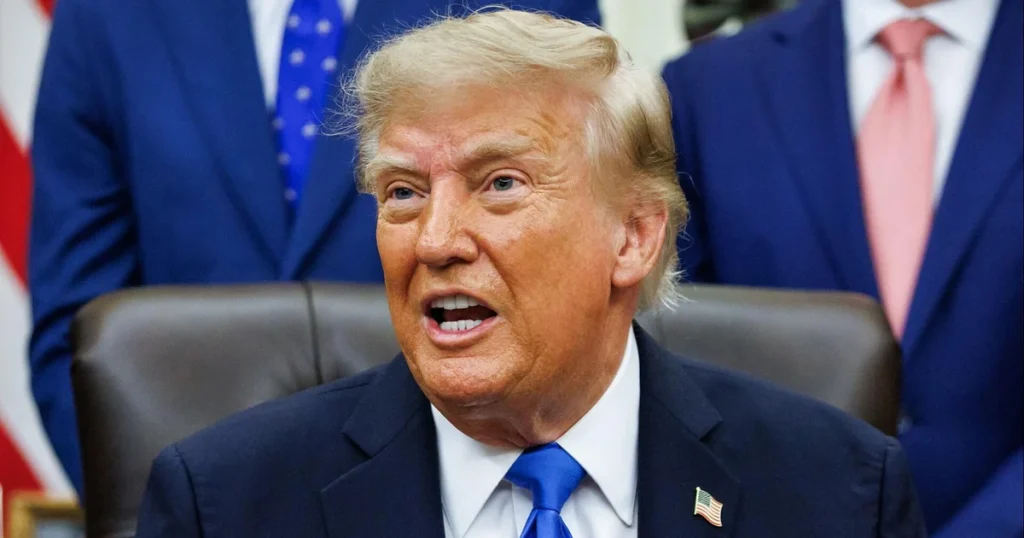
Federal Court Halts Trump Administration’s Second Bid to Restrict Birthright Citizenship
Bizeconanalysis.com – A U.S. district court has issued a temporary restraining order stopping the Trump administration from enforcing its newest executive order aimed at limiting who qualifies as a citizen by virtue of being born on American soil. The ruling, handed down on Wednesday by Judge Deborah Boardman, marks the second judicial setback the president has faced in his campaign to reshape one of the most foundational guarantees in the Constitution.
The Order and Its Targets
The executive order, signed last month, carves out three categories of newborns who would be denied automatic citizenship: children of individuals classified as “alien enemies,” children of foreign government employees, and children born to parents who traveled to the United States through what the order terms a “commercial transaction” — a phrase the administration has tied to the practice commonly called “birth tourism,” in which expectant mothers arrange travel specifically to deliver in the U.S. and secure citizenship for their infant.
The “alien enemy” provision has drawn particular scrutiny because the administration has applied that label not only to nationals of countries formally at war with the United States but also to members of transnational criminal organizations, including drug cartels. Under this expansive reading, a child born in the U.S. to a parent alleged to belong to such a group could be stripped of citizenship at birth.
Legal Backdrop: The Supreme Court’s June Ruling
The current order is a narrower successor to a broader executive action that President Trump signed shortly after returning to office last year. That first attempt sought to end birthright citizenship for children of temporary visitors and undocumented immigrants. In June, the Supreme Court struck down that order, holding that such children “are not disqualified from birthright citizenship” under the Fourteenth Amendment.
Now, with the broader order invalidated, the administration pivoted to a more limited set of exceptions. Government attorneys argued in court filings that the Supreme Court’s summer decision did not foreclose all possible limitations on birthright citizenship. Justice Department lawyers contended that the Court “never suggested that every child born to such parents is per se a citizen, with no exceptions,” and pointed to historically recognized carve-outs for children of diplomats and alien enemies as evidence that some boundaries around the amendment’s language have long been accepted.
Judge Boardman’s Reasoning
Boardman did not undertake a granular analysis of each exception enumerated in the new order. Instead, she anchored her decision to the Supreme Court’s prior ruling, describing it as “the law of the land.” In her written order, she concluded that the plaintiffs — a group of immigrants and families represented by the advocacy organization CASA — were likely to succeed on the merits of their claim that the order violates their Fourteenth Amendment rights.
“The 2026 Executive Order is almost certainly unconstitutional as applied to the certified class for the simple reason that the Supreme Court in Barbara already decided that the children in the class are citizens at birth,” Boardman wrote. “This Court must, once again, preliminarily enjoin enforcement of the President’s most recent attempt to strip the right to citizenship from them.”
The Fourteenth Amendment, ratified in 1868 in the aftermath of the Civil War, provides that citizenship belongs to “all persons born or naturalized in the United States, and subject to the jurisdiction thereof.” For more than a century, courts have interpreted that language broadly, extending citizenship to virtually every child born within the country regardless of parental status, with only a handful of narrow exceptions recognized.
Plaintiffs’ Arguments and Practical Fears
Lawyers representing the plaintiffs argued that the historically accepted exceptions to birthright citizenship are tightly drawn and that the new order is unconstitutionally “attempting to expand those categories” beyond what the Constitution permits.
“The President has no power to unilaterally rewrite the Constitution, and he should be enjoined from denying citizenship to the members of the certified class under this or any other Executive Order,” the plaintiffs’ attorneys wrote in a filing last week.
Beyond the constitutional question, the plaintiffs raised practical concerns about how the order would operate in practice. They warned that the “risk that Defendants might deprive class members of citizenship based on false allegations against their parents is credible.” Several individuals who have been deported under the administration’s “alien enemy” designation have publicly denied any gang or cartel membership, suggesting that the label can be applied on thin or disputed evidence.
Other plaintiffs expressed anxiety over the “commercial transaction” language. Because the order targets parents who purchased travel arrangements to reach the United States before delivery, some families worried that simply buying a plane ticket — a routine act for millions of travelers each year — could be construed as the kind of transaction the order purports to penalize, effectively placing a citizenship question on every expectant parent who crosses an international border.
What Happens Next
The temporary order halts enforcement while the case proceeds toward a full merits determination. The administration retains the option to appeal to the circuit court of appeals, and the ultimate question — whether any executive-branch rule can narrow the scope of Fourteenth Amendment citizenship beyond the narrow exceptions long recognized by courts — may ultimately return to the Supreme Court.
The White House had not responded to requests for comment as of publication.
For readers unfamiliar with the stakes: birthright citizenship is not merely a bureaucratic status. It determines whether a child can obtain a passport, attend public schools without visa restrictions, access federal financial aid, and vote at age 18. A child denied citizenship at birth faces a path to naturalization that can take years, require proof of continuous residence, and leave the individual in legal limbo during adolescence. The question before the courts, in plain terms, is whether a president can redraw that boundary by executive signature.
Related Reading
Frequently Asked Questions
What is Judge blocks Trump s latest effort?
Judge blocks Trump s latest effort is the main topic of this guide. The article explains the context, practical details, and next steps readers should understand.
Why does Judge blocks Trump s latest effort matter?
Judge blocks Trump s latest effort matters because readers are looking for a useful answer, not just a short summary. Good content should match search intent and help them decide what to do next.