
Meta says AI glasses fix stops users from secretly recording others
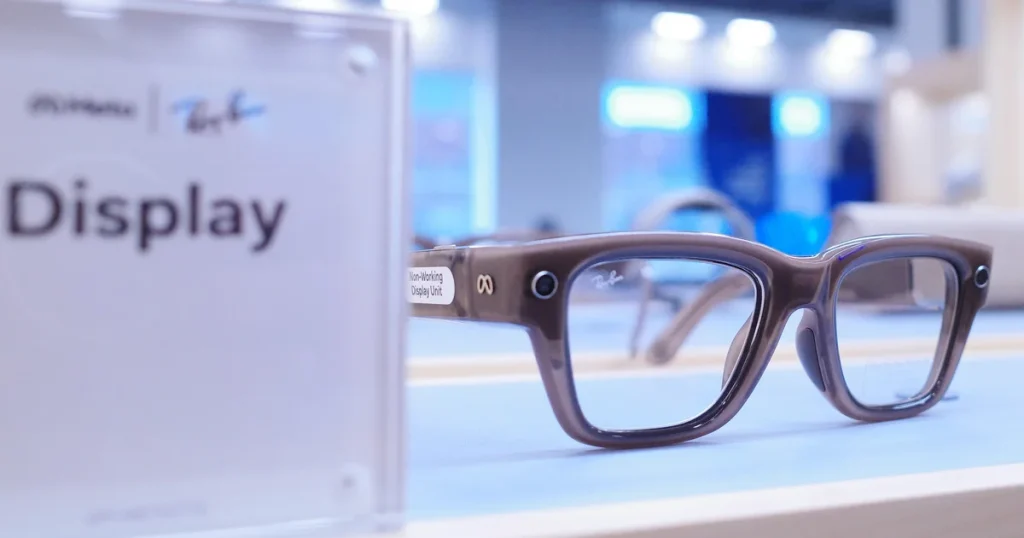
Meta Overhauls Its Smart Glasses After Privacy Backlash Over Secret Recordings
Bizeconanalysis.com – The rapid spread of wearable AI devices has raised a question that consumers increasingly want answered: who is watching, and who is recording? Meta has moved to tighten the privacy safeguards on its artificial intelligence–powered eyewear following a wave of complaints that bystanders were captured on camera without knowledge or consent. The company confirmed a revised mechanism that shuts down the recording function the moment anyone physically interferes with the small status LED built into the frame — a change designed to close a loophole that let wearers film surreptitiously.
The LED Tampering Fix, Explained
Every pair of Meta’s smart glasses carries a tiny light that illuminates whenever the camera is active, giving nearby people a visible cue that an image or clip is being captured. Under the original design, a wearer could disable the recording capability only by covering that light before pressing the capture button. In practice, however, a user could start recording first and then slip a finger or a piece of tape over the LED, effectively silencing the warning while the lens kept rolling.
Meta now states that the camera deactivates automatically if the LED is obstructed at any point during a capture session — whether before or after recording begins. The company framed the update as a response to a growing cottage industry of online tutorials and paid services that taught consumers how to neutralize the indicator light.
“These investments are we already having a deterrent effect — companies that were offering LED tampering services have shut down because the camera now deactivates when tampering is detected,” Meta wrote in an email sent to CBS News.
A Viral Incident That Sparked Scrutiny
The privacy controversy gained public traction last August when a woman discovered footage of herself posted to social media, shot by a man wearing the glasses. She said she had no awareness that a recording was underway and had never been asked for permission. The clip’s appearance online turned a quiet personal grievance into a broader conversation about consent in public spaces.
“I had no say,” she told CBS News.
The episode highlighted a tension at the heart of smart-eyewear design: the device is meant to be unobtrusive enough for everyday wear, yet its cameras can capture intimate moments in cafés, parks, and transit stations. For many observers, the woman’s experience crystallized a fear that the convenience of hands-free recording could override basic social norms of asking before filming.
Independent Testing Reveals an Earlier Gap
Anna Schecter, senior crime and public safety coordinating producer at CBS News, spent time last month evaluating the glasses’ disabling mechanism in real-world conditions. She found that an earlier iteration of the feature failed to stop recording when she covered the LED after a capture had already begun — precisely the scenario the updated firmware now addresses. Meta confirmed that the enhanced version deactivates the recording pipeline whenever any form of tampering with the indicator is detected, closing the window Schecter identified.
Meta’s Broader Privacy Posture
Beyond the firmware change, the company outlined a set of supplementary measures aimed at reducing the ecosystem of content that encouraged covert filming. Those steps include:
Removing online posts that provided step-by-step instructions or paid services for disabling the capture LED; deleting thousands of harassing comments and short-form videos tied to “pickup artist” and prank-style content that featured the glasses; and suppressing search terms and hashtags associated with that genre of material, including phrases such as “pickup artist” and “rizz.”
Meta also launched a new education and awareness campaign emphasizing that the LED exists to inform bystanders whenever a photo or video is being saved to a wearer’s gallery. The company positioned the indicator not as an optional courtesy but as a core design commitment.
“We’re going to keep rolling out updates like this to make sure the capture LED can reliably alert bystanders when photos or videos are being captured for someone’s gallery,” Alex Himel, vice president of wearables at Meta, wrote in a social media post last week. “Only a tiny minority of people try to get around these protections, and the fact they have to go to these lengths shows our efforts are working.”
Why This Matters Beyond One Product
The episode sits at the intersection of several larger trends. Wearable cameras are becoming embedded in everyday accessories — eyewear, watches, even clothing — and regulators in multiple jurisdictions are beginning to examine whether a visible recording indicator is sufficient to satisfy consent norms that were written for handheld cameras and smartphones. A device that can be worn for hours, pointed at strangers, and operated with a single tap compresses the distance between casual observation and permanent digital record.
Meta’s decision to tie the recording function directly to the physical integrity of the LED represents a shift from “trust the user” to “verify the user” in hardware design. If adopted across the category, such fail-safe logic could become a de facto standard for any consumer device that captures ambient audio or video. For now, the company says it will continue iterating on the feature, treating each reported workaround as a prompt for the next patch rather than an acceptable edge case.
The underlying question for consumers remains straightforward: when a stranger’s glasses glow, you now have a technical guarantee that the glow means what it says. Whether that guarantee is enough to restore comfort in shared public spaces is a conversation still unfolding — one that Meta, regulators, and the general public will keep having as smart eyewear moves from novelty to normalcy.
Related Reading
Frequently Asked Questions
What is Meta says AI glasses fix stops?
Meta says AI glasses fix stops is the main topic of this guide. The article explains the context, practical details, and next steps readers should understand.
Why does Meta says AI glasses fix stops matter?
Meta says AI glasses fix stops matters because readers are looking for a useful answer, not just a short summary. Good content should match search intent and help them decide what to do next.