
House rejects GOP constitutional amendment to limit Supreme Court to 9 justices
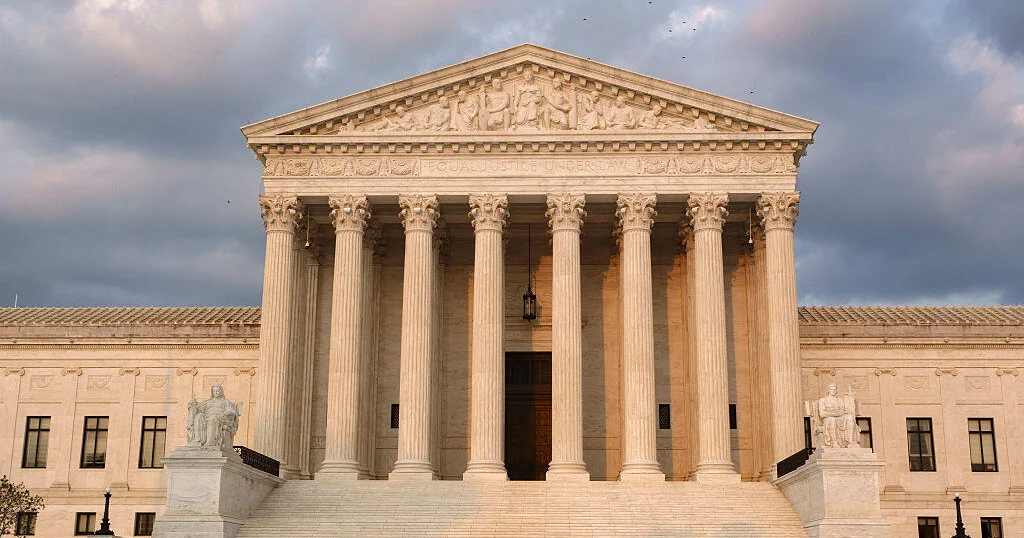
House Rejects GOP Constitutional Amendment
Bizeconanalysis.com – The House rejects GOP constitutional amendment to cap the Supreme Court at nine justices, ending a Republican bid that fell well short of the supermajority needed to advance. On Wednesday, members cast 212 votes in favor and 206 against the joint resolution, leaving the proposal stranded below the two-thirds threshold required before it could reach the Senate and, eventually, state legislatures for ratification.
The measure, introduced by Rep. Andy Biggs (R-AZ), would have written explicit language into the Constitution declaring that the nation’s highest court “shall be composed of nine justices consisting of one chief justice and eight associate justices.” Biggs framed the effort as a structural safeguard rather than a partisan maneuver, arguing on the floor that locking the bench at nine prevents whichever party wins the next election from reshaping the court’s size.
What the Proposal Would Have Altered
Under Article I, Congress retains the authority to set the number of Supreme Court seats. That power has been exercised seven times since 1789, with the bench ranging from five to ten members before settling at nine in 1869 — a figure that has held for more than 150 years. The constitutional amendment route, by contrast, demands a two-thirds vote in both chambers plus ratification by three-fourths of state legislatures, a bar so steep that only 27 amendments have been added since 1791. Wednesday’s tally therefore represented an early procedural test, not a near-certain path to adoption.
Speaker Mike Johnson (R-LA) had staked out his support the day before the vote, calling the effort to cap the court “critically important” and warning against what he described as a slippery slope toward judicial expansion:
“Nine justices has worked well. If you go down the road of packing the Supreme Court it turns into a political palooza, and it would not serve the country.”
Democratic Opposition and Broader Context
House Democratic Whip Katherine Clark (D-MA) circulated a notice urging members to oppose the measure, arguing it would strip Congress of a power the framers explicitly granted. She tied the vote to what she characterized as a pattern of congressional abdication:
“This Republican majority — which has already surrendered Congressional war powers, Congressional taxing and tariff powers, and Congressional spending powers to President Trump — would now permanently relinquish the power to set the number of Supreme Court Justices, given to Congress in Article I of the Constitution.”
Rep. Jamie Raskin (D-MD), ranking Democrat on the Judiciary Committee, took a sharper rhetorical aim, linking the amendment to anxieties over the November election results. On the floor Wednesday, he characterized the move as an attempt to entrench the current bench composition for decades:
“Trump’s followers in Congress now seek to freeze into place the political court that MAGA built, for decades to come. Thus, they urge us to give away another critical power that the framers vested in us.”
The court-size question has gained renewed urgency in recent years as several Democratic lawmakers have publicly floated expanding the bench. Rep. James Clyburn (D-SC), a senior House leadership figure, voiced support on Sunday for growing the court to 13 justices — a proposal that would add four seats and, depending on appointment timing, could shift the ideological balance of the bench. The amendment vote also arrived the day after the House adopted a resolution condemning socialism “in all its forms,” a measure Republicans have linked to the platform of the Democratic Socialists of America.
Frequently Asked Questions
Why did the amendment fail in the House? It needed a two-thirds supermajority (213 of 317 voting members) but received only 212 votes in favor, one vote short of the threshold. Without that margin, the joint resolution cannot advance to the Senate.
Can Congress still change the number of Supreme Court justices? Yes. Article I grants Congress the power to set the court’s size. The number has been changed seven times since 1789 and has stood at nine since 1869. No constitutional amendment is required to alter it.
What would it take to actually amend the Constitution on this issue? A two-thirds vote in both the House and Senate, followed by ratification in 38 of 50 state legislatures. Only 27 amendments have cleared that bar since 1791, making success statistically rare.
Who introduced the amendment and what was its stated purpose? Rep. Andy Biggs (R-AZ) introduced the joint resolution. His stated purpose was to permanently fix the court at nine justices so that no future administration could expand the bench through simple legislation.