
Army Secretary Dan Driscoll resigning after friction with Hegseth
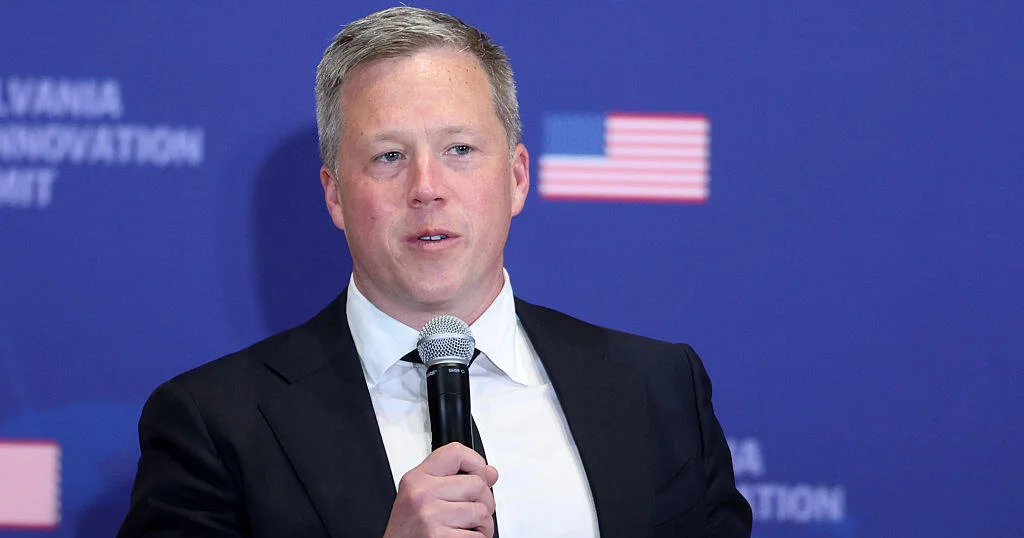
Army Secretary Dan Driscoll Steps Down After Prolonged Clash With Hegseth
Bizeconanalysis.com – The White House confirmed on Monday that Dan Driscoll, the top civilian leader of the U.S. Army, has tendered his resignation — a move that caps months of open friction between his office and that of Defense Secretary Pete Hegseth. The departure marks the latest in a string of senior military-civilian exits that have reshaped the Pentagon’s leadership bench over the past year.
Driscoll, an Iraq war veteran who previously served as an adviser to Vice President JD Vance, was confirmed by the Senate in February 2025 to head the Department of the Army. In that role he oversees the largest branch of the U.S. military, managing a force of roughly 480,000 active-duty soldiers and directing policy on everything from procurement to force posture. His tenure has been defined by extraordinary operational tempo: the U.S. action that captured former Venezuelan President Nicolás Maduro — an operation in which members of the Army’s elite Delta Force played a central role — and the ongoing conflict with Iran, both of which unfolded while he sat at the head of the Army’s civilian leadership.
White House Praises the Departing Secretary
In a statement released Monday, White House spokesperson Anna Kelly framed the resignation in terms of mission accomplishment rather than departure under pressure.
“Secretary Driscoll has been highly effective in advancing President Trump’s agenda to Make America Strong Again at the Department of the Army by providing outstanding leadership during historic military operations, restoring an emphasis on readiness and lethality, assisting with negotiations between Russia and Ukraine, and more,” Kelly said. “The United States Army is more powerful than ever thanks to his work alongside the Commander-in-Chief and Secretary of War.”
A U.S. official familiar with the matter said Driscoll spoke directly with President Trump about the current condition of the Army before formally submitting his resignation. The official added that Deputy Army Undersecretary Dave Fitzgerald is also expected to leave his post within the same week, suggesting the shake-up extends beyond a single departure.
The Friction That Built Up
Behind the polished language of the White House statement, the split between Driscoll and Hegseth had been widening for months. The clearest flashpoint involved the Army’s push toward unmanned systems. Last year, Driscoll and then-Army Chief of Staff Gen. Randy George jointly launched what they called the Army Transformation Initiative, a sweeping plan that placed greater emphasis on integrating drones, autonomous platforms, and other unmanned capabilities into the force structure.
That initiative included the creation of a dedicated drone battalion, tasked with studying the lessons of the intense drone warfare now being waged in Ukraine and translating them into U.S. doctrine. Both George and Gen. Chris Donahue, who commanded U.S. Army Europe and Africa, were vocal backers of the unit. Earlier this month, however, the Army began drawing up plans to phase the battalion out — a decision that followed reported friction between the officers championing the battalion and acting Army chief of staff Gen. Christopher LaNeve.
The personnel consequences were swift. Earlier in the year, Hegseth removed George from his post as Army chief of staff, asking him to retire. Donahue subsequently filed his own retirement papers. For Driscoll, who had built the transformation agenda alongside George, the sequence of events appeared to signal that his core institutional project was being dismantled from above.
A source familiar with the matter said Driscoll raised his concerns directly with the Trump administration, flagging both the direction of the Army’s transformation efforts and the fact that Hegseth had pushed aside several of the generals most responsible for executing the transformation plan. Whether those concerns were heeded or set aside is unclear, but the timing of the resignation suggests they were not resolved to Driscoll’s satisfaction.
A Pattern of Departures
Driscoll’s exit does not stand alone. Navy Secretary John Phelan vacated his post earlier this year, with President Trump noting publicly that Phelan “had some conflicts with some other people.” Several senior officers have also retired or been asked to retire over the past twelve months, including George, Donahue, and Adm. Alvin Holsey, who commanded U.S. Southern Command. Together, these departures represent a turnover rate at the senior leadership level that is unusual even for a period of active conflict.
The broader implications for the Army are significant. A civilian secretary who leaves mid-tenure during an ongoing war with Iran and amid a planned drawdown of U.S. forces stationed in Germany creates a leadership vacuum at precisely the moment the force is being asked to execute complex, multi-theater operations. The question now facing the Pentagon is who will fill Driscoll’s seat, whether the incoming appointee will continue, modify, or abandon the transformation agenda, and how quickly the department can stabilize its civilian leadership bench before the next operational cycle begins.
For now, the Army enters a period of transition. Fitzgerald’s expected departure this week will leave the deputy secretary’s office vacant as well, compounding the institutional disruption. The White House has not announced a timeline for confirming a replacement, and no successor has been named.
Related Reading
Frequently Asked Questions
What is Army Secretary Dan Driscoll resigning after?
Army Secretary Dan Driscoll resigning after is the main topic of this guide. The article explains the context, practical details, and next steps readers should understand.
Why does Army Secretary Dan Driscoll resigning after matter?
Army Secretary Dan Driscoll resigning after matters because readers are looking for a useful answer, not just a short summary. Good content should match search intent and help them decide what to do next.