
Nicolás Maduro shares photos from New York prison: “We are standing firm”
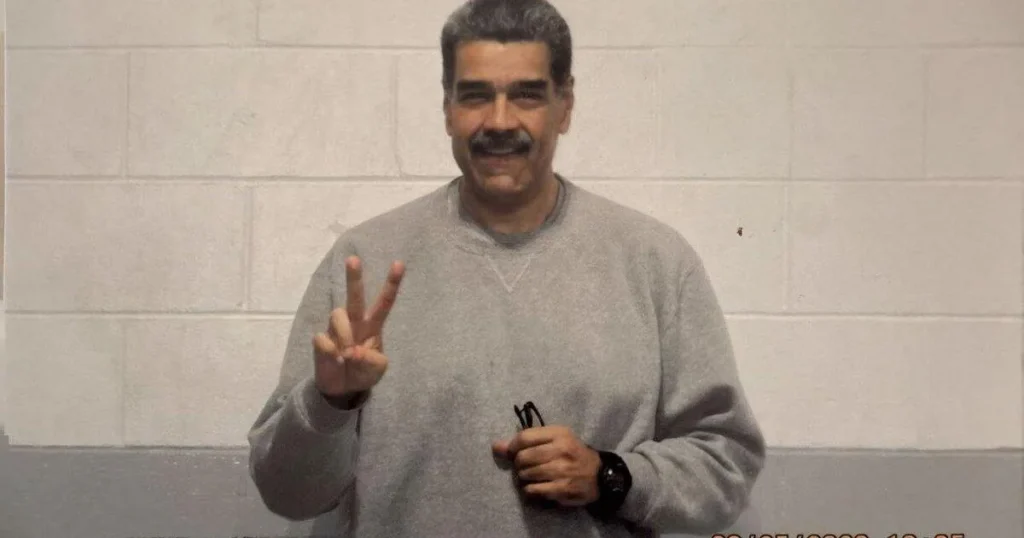
Deposed Venezuelan Leader Posts Prison Snapshots Amid Earthquake Grief and Oil Deal Turmoil
Bizeconanalysis.com – Two images posted to the Telegram messaging platform on Sunday show a thinner Nicolás Maduro in a gray tracksuit, flashing peace signs from behind what appears to be a cell wall. The photographs, which carry metadata placing their capture date at June 25, arrived just one day after twin earthquakes ripped through northern Venezuela and killed more than 6,500 people, leaving entire communities in ruins. For a man stripped of his presidency and locked in a Brooklyn detention facility, the timing of those pictures carries a weight that extends well beyond a simple family greeting.
“I am sending these photos as a small gift to all my grandchildren, to the boys and girls, and to all the good people who love us.”
Maduro, who was seized alongside his wife Cilia Flores during a U.S. military operation in Caracas last January, framed the post as a message of endurance. He told followers that he and Flores were “standing firm, with our hearts full of your love,” and closed with a declaration that Venezuela “will rise again” under divine protection. The language of resilience lands differently when the sender is a former head of state sitting in a foreign jail, cut off from newspapers and the internet, permitted only limited telephone contact with family and counsel.
The Oil Agreement That Shadowed the Post
The photographs surfaced two days after interim President Delcy Rodriguez unveiled what she called a “historic” petroleum pact granting the United States operational control over Venezuelan oil fields. President Trump described the arrangement on Friday as giving Washington majority authority over more than 60 billion barrels of proven reserves. A U.S. government official characterized the venture as a joint project pairing the American state with an experienced private operator already active in Venezuela.
The structural split, per that official, allocates 55 percent of the joint venture to the U.S. government, divided between equity stakes and the right to draw oil at cost. Trump amplified the point in a Sunday Truth Social post, declaring that he would use Venezuelan crude to refill the Strategic Petroleum Reserve, which he accused of having been “virtually emptied” under his predecessor. He added that the “topping out” process would begin “very shortly” and called the arrangement “a Gift from Venezuela to the People of the United States.”
Rodriguez, governing under sustained pressure from Washington, defended the deal in a Sunday-night address. She acknowledged that Venezuela holds the largest proven oil reserves on the planet but argued that underground wealth alone changes nothing without capital and technology to extract it.
“This agreement is based on a simple premise: each party contributes what it does best. Venezuela contributes oil, its industry, and the experience its workers have accumulated over decades. The United States is providing the necessary capital and technology to recover and develop those assets.”
She said she had “chosen the path of diplomacy” with the United States because her goal is to transform Venezuela into an “energy powerhouse.” The framing positions the deal as a pragmatic concession by a weakened government rather than a negotiated partnership between equals, a distinction that critics in Caracas have been quick to underline.
Life Behind the Cell Wall
Maduro’s daily reality in the Brooklyn facility is tightly regulated. He has no access to printed news or the internet. A source close to the former leader described his communication privileges: roughly 300 minutes of telephone time per month, capped at 15 minutes per individual call, available to family members and attorneys. His son, Nicolas Maduro Guerra, told relatives that his father is in good physical shape and fills his hours studying the Bible.
The weight loss visible in the photographs underscores the physical toll of months in custody. Maduro was taken from Caracas in January alongside Flores, and both have been held ever since on federal charges of drug trafficking and firearms possession. Both have denied every allegation.
The Trial Ahead
A federal court in New York set the opening date for the pair’s trial at June 1, 2027, an announcement made in late July. If a jury finds them part of a conspiracy to funnel cocaine into the United States, each faces a potential life sentence. Prosecutors allege that Maduro orchestrated the movement of thousands of tons of cocaine across the border by colluding with Venezuelan law-enforcement officials to assist drug kingpins.
At his January arraignment, Maduro addressed the court in Spanish, insisting on his innocence and his legitimacy.
“I am not guilty. I am a decent man, the constitutional president of my country.”
That claim of constitutional authority now competes with the reality of Rodriguez’s interim government, the seismic devastation still reshaping northern Venezuela, and a petroleum deal that hands a foreign government a controlling stake in the nation’s most valuable resource. The peace signs in the photographs, posted into a Telegram feed that millions of Venezuelans can still read, read less like a gesture of casual optimism and more like a deliberate signal: the man in the cell is still watching, still speaking, and still asking his country to remember him.
Related Reading
Frequently Asked Questions
What is Nicolás Maduro shares photos from New York?
Nicolás Maduro shares photos from New York is the main topic of this guide. The article explains the context, practical details, and next steps readers should understand.
Why does Nicolás Maduro shares photos from New York matter?
Nicolás Maduro shares photos from New York matters because readers are looking for a useful answer, not just a short summary. Good content should match search intent and help them decide what to do next.