
Nepal flood death toll surges as 65 Americans listed among over 1,000 people still missing
Nepal Flood Death Toll Surges Past 350
Bizeconanalysis.com – A catastrophic glacial collapse along the Nepal-China frontier unleashed torrents of meltwater and raw debris into mountain valleys on Wednesday, pushing confirmed fatalities past 350 and leaving more than 1,000 people unaccounted for by Thursday. The Nepal flood death toll surges reflect the sheer scale of the event: a sudden failure of a glacier feeding the Trishuli river system sent walls of water and sediment tearing through the Nuwakot and Rasuwa districts, burying entire settlements and sweeping away bridges, roads, and small hydropower installations within minutes.
Nepal Police placed the confirmed kill count at 353 and listed 826 individuals as missing as of Thursday. Breakdowns from the National Emergency Operation Center identified 113 Nepali tourists, 85 members of the army and police, and 161 local residents among the unaccounted-for. On the Tibetan side of the border, authorities tallied 558 missing persons — 260 of them foreign nationals — and confirmed at least three fatalities by Thursday morning, with two villagers pulled from the rubble.
American Nationals at the Center of the Search
The Nepal Tourism Board disclosed Thursday that at least 65 U.S. citizens were among the missing foreign nationals, nearly doubling the figure reported the previous day. Hikmat Singh Ayer, the board’s chief executive and senior director, provided the updated count to journalists. The board also noted that 27 foreign nationals had been pulled from the flood zone in Rasuwa district, including two Americans — a man and a woman both in their 50s.
The U.S. State Department said it was tracking roughly 90 Americans who could have been caught in the flood’s path and confirmed it was not yet aware of any verified U.S. deaths. Secretary of State Marco Rubio voiced American solidarity with the Nepali people in a Wednesday social-media post:
“[The department] stands ready to support the government of Nepal with needed humanitarian assistance.”
The U.S. Embassy in Kathmandu issued statements expressing “heartfelt condolences to the families and loved ones of those who lost their lives in the devastating floods” and said it was “working to account for U.S. citizens who may have been affected.” The embassy urged any American in the region to contact family members, hotels, trekking guides, or tour operators by whatever means remained available, while acknowledging that communications infrastructure was still severely disrupted. Washington also announced the dispatch of an adviser to the affected area and a $500,000 grant routed through Catholic Relief Services to support immediate relief operations.
Rescue Operations and Downstream Aftermath
Army and private helicopters began flying sorties from early Thursday morning. Brigadier General Raja Ram Basnet, spokesperson for the Nepalese army, said military crews had rescued more than 100 people from flood-affected zones through aerial operations that day. At least eight foreign nationals were airlifted to Kathmandu, and army teams also evacuated personnel trapped inside facilities connected to the Trishuli hydropower project.
Search teams working downstream located bodies roughly 62 miles from the epicenter in Chitwan district, evidence of how far the debris-laden flow traveled before losing momentum. Dozens of injured survivors were transported to Kathmandu for advanced medical treatment. In Tibet, a secondary mudslide struck near the Gyirong Por land-border crossing, compounding the already overwhelming logistics challenge facing both governments.
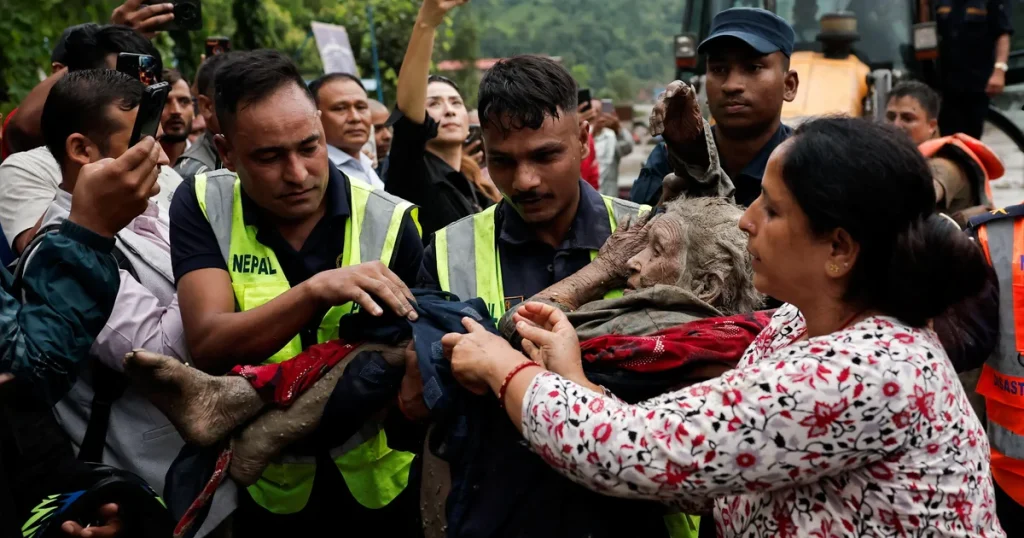
Regional video and drone footage captured the violence of the event: torrents the color of wet cement snapping bridge cables and burying structures to their second floors. In Nuwakot district, images showed upper stories of buildings coated in thick mud, debris tangled in tree branches and power lines, and vehicles half-buried under sediment. Some stunned survivors stood caked in mud, unable to move. Travel in several corridors was halted entirely.
For those caught in the path, escape was impossible. Shoyam Rajbhandari, a resident of the Dhunge bazaar area, described the speed of the event:
“When I reached Dhunge bazaar, in half an hour, the flood came and damaged all the market. People were preparing to go to office then. How many people are missing or dead, we don’t know.”
Frequently Asked Questions
How many people have been confirmed dead? As of Thursday, Nepal Police confirmed 353 fatalities on the Nepali side and at least three on the Tibetan side. The total may rise as search operations continue.
How many Americans are missing? The Nepal Tourism Board reported at least 65 U.S. citizens among the missing. The State Department is tracking roughly 90 Americans who may have been in the flood’s path.
What caused the disaster? A sudden collapse of a glacier feeding the Trishuli river system released a massive volume of meltwater and debris, which surged down steep valleys serving as primary travel and economic corridors in the Nuwakot and Rasuwa districts.
What aid has the United States committed? Washington dispatched an adviser to the affected area and routed a $500,000 grant through Catholic Relief Services for immediate relief operations. The State Department also offered broader humanitarian assistance to the government of Nepal.
Can travelers still reach the affected valleys? Travel in several corridors was halted entirely as of Thursday. Communications infrastructure remained severely disrupted, and authorities urged anyone in the region to use any available means to check in with contacts.