
Malta businessman found not guilty in car bomb killing of journalist Daphne Caruana Galizia
Malta’s Longest-Running Murder Trial Ends in Acquittal, Deepening a Nation’s Wound
Bizeconanalysis.com – For nearly a decade, the shadow of a single car bomb has hung over Malta’s courts, its politics, and its national conscience. On Wednesday, that shadow briefly lifted — and then settled back down. A jury in Valletta returned a verdict of not guilty on both counts against Yorgen Fenech, the wealthy Maltese businessman prosecutors had identified as the architect behind the October 2017 assassination of investigative journalist Daphne Caruana Galizia. The decision, reached by an 8-to-1 vote, closed the final chapter of a prosecution that had consumed six defendants over several years, yet it did little to ease the anger simmering across the island’s streets.
A Verdict Delivered to Jeers
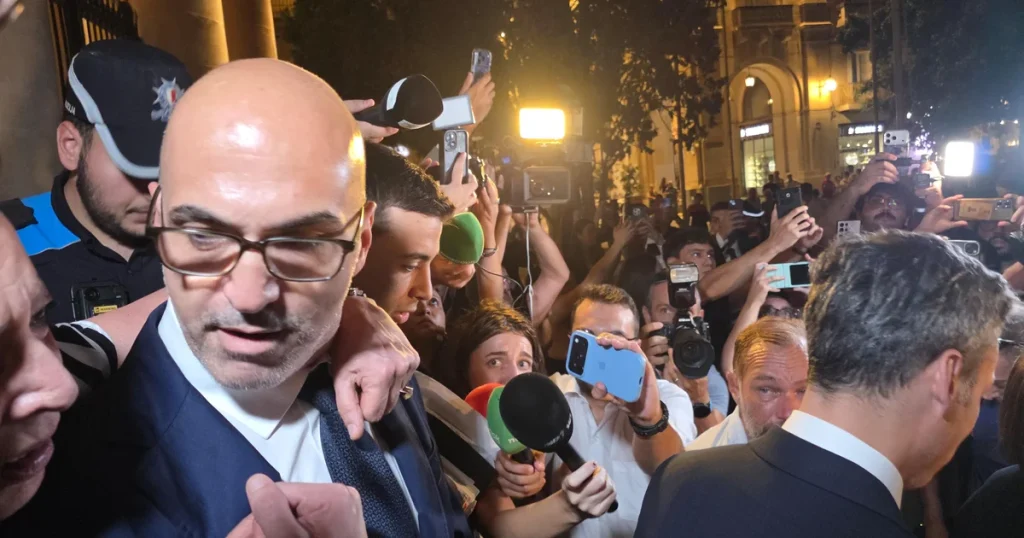
Fenech, one of the most prominent figures in Maltese commerce, had been indicted in 2021 on charges of complicity in murder and criminal conspiracy. Prosecutors built their case around the claim that he personally ordered the killing and financed it. He maintained his innocence throughout. When the jury’s decision was read in the Valletta courtroom, Fenech walked out into a scene of open hostility — hecklers shouted as he made his way away from the building. His legal team, however, framed the outcome as a vindication of due process.
“We are happy that justice has prevailed,” lawyer Gianella De Marco told reporters gathered outside. She added that the jury’s verdict effectively signaled disbelief in a key prosecution witness, a figure who had received a presidential pardon in exchange for his testimony at trial.
The Journalist Who Became a Target
Caruana Galizia, who was 53 at the time of her death, had built a reputation as Malta’s most fearless investigative reporter. Her columns and broadcasts dissected suspected corruption in both political and commercial spheres, with particular focus on figures orbiting then-Prime Minister Joseph Muscat. Several of her targets had been linked to offshore entities in tax havens, details that surfaced in the Panama Papers disclosure. Muscat and his wife, Michelle, publicly denied ever holding such companies. Caruana Galizia also aimed her scrutiny at opposition politicians and business leaders, earning her the nickname “one-woman WikiLeaks.”
On October 16, 2017, a car bomb was detonated while she was driving near her home. The explosion killed her instantly. At the time of her death, she was simultaneously defending more than 40 libel actions — a legal siege that her family and colleagues later described as part of a broader campaign to silence her.
“She knew that the powerful people that she was writing about were closing in on her,” her son Paul told CBS’s “60 Minutes” in 2018. “They were using every possible means to shut her down. She knew that, and that frightened her deeply.”
Her other son, Matthew Caruana Galizia, told the same program in 2020 that he believes her gender shaped how certain subjects reacted to her reporting, adding a layer of gendered hostility to an already dangerous professional environment.
From Arrest to Resignation
The investigation into the bombing eventually led to Fenech’s arrest in 2019, a dramatic intervention carried out while he was aboard his yacht sailing away from Maltese waters. That arrest ignited a wave of mass protests that swept through the island over the following months. The political pressure culminated in Muscat’s resignation as prime minister, making the case one of the few in recent European history in which a murder trial directly forced a head of government from office.
Fenech’s commercial profile added fuel to public suspicion. He had been part of a consortium that secured a controversial government contract to construct a power station — a deal whose terms and selection process drew sustained criticism from opposition parties and civil-society groups.
An Inquiry’s Verdict: A Culture of Impunity
Before the trial concluded, an independent inquiry into the assassination published its findings in 2021. The panel concluded that the Maltese state “has to bear responsibility” for the killing, tracing the failure to a culture of impunity that, in its assessment, emanated from the highest levels of government. The report stopped short of proving direct state involvement in the murder itself, but it found that official inaction had created a “favorable climate” in which the journalist could be killed with relative impunity.
Caruana Galizia’s family had long argued that Muscat’s administration displayed little genuine interest in solving her murder, a claim the inquiry’s language appeared to validate in broad strokes.
The Family’s Unfinished Grief
Both of Caruana Galizia’s sons were present in the courtroom when the verdict was delivered. They departed without offering remarks to the press. Later that day, the family posted a statement to Facebook in which they said the outcome denied their mother “the justice she deserves.”
“Nine years after Daphne’s brutal assassination, the institutional failures that enabled her murder remain unaddressed and unreformed. Lasting justice means no person should ever face the same risks again,” the statement read. “Our country failed to protect Daphne. It owes it to her to prevent other lives being lost.”
Opposition Demands Answers
The opposition Nationalist Party organized a silent march late Wednesday evening. In a written statement, the party said it respected the jury’s verdict while insisting that accountability for who ordered the assassination remained outstanding.
“After years of investigations, inquiries and judicial proceedings, justice has still not reached where it needed to reach — neither for Daphne’s family nor for our country,” the party said.
With Fenech now the last of the half-dozen defendants to face trial, the question Malta must answer is no longer whether the courts will deliver a verdict. It is whether the institutions that allowed a journalist to be bombed on a quiet residential street — and then allowed the machinery of justice to grind through nine years of proceedings without producing a conviction — will reform before another voice is silenced.
Related Reading
Frequently Asked Questions
What is Malta businessman found not guilty in car?
Malta businessman found not guilty in car is the main topic of this guide. The article explains the context, practical details, and next steps readers should understand.
Why does Malta businessman found not guilty in car matter?
Malta businessman found not guilty in car matters because readers are looking for a useful answer, not just a short summary. Good content should match search intent and help them decide what to do next.