
Iran-U.S. Updates: Iran strikes vessel in Strait of Hormuz amid debate over “transit fees”
Iran U S Updates –
Iran-U.S. Updates: Hormuz Attack and Regional Tensions
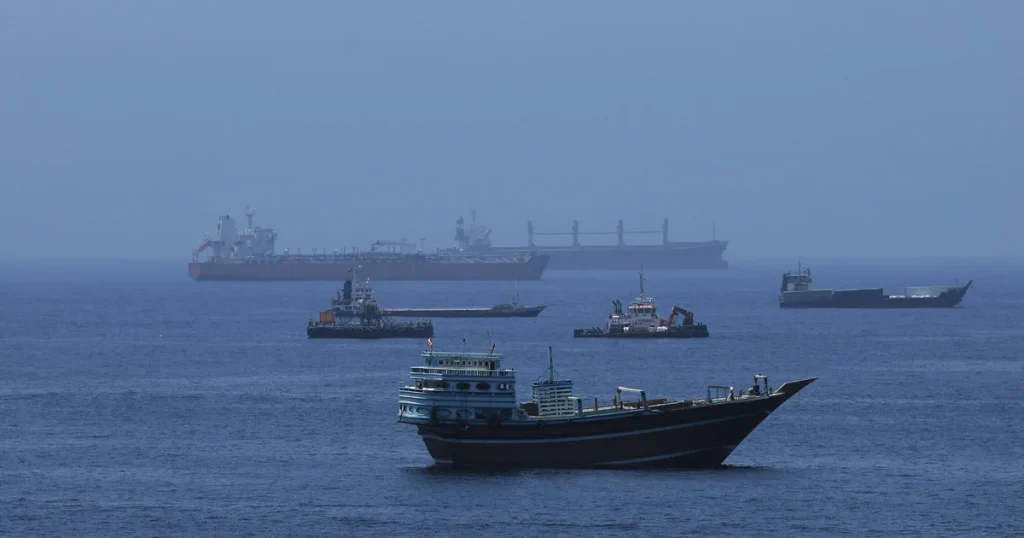
On June 25, 2026, Iran-U.S. updates confirmed a dramatic incident in the Strait of Hormuz, where an Iranian missile struck a Singapore-registered commercial vessel near the Omani coast. The attack, reported by the Islamic Revolutionary Guard Corps (IRGC), has intensified debates about Iran’s control over maritime transit routes and its geopolitical strategy in the region.
Strait of Hormuz Incident Sparks Global Concern
The U.S. has advocated for a specific route through the strait, urging ships to stay close to the Omani coastline to avoid risks. Iran-U.S. updates show that Iran prefers a northern path, claiming it to be more secure. This divergence in approach has created friction, particularly as Iran’s Persian Gulf Strait Authority (PGSA) asserts authority over the region’s waterways.
Following the attack, the PGSA issued a statement warning that any deviation from its designated framework would mean ships are not guaranteed safe passage. “Vessels operating outside the PGSA’s guidelines shall bear the consequences,” the agency emphasized, reinforcing its role in managing transit risks. The U.S. has yet to formally respond to the incident, but it has raised concerns about the security implications for international trade.
International Maritime Response to Hormuz Crisis
Iran-U.S. updates indicate the International Maritime Organization (IMO) has paused its evacuation plans for vessels in the strait after the British military confirmed the projectile strike. IMO Secretary General Arsenio Dominguez stressed the importance of seafarer safety on social media, stating, “Seafarer safety remains paramount. The IMO evacuation plan will be paused until further clarity is achieved.”
This pause reflects growing uncertainty about the strait’s security. With Iran-U.S. tensions escalating, the IMO is prioritizing risk management for ships navigating this vital oil transport corridor. The decision could impact global trade, as the strait handles approximately 20% of the world’s oil supply.
Lebanon Crisis Escalates Amid Escalating Violence
Meanwhile, in southern Lebanon, the situation has worsened, drawing attention to the Iran-U.S. updates on regional stability. Doctors Without Borders (MSF) described the area as a “death trap,” highlighting the dire conditions faced by civilians and rescue teams. “People are caught under heavy shelling, and rescue teams struggle to reach them,” said MSF emergency coordinator Pierre Boulet-Desbareau.
“Civilians and first responders must be protected, and unhindered access for rescue teams is urgently needed,” Boulet-Desbareau added, underscoring the humanitarian crisis in the area. The organization reported 50 deaths in the province over several days, linked to a surge in attacks across the region.
Peace Talks Stalled by Lebanon’s Sovereignty Dispute
Negotiations between Iran and the U.S. have stalled due to disagreements over Lebanon’s sovereignty. A key clause in the proposed memorandum of understanding (MOU) requires an end to fighting in Lebanon and a commitment to its territorial integrity. Iran-U.S. updates show that Iran insists Israeli forces must withdraw from southern Lebanon before finalizing the agreement.
Israel’s resistance to ceding ground has created a deadlock in peace talks. The U.S. seeks to balance its strategic interests with Iran against the need for regional stability, but the issue of Lebanon’s sovereignty remains a central challenge. Both sides continue to vie for influence in the area, complicating efforts to reach a lasting agreement.
Gulf Cooperation Council Aligns with U.S. on Strategic Goals
During a critical meeting in the Gulf region, U.S. Secretary of State Marco Rubio engaged with the Gulf Cooperation Council (GCC), which has aligned with the U.S. on strategic objectives. Iran-U.S. updates reveal the GCC endorsed the June 17 MOU with Iran, signaling support for the agreement despite lingering concerns over maritime security.
The GCC’s joint statement highlights its commitment to stabilizing the region and protecting trade routes. This alignment with the U.S. could strengthen diplomatic efforts, but Iran-U.S. tensions over Lebanon and the Hormuz incident remain unresolved. The situation underscores the delicate balance of power in the Middle East.