
At least 20 killed after powerful 7.7 earthquake strikes Indonesia, triggers tsunami warning
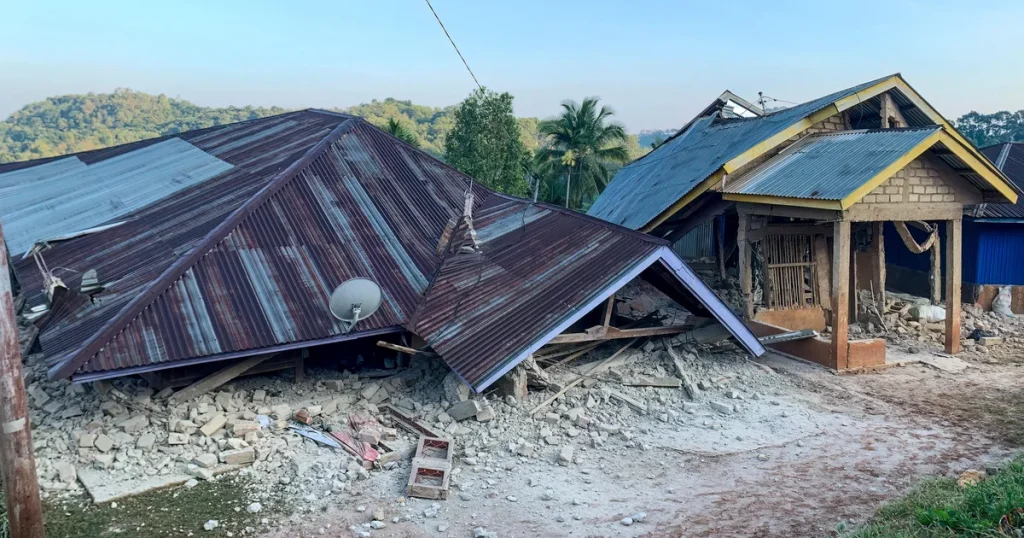
Massive 7.7 Tremor Rocks Indonesian Archipelago, Death Toll Climbs
Bizeconanalysis.com – A devastating seismic event rippled through eastern Indonesia on Saturday morning, sending shockwaves through coastal communities and triggering emergency responses across multiple provinces. The magnitude 7.7 earthquake, which struck just before 6 a.m. local time, left a trail of destruction that has claimed at least twenty lives and damaged countless structures throughout the region.
Authorities immediately activated tsunami protocols, ordering residents in vulnerable coastal zones to evacuate to elevated terrain. However, officials subsequently rescinded the alert after comprehensive monitoring revealed no substantial alterations in ocean levels that might endanger shoreline populations.
Seismic Event Details and Geographic Impact
The United States Geological Survey documented the earthquake’s occurrence at precisely 5:58 a.m. local time. The epicenter rested approximately 42 miles to the north-northwest of Ende, situated within East Nusa Tenggara province. This geological disturbance was followed by numerous aftershocks that kept residents on edge throughout the morning hours.
East Nusa Tenggara’s police chief, Rudi Darmoko, provided preliminary casualty figures indicating two deaths in Sikka Regency and three fatalities in Manggarai Regency. The tremor’s force caused extensive structural damage across both districts, with numerous buildings collapsing under the violent shaking.
Darmoko emphasized that communication failures have complicated rescue operations. “We are continuing to collect reports of damages and casualties, but there are communication disruptions,” he explained, noting that widespread power outages in both urban centers and rural villages have severely hampered information flow and emergency response coordination.
Hospitals and Institutions Respond to Crisis
Television broadcasts captured dramatic scenes as medical facilities evacuated patients from multi-story buildings as a precautionary measure. Healthcare workers relocated essential equipment—including hospital beds, intravenous stands, and oxygen cylinders—to outdoor spaces, establishing temporary treatment zones to accommodate the surge in emergency cases.
Local residents described chaotic scenes as the earthquake’s intensity peaked. Yohanna Embu, a Sikka regency resident, recounted the widespread panic that gripped the community. “Many buildings here were damaged … I saw that the waiting room at the port terminal in Maumere had collapsed,” she stated, describing how frightened citizens scrambled toward higher ground.
Seminary Incident Highlights Human Toll
Religious institutions faced their own emergencies during the seismic event. Students and nuns at St. Peter Major Seminary, locally known as Ritapiret Seminary, fled in terror when the assembly hall’s roof caved in during morning Mass. The predominantly Catholic institution on Flores island witnessed several injuries as people scrambled for safety.
The Rev. Guidelbertus Tanga, the seminary’s rector, provided details about the harrowing moments. “Our students and nuns ran out in panic beneath a collapsing roof,” Tanga recounted. “At least one priest suffered a broken leg after jumping from the second floor of a building during the quake.”
Regional Spread of Destruction
The earthquake’s effects extended well beyond East Nusa Tenggara. Bima, a city in neighboring West Nusa Tenggara province, experienced significant panic among its residents. Additionally, portions of southern Sulawesi island reported structural damages, indicating the tremor’s broad geographic reach.
Indonesia’s position along the Pacific Ring of Fire makes the archipelago particularly susceptible to powerful earthquakes and subsequent tsunamis. The country sits atop multiple tectonic plate boundaries, creating conditions where seismic activity can occur with relatively little warning. This geological reality means that communities across the nation must maintain constant vigilance and robust emergency preparedness systems.
The lifting of the tsunami warning provided some relief to coastal populations, though officials cautioned that monitoring would continue. Search and rescue teams are now working to assess the full extent of damage and casualties as communication networks gradually recover from the initial disruption caused by the earthquake.
Recovery efforts face significant challenges given the remote locations of many affected areas and the infrastructure damage that has hampered access. Local authorities are coordinating with national emergency services to ensure that assistance reaches all affected communities in the coming days and weeks.
Related Reading
Frequently Asked Questions
What is At least 20 killed after powerful 7?
At least 20 killed after powerful 7 is the main topic of this guide. The article explains the context, practical details, and next steps readers should understand.
Why does At least 20 killed after powerful 7 matter?
At least 20 killed after powerful 7 matters because readers are looking for a useful answer, not just a short summary. Good content should match search intent and help them decide what to do next.