
WNBA suspends Alyssa Thomas for hitting Caitlin Clark in the throat
WNBA Suspends Alyssa Thomas for Hitting Caitlin Clark in the Throat
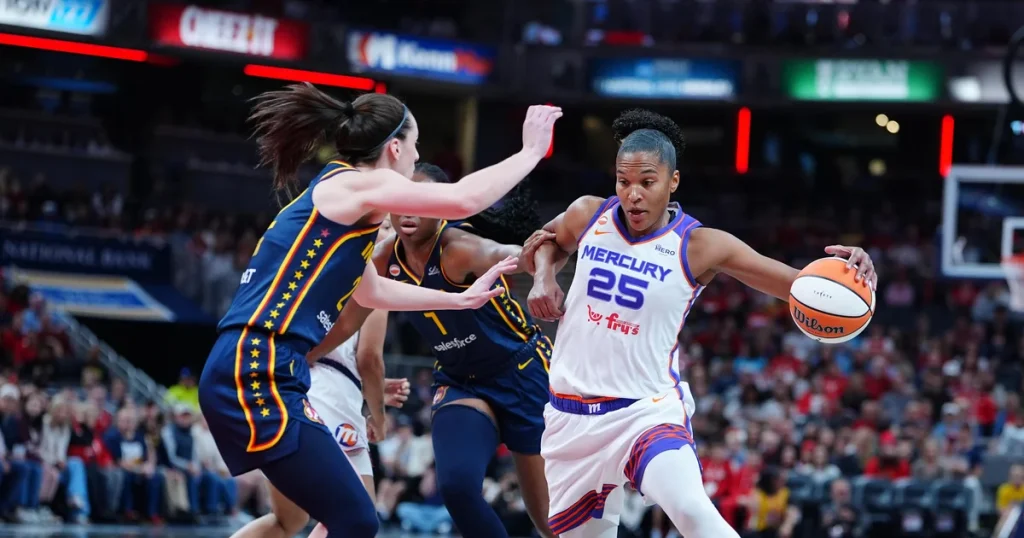
WNBA suspends Alyssa Thomas for hitting – The WNBA has imposed a one-game suspension on Phoenix Mercury player Alyssa Thomas following a controversial play in which she struck Indiana Fever guard Caitlin Clark in the throat during a match on Wednesday night. The incident occurred at Gainbridge Fieldhouse, as the two teams battled for control of the game. The decision was announced by the league on Thursday, marking the latest in a series of disciplinary actions taken to uphold player safety.
A Flagrant Foul in the Second Quarter
Thomas’ action took place with 6 minutes and 52 seconds remaining in the second quarter. As the teams contested for possession, Thomas’ fist made contact with Clark’s throat, a move that left the Indiana player visibly shaken. Despite the severity of the hit, the referees did not call a foul at the time of the incident. This decision drew sharp criticism from Fever coach Stephanie White, who described the moment as “egregious” in her post-game remarks.
“The fact that it was a no-call … You got to call it,” White stated, emphasizing that the lack of a foul call was “absolutely unacceptable.” Her comments highlight the growing scrutiny surrounding officiating decisions in high-intensity moments of the game. While the initial play was not flagged, the league’s review process later deemed it a flagrant foul, underscoring the importance of accountability in professional sports.
The WNBA’s League Office has the authority to reassess any game and classify fouls as flagrant, even if they were not initially called. In this case, the review concluded that Thomas’ contact with Clark’s throat constituted a non-basketball act, a classification reserved for deliberate, dangerous actions that prioritize aggression over fair play. The suspension will take effect on Saturday, June 27, when the Mercury face the Toronto Tempos at home. This decision aims to send a clear message about the league’s commitment to protecting players from harmful physical contact.
Clark’s Injuries and League Precedents
Caitlin Clark, a standout player known for her scoring ability and playmaking skills, sustained a minor injury during the incident. While the foul itself was not upgraded to a flagrant at the time, the league’s review later classified it as such. Clark’s history of back issues adds context to the severity of the situation, as she missed a game against the Portland Fire in May due to a similar injury. Last season, she was limited to 13 games because of lower-body problems, raising concerns about her long-term health and the risks she faces on the court.
The suspension of Thomas is part of a broader pattern in the WNBA where officials have upgraded fouls against Clark in past games. Last season, Marina Mabrey of the Connecticut Sun was initially called for a technical foul during a matchup against Indiana. However, the league later reclassified it as a Flagrant 2, demonstrating a willingness to address repeated incidents of questionable contact. This precedent has fueled discussions about whether the league is taking a more proactive stance in penalizing aggressive plays directed at Clark.
Game Context and Team Reactions
While Thomas’ hit on Clark was a significant moment, the game itself continued with other notable plays. Later in the second quarter, Clark was fouled while attempting a 3-pointer. She fell to the ground, clutching her back as she got back up, but the foul was not escalated to a flagrant. Despite this, Clark managed to contribute significantly to the team’s performance, scoring 19 points and recording eight assists in 20 minutes of play. The Mercury ultimately secured a narrow victory, winning 111-109.
Indiana Fever President Kelly Krauskopf praised the WNBA’s decision in a social media statement, emphasizing the league’s role in ensuring player safety. “Player safety should be paramount in our league,” Krauskopf wrote. “We appreciate the WNBA’s review of last night’s incident and the action taken. Right now our focus is on Caitlin and our entire team as we prepare for Saturday.” This statement reflects the team’s support for Clark and their acknowledgment of the league’s efforts to address the issue.
The incident also highlights the broader context of officiating in WNBA games. In a previous matchup on Monday night, the Mercury and Fever played a game that saw six technical fouls and one ejection. Clark was among those who received a technical foul, accumulating her fifth of the season. The team had petitioned the league to rescind the call, but the WNBA confirmed that the technical would remain. This incident, combined with the Wednesday night play, has sparked debates about the consistency of officiating and the need for clearer guidelines in assessing dangerous contact.
Implications for the League and Players
The suspension of Thomas not only impacts the Mercury but also raises questions about how the league handles aggressive plays in the context of individual player dynamics. The decision to classify the hit as a flagrant foul demonstrates the league’s focus on protecting athletes from potentially serious injuries, even if the initial call was missed by the referees. This approach has been praised by some for its emphasis on player well-being, while others argue that it may lead to stricter penalties for minor infractions.
For Caitlin Clark, the incident adds another layer to her career narrative. Known for her resilience and ability to bounce back from setbacks, she has become a focal point for discussions about player safety and the challenges of competing at the highest level. Her performance in the game, despite the foul, underscores her determination. However, the threat of further incidents could influence her game strategy and physical conditioning moving forward.
The WNBA’s decision to suspend Thomas also sets a precedent for future games. By reclassifying the foul as a flagrant, the league has signaled that actions like hitting a player in the throat will not be overlooked. This could lead to more rigorous scrutiny of similar plays, potentially altering the way players and coaches approach physical contact during games. The league’s review process, which allows for post-game assessments, plays a critical role in ensuring that justice is served, even if the initial call was missed.
As the suspension takes effect, fans and analysts will closely watch how the Mercury and Fever handle the aftermath. The suspension may affect team morale and strategy, particularly as the Mercury prepare for their next game. Meanwhile, Clark’s team will need to adjust their approach, ensuring that her focus remains on performance while also addressing the physical toll of the game. This incident serves as a reminder of the delicate balance between competitive play and player safety in the WNBA.