
Removing Poison — and Stigma — from the World’s Most Dangerous Bowl of Soup
Removing poison – In a 1991 episode of “The Simpsons,” Homer Simpson’s frantic attempt to cross off items from his bucket list after consuming fugu, the poisonous pufferfish, highlights a common fear: the idea that this delicacy could be deadly. Yet, the episode ends with a twist — the chef’s mastery in eliminating the toxin ensures Homer survives, leaving the audience to ponder how such a perilous dish became a symbol of both danger and culinary artistry. Today, in Busan, South Korea, pufferfish is far more than a risky meal; it’s a cherished local specialty that has shaped the city’s identity and sparked a unique blend of tradition, innovation, and intrigue.
A City Built on the Sea
Busan, South Korea’s second-largest city and a bustling seaside hub, has long embraced its coastal heritage. While seafood is a staple throughout the nation, pufferfish holds a special place in this port city. The surrounding waters provide ample access to the fish, which local fishermen have caught and prepared for generations. One of the most notable neighborhoods, Mipo, has earned the affectionate moniker “Pufferfish Village” due to its concentration of restaurants specializing in this daring dish. Here, the balance between danger and delight is not just a menu item — it’s a cultural phenomenon.
Preparing pufferfish requires precision and expertise. The fish contains tetrodotoxin, a neurotoxin so potent that a single gram can be lethal to humans. However, skilled chefs can extract the toxin from the fish’s organs, particularly the liver, skin, and ovaries, rendering the meat safe for consumption. This process, which demands rigorous training and certification, has been refined over centuries, blending science with artistry. In South Korea, pufferfish chefs must pass national exams to earn their license, a testament to the dish’s significance and the risks involved in its preparation.
For diners, the assurance of safety often lies in a simple visual cue: the presence of a certificate displayed prominently in the restaurant. These documents, issued by government authorities, serve as a reminder that the food served is not only flavorful but also carefully crafted to minimize danger. Despite this, the stigma of pufferfish remains, with many still wary of its reputation as a potentially fatal delicacy.
Chowon Bokguk: A Legacy in Soup
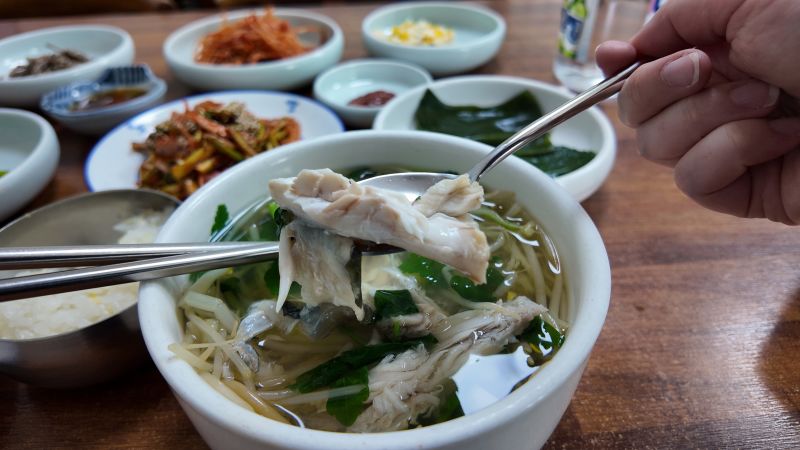
Among Busan’s pufferfish restaurants, Chowon Bokguk stands out. The name translates to “pufferfish soup” in Korean, and its humble brick building on a quiet side street belies its historical weight. Founded by Kim Dong-sik, the restaurant was the first to secure a pufferfish chef license in the city, establishing its reputation as a culinary pioneer. Its menu, though modest, offers a glimpse into the art of pufferfish preparation. Diners can choose from a set lunch that includes a steaming bowl of pufferfish soup, paired with deep-fried fritters and a selection of traditional Korean side dishes like kimchi, rice, and water spinach.
But Chowon Bokguk’s fame extends beyond its kitchen. In 1992, the restaurant became the center of a political scandal that reverberated across South Korea. A group of city officials, including the mayor and police chief, dined there under the assumption that their conversation was private. Unbeknownst to them, the building had been secretly bugged. The tapes, which captured heated discussions about influencing presidential elections, were released just days before the vote, igniting public outrage and leading to a landmark legal case. Ironically, members of the Unification People’s Party were convicted of trespassing for installing the listening devices without consent.
“Food culture has always been an exchange,” says Park Sung-bae, a Korean food historian and head chef at Seoul’s Onjium restaurant. “Korean cuisine itself is very diverse. Rather than following strict rules, it evolves through individual styles coming together. Japan tends to standardize and systemize its culinary rules, with everyone following them precisely. In Korea, things are less rigid. We aim to express philosophy within that irregularity. In the end, the goal is a sense of comfortable beauty.”
The incident, now known as the “Chowon Bokguk scandal,” has become a cultural reference point, akin to Watergate in American history. Today, the restaurant prefers to stay out of the spotlight, focusing instead on its food. Its popularity remains steady, particularly during weekday lunches, where diners can expect a swift and efficient service. An attendant often helps drivers navigate the tight parking space in front, a small nod to the restaurant’s enduring place in the community.
A History Rooted in Tradition
While pufferfish is commonly associated with Japan, its presence in Korean cuisine dates back much further. Korean food historian Park Sung-bae argues that the dish was consumed long before Japanese influence became prominent. During the Joseon dynasty (1392–1897), pufferfish was a delicacy reserved for the elite, symbolizing both status and risk. However, its history may stretch even earlier, with evidence suggesting it was enjoyed by commoners as well.
“The idea that pufferfish arrived in Korea from Japan is a misconception,” Park explains. “This fish has been part of Korean culinary traditions for centuries. The preparation methods, though similar to those in Japan, are distinct in their approach and cultural context.” The historical exchange of food between neighboring countries is a recurring theme, but in Korea, the adaptability of the cuisine allows for unique interpretations of traditional ingredients. This flexibility is what makes pufferfish not just a dish, but a story of resilience and ingenuity.
Busan’s pufferfish culture is a microcosm of this broader tradition. The city’s restaurants continue to innovate while honoring the dish’s heritage, creating a culinary landscape that is both safe and sophisticated. As the Michelin guide for Busan launched in 2024, several pufferfish eateries have been celebrated for their expertise, further cementing the city’s reputation as a hub for this daring cuisine. For visitors and locals alike, Chowon Bokguk remains a symbol of Busan’s blend of history, politics, and flavor — a place where the most dangerous bowl of soup can be both a comfort and a challenge.
Today, as diners savor the rich broth of pufferfish soup, they are not just indulging in a meal. They are partaking in a legacy that stretches from ancient dynasties to modern culinary art. The journey from fear to fascination is a testament to the city’s ability to transform risk into reward, and to turn a potentially lethal ingredient into a celebrated dish. In Busan, pufferfish is more than a delicacy — it’s a living history, a culinary riddle, and a symbol of the city’s enduring connection to the sea.





