
Hundreds of Everest Climbers Await Base Camp as Ice Blockage Persists
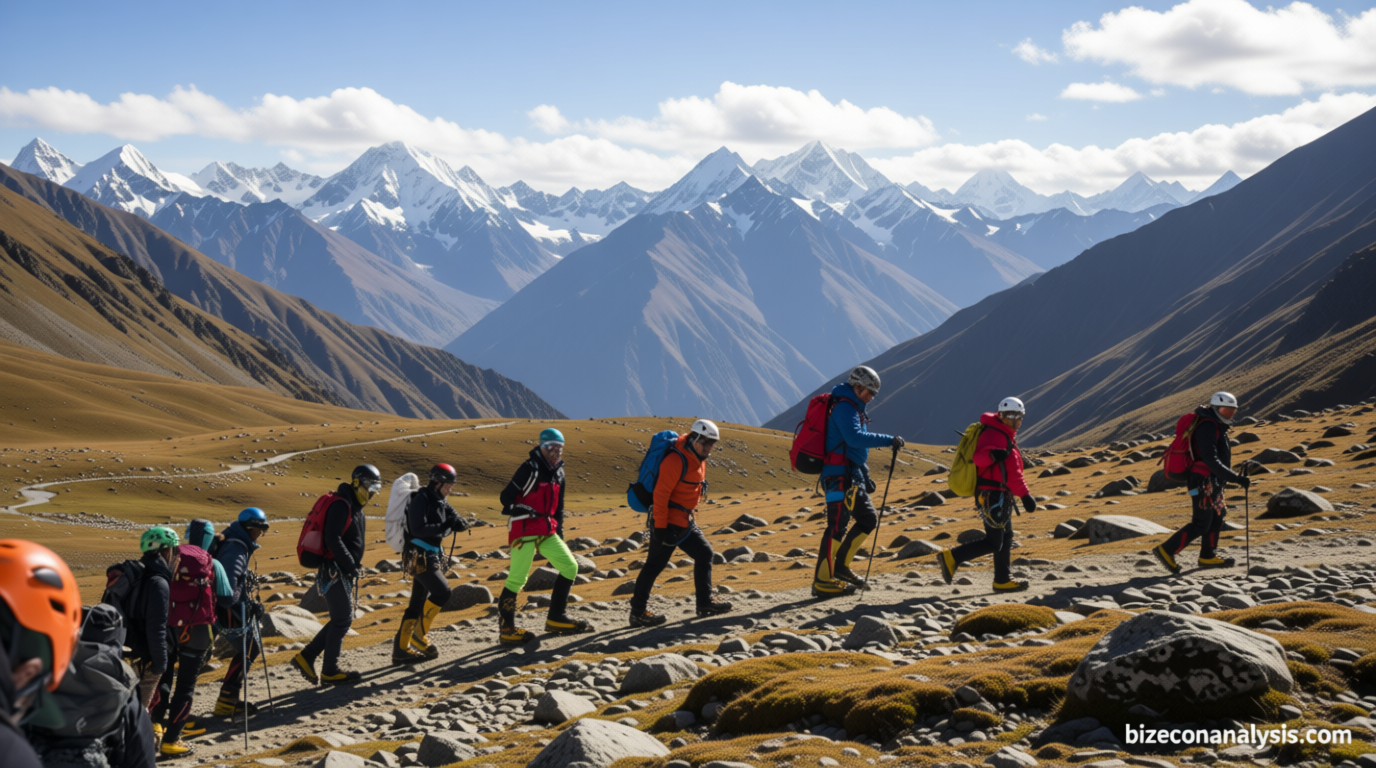
Everest Base Camp, perched more than 5,300 meters above sea level, is thick with anticipation. Over a hundred climbers, including Sherpas, have congregated, hoping to reach the summit as the annual spring season begins. Yet, a massive serac—unstable glacier ice—has become the main roadblock, delaying their ascent and keeping them in a state of waiting.
For weeks, specialized high-altitude workers known as “icefall doctors” have been assessing the serac’s condition in the treacherous Khumbu Icefall. Their usual task is to stabilize the route by setting up ropes and ladders, but this year, the ice’s unpredictability has slowed their progress. “They’re using drones, 3D imaging, and every tool available to predict when the serac might collapse and if it’s safe for climbers to proceed,” explained Adriana Brownlee, co-owner of AGA Adventures.
“We’re letting nature decide. If the mountains say no, it’s no,” she said, emphasizing the reliance on natural processes to clear the path.
Meanwhile, Bianca Adler, an 18-year-old aiming to set a new Australian record, arrived at base camp on April 20. Her planned altitude adjustments, which involve climbing and descending camps, have been postponed. To stay active, she and fellow climbers are tackling smaller hikes, navigating nearby ice towers, and practicing ladder crossings over deep crevasses.
Climate change has intensified the risks, according to Gelje Sherpa, a co-founder of AGA Adventures and former icefall doctor. “In my time, the icefall was more stable. Now, warming has made it more dangerous,” he remarked, reflecting on his 2023 rescue of a climber in the death zone—a feat he called the hardest of his life. Sherpas, who often transport gear and guide climbers, must move cautiously to avoid triggering further instability.
History shows the dangers of such ice formations. In 2014, a serac collapse in the Khumbu Icefall triggered an avalanche, claiming over a dozen lives. Another incident in 2019 forced climber Garrett Madison to abandon his expedition. As climbers await the serac’s collapse, concerns grow about potential congestion at the summit once the route reopens.
“It seems to be going the right way, but only time will tell,” Brownlee added, expressing cautious optimism about the upcoming challenges.





