
Trump orders scale-back of military exercises with South Korea after refusal to help with Iran’s denuclearization
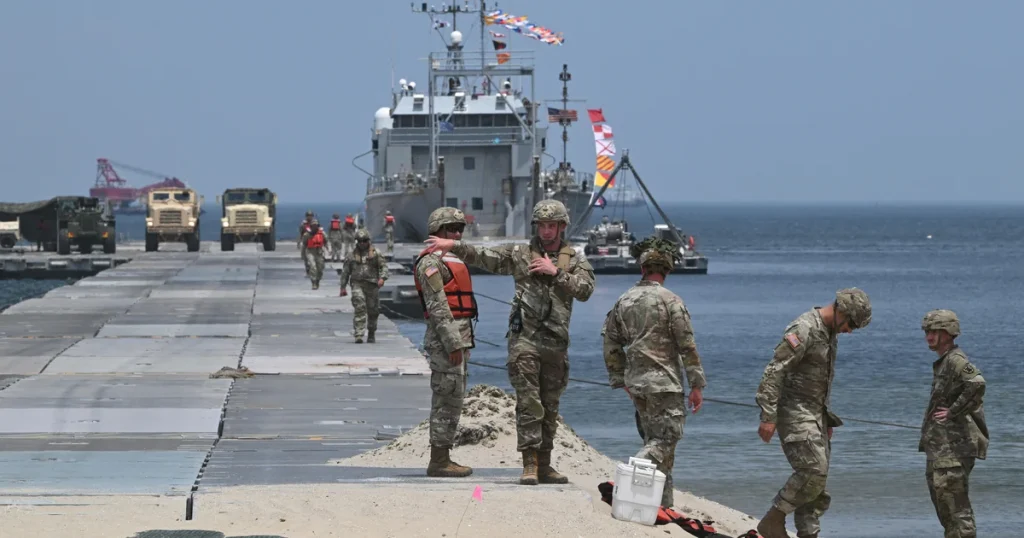
Trump Orders Scale Back of Military Drills
Bizeconanalysis.com – Trump orders scale back of military exercises with South Korea following Seoul’s decision to sit out a U.S.-led effort to denuclearize Iran. President Donald Trump made the announcement on Sunday through his Truth Social platform, instructing the Department of Defense to sharply narrow the scope of bilateral war games slated for the coming weeks. While he tied the directive partly to South Korea’s diplomatic rebuff, the president conceded the two matters were only tangentially linked. The pronouncement arrives amid sustained tension on the Korean Peninsula and fresh scrutiny of the alliance’s durability.
Stated Rationale and the Iran Connection
In his post, Trump labeled the upcoming drills costly and accused them of sending a signal to Pyongyang he deemed both erroneous and inflammatory. He characterized North Korea’s current posture under his watch as “calm and courteous,” a framing that departs sharply from standard Pentagon and South Korean defense assessments.
“Based on my very good relationship with Kim Jong Un, of North Korea, I am not happy with the fact that the United States has, long ago, agreed to participate in Joint Military Exercises with South Korea.”
Rather than cancel the drills outright, Trump directed Defense Secretary Pete Hegseth to “substantially reduce” their scope, noting the window for full withdrawal had already closed. He also disclosed that he had recently extended an invitation to South Korea’s leader to join a broader U.S. initiative aimed at stripping Iran of its nuclear capability, and that Seoul had declined. He insisted the decision to shrink the military partnership was “somewhat unrelated” to that diplomatic snub.
Seoul’s Response and Alliance Implications
South Korea’s presidential office issued a brief statement to AFP on Monday, confirming it was monitoring the president’s social-media remarks closely. The office voiced a hope for “meaningful dialogue” between the two capitals—a formulation that neither endorsed nor contested the directive. For a nation that depends on the U.S. nuclear umbrella and a forward-deployed force of roughly 28,500 American troops, any perceived softening of the alliance carries immediate domestic political weight and stokes voter anxiety about the reliability of its principal security guarantor.
Scope of the Exercises and North Korea’s Reaction
The drills in question span 11 days and involve approximately 18,000 South Korean personnel alongside their American counterparts. U.S. military briefings describe the scenario set as including live-fire operations to validate joint precision targeting and maneuver, wet-gap river crossings, and rapid distribution of prepositioned equipment stored in South Korean warehouses. The Pentagon has long characterized such exercises as reinforcing the alliance’s role as “the linchpin for regional peace and security” and as reaffirming the “ironclad commitment between the United States and the Republic of Korea to defend their homelands.”
Pyongyang did not wait long to react. On Friday—before Trump’s Sunday post—North Korea warned of unspecified “stern steps” against both Washington and Seoul, branding the upcoming drills a “rehearsal for an aggressive war” that would deepen regional instability. Analysts observe that such rhetoric is a near-annual fixture of the peninsula’s diplomatic calendar: North Korea routinely seizes on the timing of allied exercises to justify accelerated missile tests, expanded weapons production, and domestic propaganda reinforcing Kim Jong Un’s leadership. The cycle of provocation and counter-provocation has persisted across multiple administrations, though its intensity has fluctuated with the degree of direct U.S.–DPRK engagement.
Prior Track Record
This is not the president’s first attempt to dismantle the drills. During his first term, after meeting Kim Jong Un three times—most recently in 2019—Trump made a surprise announcement calling the war games “provocative” and pledged to halt them.
“We will be stopping the war games, which will save us a tremendous amount of money, unless and until we see the future negotiation is not going along like it should.”
That 2018 declaration, delivered after the landmark Singapore summit, ultimately did not materialize in full. Exercises continued in modified form through the remainder of his first term, setting a precedent that now frames the current episode.
Frequently Asked Questions
What exactly did Trump order regarding the South Korea exercises? Trump directed Defense Secretary Pete Hegseth to “substantially reduce” the scope of the 11-day bilateral drills rather than cancel them entirely. The directive was issued via his Truth Social account on Sunday.
Why did Trump link the decision to Iran? He cited South Korea’s refusal to join a U.S.-led initiative to denuclearize Iran as a contributing factor, while simultaneously acknowledging the two issues were “somewhat unrelated.” The Iran connection appears to serve as political framing rather than the sole causal driver.
How did South Korea respond? The presidential office confirmed it was monitoring the remarks and expressed hope for “meaningful dialogue” between the two capitals. It did not publicly endorse or contest the directive.
How many troops are involved in the affected exercises? Approximately 18,000 South Korean personnel participate alongside their American counterparts over the 11-day period. Separately, roughly 28,500 U.S. troops remain forward-deployed in South Korea as part of the standing alliance posture.
Is this the first time Trump has sought to curtail these drills? No. In 2018, after the Singapore summit, he announced plans to stop the war games entirely. Those plans were never fully executed, and exercises continued in modified form through the rest of his first term.