
Ukraine’s fired Defense Minister Mykhailo Fedorov calls for elections despite war with Russia
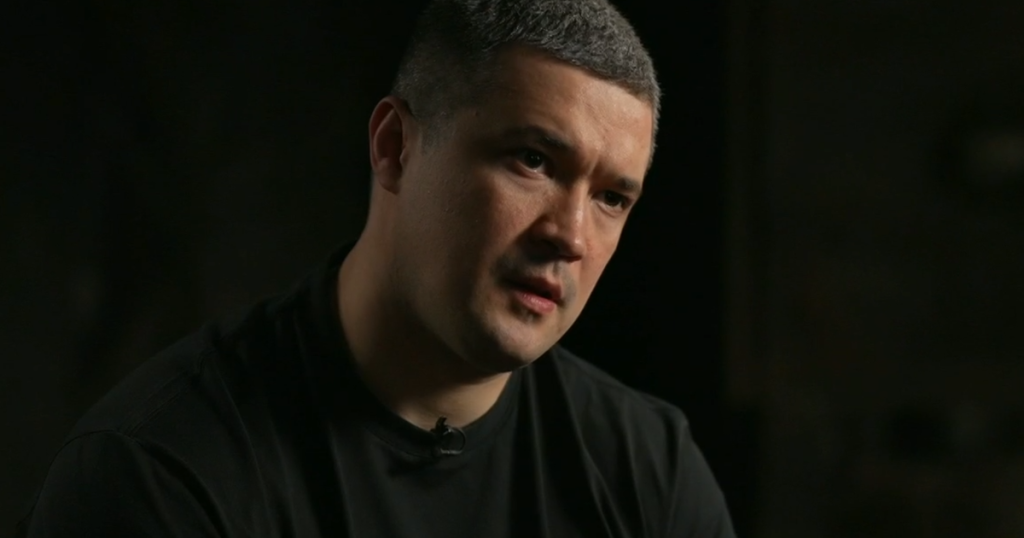
Ukraine’s Oustered Defense Chief Demands Elections While the War Grinds On
Bizeconanalysis.com – The most direct challenge yet to President Volodymyr Zelenskyy’s wartime authority arrived not from Moscow but from Kyiv itself. Mykhailo Fedorov, the former defense minister dismissed from his post last month, publicly urged the country to hold elections on Tuesday — a demand that cuts straight to the heart of how long a single leader may govern under martial law while millions of Ukrainians fight, flee, or grieve.
Zelenskyy declared martial law the moment Russian forces crossed the border in February 2022. Under that legal framework, parliamentary and presidential votes are suspended, effectively freezing the country’s democratic machinery for as long as the conflict endures. Fedorov’s intervention, delivered through a video uploaded to YouTube, reframes that suspension not as a necessary wartime measure but as a vulnerability that Russia can exploit.
“Democracy cannot be held hostage by Russia,” Fedorov stated in the video. He called for a “legal, safe and realistic mechanism that will allow Ukraine to restore a full democratic process even amidst a prolonged war.”
The former minister framed the appeal in explicitly European terms, tying the fight for the ballot box to the fight for the nation’s sovereignty.
“We are fighting precisely because we want to remain a free European state,” he added.
A Removal That Ignited the Streets
Fedorov’s political capital did not evaporate when he lost his cabinet post. Zelenskyy terminated his appointment in mid-July, attributing the decision to an irreconcilable rift between the minister and Oleksandr Syrskyi, the commander-in-chief of Ukraine’s armed forces. The explanation satisfied few. Within days, thousands of Ukrainians took to the streets in cities across the country, staging weeks of demonstrations that demanded the minister’s reinstatement and questioned the logic of sidelining a figure widely regarded as the architect of Ukraine’s most effective military innovation.
Those protests, Fedorov argued in an interview conducted just days before his election call, were themselves evidence of something deeper: that the Ukrainian public still believes in democratic accountability even under fire. He interpreted the crowds not as a rejection of the war effort but as an insistence that the war be fought by a government the people have chosen.
The Drone Architect
Before his dismissal, Fedorov had overseen a fundamental reorientation of Ukraine’s military doctrine. Recognizing that conventional force parity with Russia was unattainable, his ministry pivoted toward unmanned systems — drones, autonomous platforms, and robotic delivery mechanisms — to punch far above the country’s weight. The results were measurable: Ukraine’s long-range strikes deep into Russian territory increased roughly tenfold under his tenure, and the domestic production base for such systems expanded sharply. Analysts credited this shift with altering the calculus of attrition on the battlefield, giving a smaller nation a means to project force across hundreds of kilometers at a fraction of the cost of manned aviation.
That track record is precisely what made his removal so contentious. For many Ukrainians, the question was not whether a minister could be replaced but whether the replacement logic served the war or served internal power management.
The Practical Problem of Voting Under Fire
Fedorov did not pretend the task was simple. In the same video, he acknowledged the logistical and security obstacles that make a wartime vote extraordinarily difficult: how do conscripted soldiers at the front cast ballots? How do residents of towns within artillery range participate safely? How do the millions of Ukrainians displaced abroad — in Poland, Germany, the United States, and dozens of other countries — register and vote without exposing themselves or their families to risk?
“This is complex. … But complexity does not mean impossibility,” he said.
He stopped short of detailing his own candidacy or political plans should a vote actually take place. In earlier remarks, however, he had indicated he would re-enter government only in the role of defense minister, suggesting he views the portfolio as inseparable from his identity and his sense of purpose.
What the Demand Signals
The timing matters. With the war now well past its third year and no visible endgame on the horizon, questions about governance legitimacy have moved from academic footnotes to front-page politics. Zelenskyy’s mandate, originally granted in 2019, has been extended by the legal fiction of martial law. Fedorov’s challenge forces a public reckoning: can a democracy sustain indefinite executive rule without periodic consent, even when the alternative is a vote conducted under air-raid sirens? For Kyiv’s European partners, who tie further integration steps to democratic benchmarks, the question carries diplomatic weight beyond Ukraine’s borders.
Whether the call for elections becomes a formal political movement or remains a symbolic gesture will depend on whether other figures in Ukrainian public life join the chorus. What is already clear is that the post-removal protests demonstrated a constituency willing to speak, and that Fedorov has chosen to speak first.
Related Reading
Frequently Asked Questions
What is Ukraine s fired Defense Minister Mykhailo?
Ukraine s fired Defense Minister Mykhailo is the main topic of this guide. The article explains the context, practical details, and next steps readers should understand.
Why does Ukraine s fired Defense Minister Mykhailo matter?
Ukraine s fired Defense Minister Mykhailo matters because readers are looking for a useful answer, not just a short summary. Good content should match search intent and help them decide what to do next.