
The IndyCar race in D.C. is taking over the capital this weekend. Here’s what to know.
The IndyCar Race in D.C. Weekend Guide
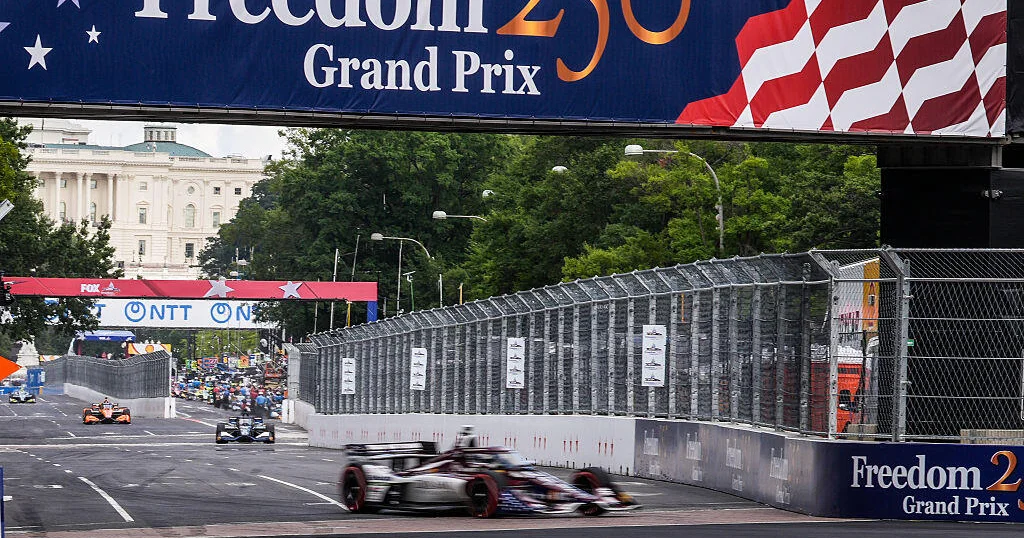
Bizeconanalysis.com – This weekend, the IndyCar race in D.C. transforms the National Mall into a 1.7-mile open-wheel circuit timed to the United States’ 250th anniversary. Twenty-five cars capable of exceeding 180 mph on the long straights will thunder past the Capitol, the Smithsonian museums, and the monuments for what organizers project as roughly 140,000 spectators per day — the largest auto-racing spectacle the capital has hosted in more than two decades. The event, branded the Freedom 250 Grand Prix, marks the series’ first-ever visit to Washington.
Weeks of construction have already reshaped the Mall corridor. Grandstands, concrete safety barriers, and temporary fencing now line stretches of roadway that are fully closed to both vehicles and pedestrians. Popular sightseeing stops along the Mall face restricted or eliminated access, and even ticketed fans must funnel through limited entry gates. Anyone planning a conventional monument-touring weekend should expect significant disruption.
Track Layout and Driver Experience
The circuit comprises six left-hand corners and a single right-hand turn, totaling 1.7 miles. The race distance is 250 miles — 147 laps — a deliberate reference to the sesquicentennial. Because the layout is built atop existing streets and plazas, surface irregularities are unavoidable. Alex Palou, who currently leads the IndyCar points standings, tested the track during Saturday morning practice and summed up the experience bluntly:
“I didn’t know if it was going to be fun or not to drive. It’s a blast, super fun. Very bumpy, huge bumps heading into Turn 2 and Turn 6. Massive bumps that are going to spice things up.”
Teams spent both of Saturday’s practice sessions tuning suspension geometry, tire pressures, and aero settings to manage those imperfections — a calibration process that carries outsized weight on a circuit no driver has previously raced.
How the Route Threads the Capital
The start/finish line sits directly west of the U.S. Capitol on Third Street Northwest. From the lights-out moment, cars accelerate down Pennsylvania Avenue, hook left onto Ninth Street Northwest past the National Archives, then run a brief segment of Constitution Avenue alongside the National Gallery of Art. A right-hand turn onto Seventh Street Northwest carries them straight across the National Mall to Independence Avenue Southwest, threading past the Smithsonian National Air and Space Museum and the National Museum of the American Indian. From there the route swings onto Maryland Avenue Southwest and loops back to the Capitol frontage to complete each lap.
IndyCar published a detailed attendee map identifying gate locations, concession zones, and other venue logistics for ticket holders.
Race Weekend Structure
Saturday delivered two timed practice sessions giving teams data on tire wear, braking zones, and the surface bumps described above. Between those sessions, the International Race of Champions (IROC) exhibition ran on the same circuit, adding an extra layer of spectacle for fans already in the stands.
Qualifying followed Saturday evening in an elimination format: drivers post their fastest single lap across three rounds, with the slowest competitors eliminated after rounds one and two. The final round sets the starting grid for Sunday’s main event.
The green flag drops at 1 p.m. ET on Sunday. President Trump is expected to wave that flag, capping a project that has been in development for more than a year.
IndyCar in Context
IndyCar is the premier open-wheel racing series in North America and is widely regarded as the second-most-prestigious single-seater category worldwide, trailing only Formula 1 in international recognition. Its cars can exceed 230 mph on purpose-built ovals, though street and road courses like this one cap top speeds considerably lower. The series’ marquee event remains the Indianapolis 500, one of three races that together form what motorsport fans call the “triple crown.” This weekend’s D.C. event marks the first time the series has raced in the nation’s capital.
Access, Tickets, and Practical FAQ
General-admission tickets were offered at no cost, but the request window closed in June. Those passes are nontransferable and do not appear on secondary resale platforms. The race’s official website states plainly:
“No other GA tickets are available for the Freedom 250 Grand Prix. You must have a ticket for venue access and race viewing. There are no viewing options outside the ticketed areas.”
Frequently Asked Questions
Can I watch the race without a ticket? No. All venue access requires a valid ticket. General-admission passes were free but the allocation window closed in June, and no additional GA tickets exist.
What time does the race start on Sunday? The green flag drops at 1 p.m. ET. Arrive well before that time to clear entry gates and find your designated viewing area.
Will normal Mall sightseeing be possible during the event? Access to popular monuments and museums along the Mall corridor will be restricted or eliminated. Plan alternate sightseeing days outside the race weekend if possible.
Is the track safe given the bumps drivers mention? The circuit has passed all required safety inspections. Surface irregularities are managed through suspension tuning and tire selection; the bumps are a known factor teams have already accounted for in setup.
Where can I find gate locations and concession info? IndyCar published an official attendee map with gate locations, concession areas, and venue logistics. Check the race’s official website for the latest version.