
11 cruise ship workers arrested in Boston over alleged child sex abuse materials in “Operation Tidal Wave”
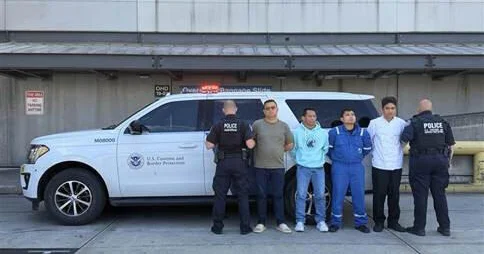
11 Cruise Ship Workers Arrested in Boston
Bizeconanalysis.com – Eleven foreign crew members were taken into custody at Boston’s port complex after federal agents uncovered evidence of child sexual abuse material in their possession. The arrests, executed between August 14 and 16 under a multi-agency initiative called Operation Tidal Wave, mark the latest enforcement action targeting the international workforces of cruise liners calling at U.S. ports.
How the Boston Boarding Unfolded
U.S. Customs and Border Protection agents, joined by Border Patrol officers and Department of Homeland Security investigators, boarded two vessels simultaneously: the Volendam, operated by Holland America Line, and the Norwegian Breakaway, a ship in the Norwegian Cruise Line fleet. Teams searched targeted crew quarters, seized personal electronics, and reviewed onboard communication systems before referring each case to the U.S. Attorney’s Office for a legal determination.
The scope of the inspection was described as comprehensive. Investigators examined devices, interviewed witnesses, and coordinated with shipping agents to confirm the nationality and immigration status of every individual flagged during the sweep.
Nationalities, Legal Pathway, and What Comes Next
The detained workers come from three countries: nine Filipino nationals, one Indonesian, and one Nicaraguan. Following the searches and prosecutorial review, all were processed for removal from the United States under Section 212(a)(2)(A)(i)(I) of the Immigration and Nationality Act — the moral-turpitude deportation provision. The agency confirmed that the individuals, assisted by their shipping agent, are scheduled to depart the country. No separate criminal prosecution details were disclosed in the initial announcement.
This immigration-removal pathway allows authorities to act swiftly once evidence is gathered, but it also raises due-process questions for workers who may have limited English proficiency and restricted access to counsel while confined to a foreign port.
A Recurring Pattern Across Multiple Ports
The Boston action is part of a broader campaign. Earlier in the same year, Operation Tidal Wave was carried out in San Diego and in Puerto Rico, where a combined total of 41 crew members were arrested across nine different ships. The recurrence of the operation at multiple ports signals that federal authorities view the cruise industry’s transient international workforce as a persistent vector for child exploitation material and are prepared to deploy multi-agency teams at scale.
Cruise vessels function as floating enclaves: they carry hundreds or thousands of crew members from dozens of nationalities, operate under flag-state regulations that vary widely, and rotate through multiple jurisdictions within a single itinerary. For investigators, a ship in port offers a concentrated, bounded environment in which to search devices and coordinate with shipping agents — conditions far harder to replicate on open water or in foreign ports.
Cruise Line Responses
Both operators confirmed cooperation with law enforcement. Holland America Line stated it had “immediately terminated the individuals involved” and added:
“These allegations are deeply disturbing, and we have zero tolerance for criminal behavior,” a Holland America spokesperson said.
The Norwegian line’s response was more measured but equally firm:
“We are aware of the situation and take this matter very seriously. The safety, security, and well-being of our guests are of paramount importance, and we remain committed to maintaining a safe and secure environment across our fleet.”
FAQ
What is Operation Tidal Wave?
Operation Tidal Wave is a multi-agency federal initiative in which CBP, Border Patrol, and DHS teams board cruise ships in U.S. ports to search for evidence of child sexual abuse material among international crew members. It has been conducted in Boston, San Diego, and Puerto Rico.
What happened to the arrested workers?
All eleven were processed for removal from the United States under the moral-turpitude clause of the Immigration and Nationality Act. They were assisted by their shipping agent and scheduled to depart the country. No separate criminal trial details were released.
Why are cruise ships targeted?
Cruise ships carry large, multinational crews that rotate through multiple jurisdictions. When docked in a U.S. port, the vessel provides a bounded environment where agents can search devices, interview witnesses, and coordinate with immigration authorities — conditions difficult to replicate at sea or in foreign ports.
What is the moral-turpitude deportation provision?
Section 212(a)(2)(A)(i)(I) of the INA authorizes immigration authorities to remove non-citizens convicted of, or found to have committed, crimes involving moral turpitude. It allows swift removal without requiring a full criminal trial, though it has drawn scrutiny over due-process protections for workers with limited language access.