
Supreme Court rules Rastafarian ex-inmate can’t sue prison officials for shaving dreadlocks
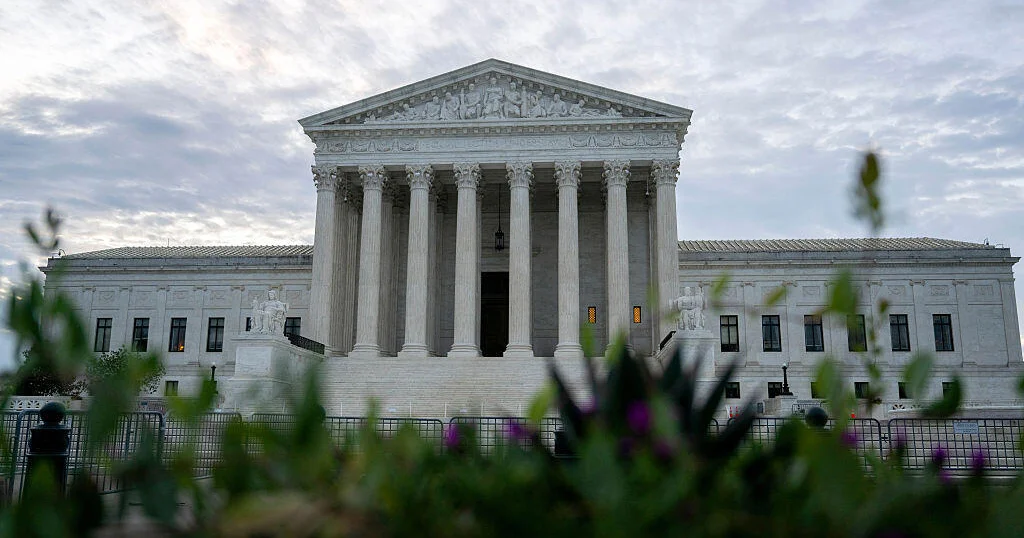
Supreme Court Rules on Rastafarian Ex-Inmate’s Dreadlock Shaving Case
Supreme Court rules Rastafarian ex inmate – The U.S. Supreme Court recently ruled that a former Louisiana inmate, Damon Landor, could not pursue legal action against prison officials for cutting his dreadlocks, which he claimed were a religious symbol. The 6-3 decision upheld lower courts’ rulings under the Religious Land Use and Institutionalized Persons Act (RLUIPA), denying Landor’s claim that individual officers were personally liable for violating his faith-based rights. The ruling has sparked debate over whether it limits the ability of incarcerated individuals to seek justice for religious restrictions.
Landor’s Religious Practice and Legal Claim
Damon Landor, a devout Rastafarian, had maintained his Nazarite Vow—a spiritual commitment to keep his hair uncut—for nearly two decades before being incarcerated. During his 2020 five-month sentence, he was initially allowed to grow his hair freely for the first four months. However, after being transferred to the Raymond Laborde Correctional Center, prison staff shaved his head, prompting a legal challenge. Landor’s attorneys argued that this action violated his constitutional right to observe religious practices, citing a prior 2017 Fifth Circuit ruling that supported similar claims.
“I informed the intake officer of my Rastafarian faith and provided evidence of my religious practices,” Landor’s legal team explained. “We believed Louisiana’s policy on hair-cutting for inmates was inconsistent with RLUIPA, which aims to protect religious freedoms in institutional settings.”
Supreme Court’s Interpretation of RLUIPA
Justice Neil Gorsuch, writing for the majority, emphasized that RLUIPA does not grant prisoners the right to sue individual officers directly. Instead, the law allows for indirect regulation through the Spending Clause, requiring officials to consent to litigation. This approach, Gorsuch argued, ensures consistency with federal standards while preventing excessive burdens on state authorities. The dissenting justices, including Justice Ketanji Brown Jackson, disagreed, warning that the ruling creates a legal gap for prisoners whose religious rights are overlooked.
“The majority has turned a statutory right into a contractual obligation,” Jackson wrote. “By linking RLUIPA to consent, they’ve weakened the ability of inmates to assert their faith-based claims in court.”
State Policy and Legal Precedent
Louisiana officials defended the decision, stating that their policies already balance religious freedoms with institutional needs. Attorney General Liz Murrill highlighted that ten federal appellate courts have consistently interpreted RLUIPA to exclude personal liability claims against prison staff. The Supreme Court’s ruling, she argued, reinforces this established legal framework and ensures uniformity in how religious accommodations are handled nationwide.
Impact on Religious Freedom in Prisons
Legal experts have raised concerns that the decision may embolden prison authorities to overlook religious practices. With the burden of proof shifted to state officials, critics argue that this could lead to more instances of hair-cutting or other restrictions on faith without accountability. Supporters, however, see the ruling as a necessary clarification, preventing courts from overstepping into areas where state policy should prevail. The case highlights the ongoing tension between individual rights and institutional authority within the U.S. prison system.
“This ruling does not eliminate religious rights,” said one analyst. “It simply ensures that prisoners must follow established procedures to claim those rights, rather than holding officials personally liable for every decision.”
Future Implications for Inmate Rights
While the Supreme Court’s decision may stabilize current practices in Louisiana, it leaves open questions about how other states handle similar claims. Landor’s case underscores the importance of clear policies and training for staff on religious accommodations. Advocacy groups are now considering whether to push for legislative changes or reinterpret RLUIPA to expand protections for inmates. The ruling also sets a precedent that could influence future cases involving faith-based treatment in correctional facilities.