
Abelardo de la Espriella, right-wing millionaire backed by Trump, declared winner of Colombia’s presidential runoff election
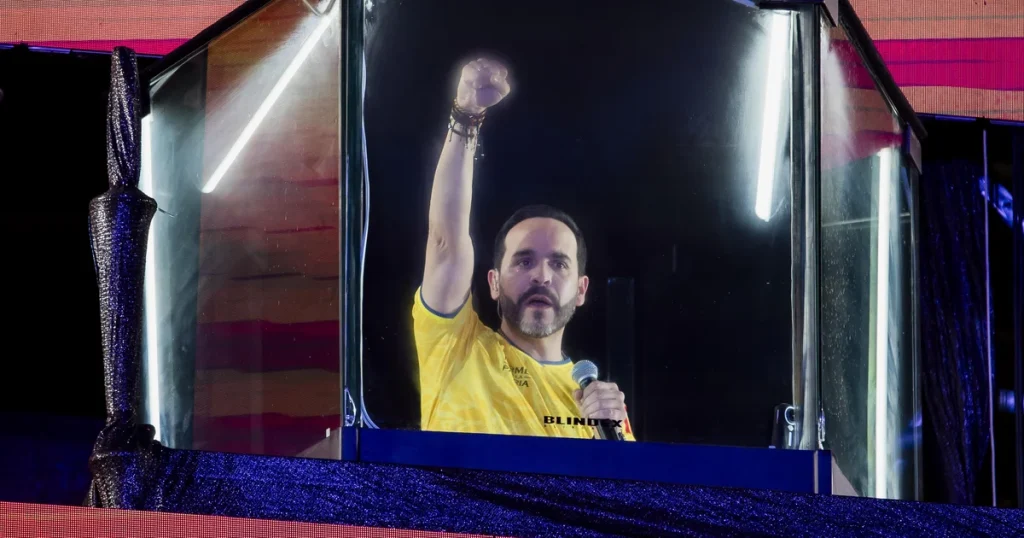
Abelardo de la Espriella Right-Wing Candidate Wins Colombia’s Presidential Runoff
Abelardo de la Espriella right wing – Abelardo de la Espriella, the right-wing millionaire supported by former U.S. President Donald Trump, has been declared the winner of Colombia’s presidential runoff election. The 47-year-old businessman and lawyer, with no prior political experience, narrowly defeated progressive lawmaker Iván Cepeda by just 1 percentage point—equivalent to over 251,000 votes. His victory signals a pivotal shift in Colombian politics, as he prepares to assume the presidency on August 7. De la Espriella’s win reflects growing public support for leaders who challenge the status quo, particularly in addressing crime and security concerns.
Abelardo de la Espriella: Right-Wing Millionaire’s Rise in Colombia’s Election
Abelardo de la Espriella’s political journey began with his wealth in the fashion, winemaking, and distilling industries. His campaign leveraged his business reputation, positioning him as a pragmatic outsider capable of reversing Colombia’s current political direction. Trump’s endorsement played a key role in amplifying his appeal, especially among voters disillusioned with leftist governance. De la Espriella’s strategy centered on hardline measures against crime, drawing comparisons to El Salvador’s President Nayib Bukele, whose tough policies have been both praised and criticized.
Despite initial skepticism about his lack of political experience, de la Espriella’s campaign succeeded through a combination of bold rhetoric and strategic alliances. His use of pyrotechnics and confrontational tactics with the media stirred controversy but also energized his supporters. The candidate’s vision includes the construction of 10 mega-prisons modeled after El Salvador’s CECOT system, a plan that aligns with his right-wing agenda of stricter law enforcement. Critics argue these facilities could lead to overcrowding and potential human rights issues, but de la Espriella remains steadfast in his commitment to “restoring order.”
Election Results and Policy Shifts Under De la Espriella’s Leadership
The outcome of the runoff election marks a decisive break from Colombia’s leftist government, which has faced accusations of failing to control the rise of armed groups. Iván Cepeda, who lost to de la Espriella, had advocated for continued peace negotiations with guerrilla forces and drug cartels. However, recent reports indicate that these efforts have not effectively curbed the spread of violence, particularly in low-income communities near coca plantations. Over 50 massacres were documented in the country this year, highlighting the urgency for a new leadership approach.
De la Espriella’s victory has already sparked discussions about a return to tougher security policies. His campaign promises to resume glyphosate-based aerial fumigation of coca fields and target drug trafficking networks through aggressive measures. This shift has drawn comparisons to the Trump administration’s emphasis on law and order, which de la Espriella’s supporters believe will bring stability to Colombia’s security landscape. The candidate’s coalition, however, has not yet fully solidified its legislative and economic plans, leaving room for further analysis.
Abelardo de la Espriella’s Plans: Right-Wing Approach to Colombia’s Security
De la Espriella has outlined a clear agenda focused on strengthening national security and reducing crime. His plan includes the construction of 10 maximum-security prisons, designed to house inmates in harsh conditions under the guise of “effective punishment.” This strategy echoes the policies of his right-wing allies, including El Salvador’s President Bukele, and aims to deter criminal behavior through strict measures. Supporters argue that such policies will tackle the root causes of violence, while opponents warn of potential abuses and the erosion of due process.
Abelardo de la Espriella’s victory may also signal a new era in U.S.-Colombia relations. Trump’s endorsement and his critique of Colombia’s counternarcotics efforts have aligned de la Espriella with American foreign policy priorities. With his government poised to take office, the candidate is expected to advocate for stronger collaboration with the U.S. in combating drug trafficking. This could lead to increased military support or financial aid, further solidifying the right-wing coalition’s influence on the country’s future direction.
Historical Context of U.S.-Colombia Relations
Colombia has long been a U.S. ally in the fight against narcotics, but tensions have grown under President Gustavo Petro. In 2025, Trump criticized Colombia for its “failure to curb drug production” and threatened military strikes, prompting a rift with the Petro administration. The State Department revoked Petro’s visa, signaling a sharp contrast in foreign policy approaches. De la Espriella’s right-wing stance positions him as a potential bridge between Colombia and the U.S., with his campaign promising to revive the Trump-backed “Shield of the Americas” coalition.
This coalition, which includes other right-leaning Latin American leaders, aims to strengthen regional security and counter leftist influence. De la Espriella’s alignment with this group suggests a broader strategy to reshape Colombia’s political and economic landscape. His victory may lead to a renewed focus on U.S. partnerships, potentially altering the country’s approach to international trade and security cooperation. Analysts will be watching closely to see how these policies translate into real-world impact.
Public Reaction and Political Future
Abelardo de la Espriella’s win has been met with mixed reactions. While supporters celebrate his leadership as a fresh start, critics express concerns about his right-wing policies and their potential consequences. The election results underscore a polarized political climate, where voters are divided between progressive reforms and traditional security-focused strategies. De la Espriella’s ability to implement his agenda will depend on his capacity to unify diverse factions within his coalition.
As Colombia prepares for a new chapter under de la Espriella’s leadership, the focus will shift to his ability to address the country’s pressing challenges. His campaign’s emphasis on hardline measures and American support has positioned him as a strong contender for national security. However, the road ahead will require balancing these policies with economic stability and social reforms. The next president’s success will ultimately hinge on his vision for a united Colombia, driven by both right-wing pragmatism and the need for inclusive governance.