
As measles outbreaks grow in the U.S., maps and charts show a record number of cases
As Measles Outbreaks Grow, U.S. Hits Record Cases
Bizeconanalysis.com – The United States is facing an unprecedented wave of infections as measles outbreaks grow across multiple states. Health officials warn that the nation’s hard-won elimination status—achieved in 2000 and maintained for over two decades—now faces genuine threat as transmission clusters multiply. By mid-July 2026, the cumulative case count had already eclipsed every single day of the previous year combined.
A Record-Breaking Year Already Underway
The 2025 calendar year represented a historic high, recording more than 2,200 confirmed infections. That figure dwarfed the 1,274 cases documented in 2019, which had been driven primarily by outbreaks in New York, California, and Washington state. Most years between those peaks saw considerably fewer infections.
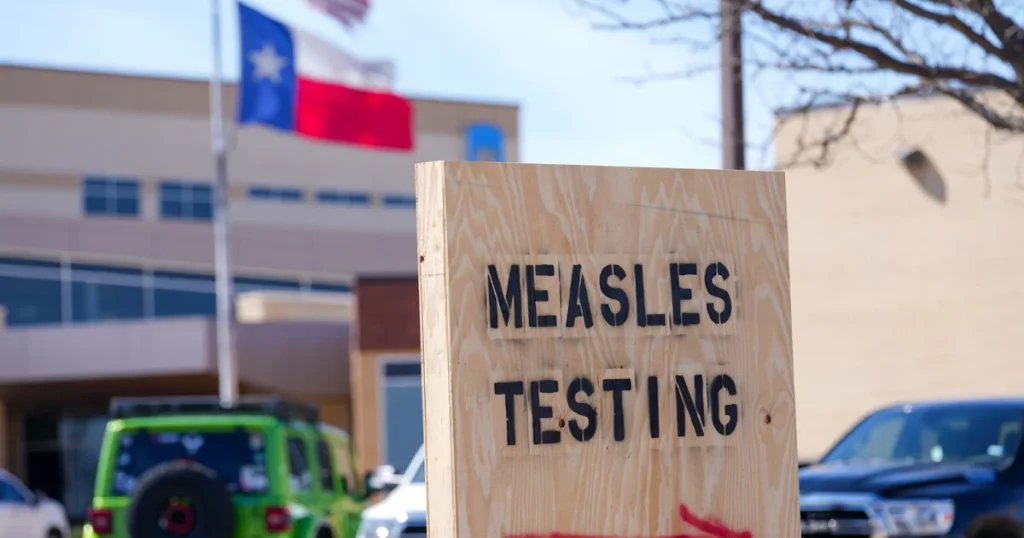
The most recent full year, 2024-2025, tallied 2,289 confirmed cases nationwide. A significant portion of those—over 750—traced directly to a devastating outbreak in West Texas that claimed the lives of two young children. This tragic outcome underscored the potential severity of the disease, which is capable of triggering serious lung and brain infections that may result in cognitive impairment, hearing loss, or fatality.
Vaccination Coverage Declines Below Critical Threshold
Public health authorities have identified declining immunization rates as the primary driver behind the resurgence of this highly contagious viral illness. The disease spreads through the air when an infected person coughs or sneezes, making it one of the most transmissible infectious diseases known to medicine.
When more than 95% of people in a community are vaccinated, most people are protected through community immunity (herd immunity), the CDC states.
During the 2024-2025 school year, approximately 92.5% of American kindergartners received measles vaccinations. While this figure may appear substantial, it represents a meaningful drop from the 95.2% coverage rate recorded during the 2019-2020 academic year. That 95% benchmark serves as the critical threshold for maintaining herd immunity and preventing widespread transmission.
Only ten states managed to maintain vaccination rates at or above this essential 95% level throughout the previous year. Communities falling below this threshold have proven particularly vulnerable to outbreak conditions, with the vast majority of infections occurring among unvaccinated individuals.
Expert Guidance on Vaccine Safety and Importance
Medical professionals continue to emphasize the importance of childhood immunizations in protecting both individual children and broader populations. Dr. Jay Bhattacharya, director of the National Institutes of Health, addressed the issue directly during a national television appearance.
I think that parents, for most kids, especially for the measles vaccines, the DTP, all the standard childhood vaccines, it’s very important that parents vaccinate their kids, Dr. Bhattacharya said on Face the Nation with Margaret Brennan.
Scientific research has consistently demonstrated that vaccines undergo rigorous safety testing before public distribution. Extensive studies have found no evidence suggesting increased autism rates among vaccinated populations compared to those who remain unvaccinated. The medical consensus remains strong that the benefits of vaccination far outweigh any potential risks.
Looking Ahead: Implications for Public Health
The current surge carries significant implications for American public health infrastructure. Health departments across the country are working to identify and contain transmission clusters before they expand further. Contact tracing, isolation protocols, and targeted vaccination campaigns represent the primary tools available to slow the spread.
The situation also highlights broader challenges facing immunization efforts nationwide. Vaccine hesitancy, misinformation campaigns, and access barriers continue to contribute to coverage gaps in certain communities. Without sustained intervention, experts warn that the United States could face not only continued outbreaks but also potential resurgences of other vaccine-preventable diseases.
Frequently Asked Questions
How is measles transmitted? Measles spreads through the air when an infected person coughs or sneezes. The virus can remain active in the air or on surfaces for up to two hours, making it highly contagious in enclosed spaces.
What is the recommended vaccination rate? Public health authorities recommend that more than 95% of people in a community be vaccinated to maintain herd immunity and prevent widespread transmission.
Who is most at risk? The vast majority of infections occur among unvaccinated individuals. Communities with vaccination rates below the 95% threshold have proven particularly vulnerable to outbreak conditions.
Are there serious complications? Yes. Measles is capable of triggering serious lung and brain infections that may result in cognitive impairment, hearing loss, or fatality. The recent West Texas outbreak claimed the lives of two young children.
How can communities protect themselves? Health departments are using contact tracing, isolation protocols, and targeted vaccination campaigns to slow the spread. Maintaining vaccination rates above 95% remains the most effective prevention strategy.