
German man, 81, convicted 32 years after rape and murder of U.S. tourist Amy Lopez
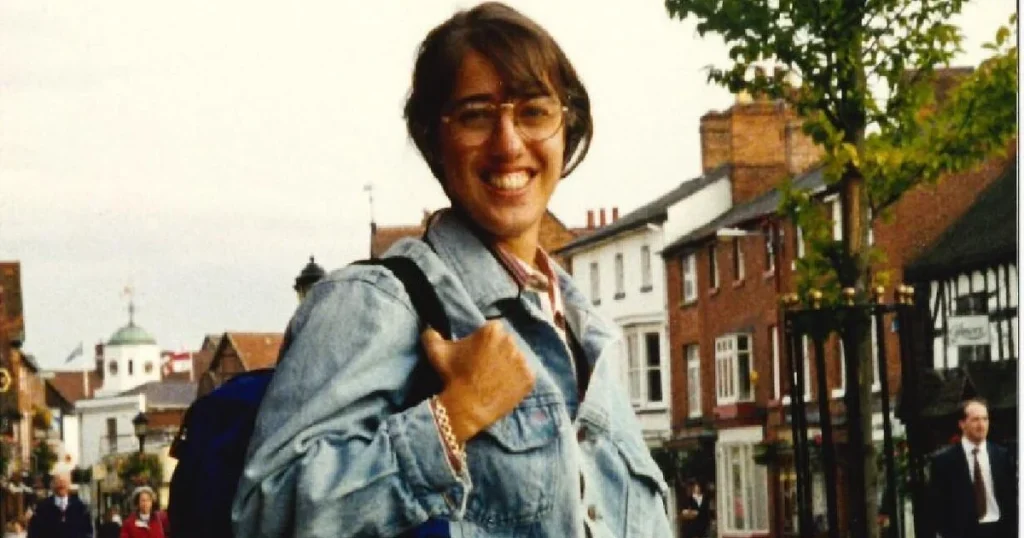
Life Sentence Handed Down in 1994 Rhine-Side Killing After Three-Decade DNA Breakthrough
Bizeconanalysis.com – A Koblenz regional court delivered a life imprisonment verdict this past Friday to an 81-year-old German man found responsible for the 1994 rape and killing of a young American woman touring the Rhine valley. The ruling closes one of the region’s longest-running unsolved homicide files and underscores how modern forensic genetics can reopen cases that investigators once believed were permanently lost.
The victim, Amy Lopez, was 24 years old and visiting from Texas when her body was located near the Ehrenbreitstein Fortress, a medieval stronghold perched above the Rhine in the western German city of Koblenz. Children stumbled upon her remains, which bore multiple stab wounds, devastating cranial trauma, and marks consistent with manual strangulation. The Koblenz Public Prosecutor’s Office later summarized the forensic findings in a written statement:
“The victim was strangled, struck on the head with a stone, and stabbed multiple times, ultimately resulting in his death.”
Three Decades of Silence, Then a Match
For roughly thirty years, no suspect was ever formally identified. Investigators preserved Lopez’s clothing and other physical evidence, but without a viable lead the file sat dormant. That changed when prosecutors and police undertook a systematic re-examination of the original garments alongside approximately 1,600 reference samples drawn from other cases and records. A male DNA trace surfaced on the clothing, and in 2024—marking the thirtieth anniversary of the discovery—authorities posted a reward of 2,500 euros for information that might lead to an arrest.
The genetic profile ultimately matched a man identified only as Hans S., who was living in a retirement home at the time of his arrest this past February. His DNA had originally been entered into a national database following a 1999 conviction for attempting to rape a 16-year-old girl. That record was later purged from the system, but investigators secured a fresh saliva sample from the suspect. Laboratory comparison confirmed the match to the trace preserved on Lopez’s clothing, prosecutors explained at the time of the arrest.
The Court’s Findings
At trial before Koblenz’s regional court, the jury of professional judges concluded that Hans S. had lured Lopez onto a secluded footpath beneath the fortress, using the pretext of guiding her to a nearby youth hostel. Once isolated, he raped her and then killed her. The court characterized the circumstances as carrying a “particular gravity of guilt,” a legal designation that raises the threshold for any future petition for early release under German sentencing law.
In its written reasoning, the tribunal observed that the defendant had been
“looking for a victim to rape”
and that Lopez, an unsuspecting traveler passing through one of Germany’s most scenic river corridors, was
“tragically in the wrong place at the wrong time.”
Lopez’s family participated as co-plaintiffs throughout the proceedings, giving them a formal voice in the courtroom and a direct stake in the outcome.
How a Cold Case Stays Alive
The Lopez file illustrates a broader shift in German criminal investigation. Advances in touch-DNA extraction, statistical matching algorithms, and the retention of physical evidence for decades have turned once-inert archives into active investigative resources. Where a 1994 homicide might previously have been written off as permanently unsolvable, prosecutors now routinely revisit old garments, bedding, and scene materials with techniques unavailable at the time of the original inquiry. The re-examination of roughly 1,600 samples in this case reflects the scale of that renewed effort.
Media attention also played a role. After the case was profiled on Aktenzeichen XY, a long-running German true-crime television program, the prosecutor’s office noted a fresh wave of public tips that helped narrow the investigative perimeter. The combination of renewed forensic work, a financial incentive for witnesses, and sustained public visibility created the conditions under which a match could finally be confirmed.
What the Verdict Means
For the Lopez family, the conviction offers a formal judicial acknowledgment of what happened to their daughter and why. For the city of Koblenz and the wider Rhine tourist corridor, it closes a wound that had lingered for three decades and reassures visitors that old cases are not simply abandoned. For German prosecutors, it validates the continued investment in cold-case DNA re-testing and signals that no homicide file is truly closed while physical evidence remains in storage.
Hans S., now 81, will serve his sentence in a German correctional facility. The “particular gravity of guilt” finding means that any future application for conditional release will face a heightened evidentiary burden, making early freedom unlikely absent extraordinary circumstances.
Related Reading
Frequently Asked Questions
What is German man 81 convicted 32 years?
German man 81 convicted 32 years is the main topic of this guide. The article explains the context, practical details, and next steps readers should understand.
Why does German man 81 convicted 32 years matter?
German man 81 convicted 32 years matters because readers are looking for a useful answer, not just a short summary. Good content should match search intent and help them decide what to do next.