
What happens to Lindsay Clancy after verdict in murder trial? Legal experts explain potential outcomes.
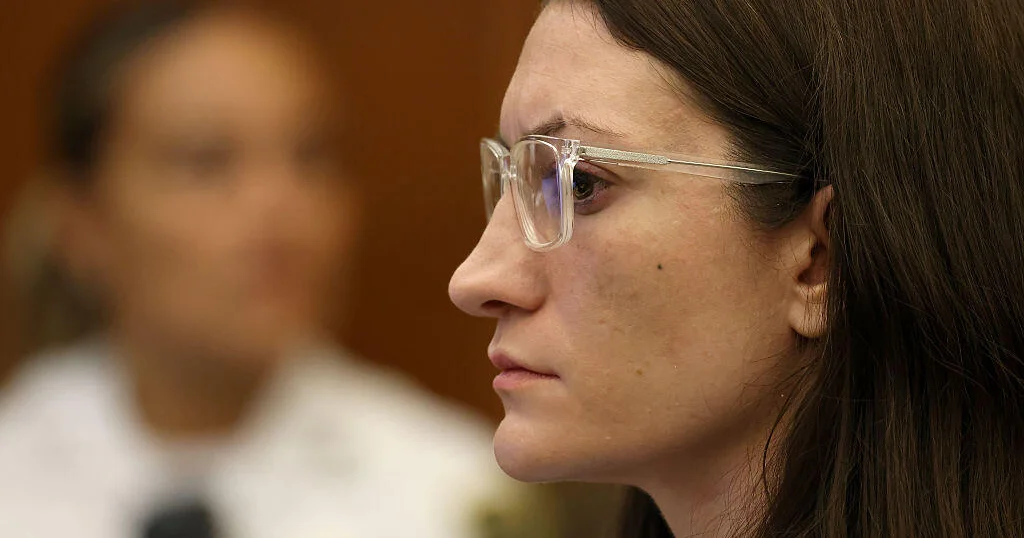
What Happens to Lindsay Clancy After Verdict
Bizeconanalysis.com – What happens to Lindsay Clancy once the jury returns its decision is the question dominating Massachusetts legal commentary. The 36-year-old mother, accused of strangling her three young children — 5-year-old Cora, 3-year-old Dawson, and 8-month-old Callan — in January 2023, has pleaded not guilty on all three counts of first-degree murder. Jurors are now deliberating, and whichever path they choose will determine whether she faces a mandatory life sentence, indefinite psychiatric commitment, or acquittal.
The Insanity Defense Versus Premeditation
Clancy’s attorneys built their case around postpartum psychosis, arguing that at the moment of the killings she lacked the mental capacity to form criminal intent or to distinguish right from wrong. The prosecution countered with a narrative of deliberate planning, telling the jury that the strangulations bore the hallmarks of premeditation and that the defendant understood exactly what she was doing. The two accounts are mutually exclusive, and the panel must decide which it finds more credible.
Sentencing and Commitment Outcomes
Massachusetts law leaves no discretion for a first-degree murder conviction: the sentence is life imprisonment without parole. There is no minimum term to negotiate, no early-release mechanism, and no built-in commutation pathway. A lesser conviction such as second-degree murder or voluntary manslaughter would still carry a substantial prison term but would open the door to parole eligibility after a set number of years, according to legal analyst Jennifer Roman.
That distinction carries particular weight here. As of trial, the defendant is paralyzed from the waist down following an alleged suicide attempt and requires around-the-clock medical and supervisory attention. Roman noted that housing a wheelchair-dependent inmate on continuous suicide watch adds a layer of logistical complexity most correctional systems encounter only rarely.
“Certainly given her physical limitations and the fact that she’s on 24/7 suicide watch currently is going to influence how the 10 prison system deals with her and manages her, if that’s ultimately what happens,” Roman said.
If the jurors accept the insanity defense, the outcome is different but not freedom. Under Massachusetts procedure, a verdict of not guilty by reason of mental disease or defect triggers an automatic commitment order to a state psychiatric hospital. Legal analyst Caroline Polisi explained that the defendant would remain at Tewksbury Hospital — or be transferred to a comparable institution — subject to periodic medical evaluation, with no statutory time limit on how long that commitment can last.
“It could be in essence a life sentence at the state hospital if the faculty there ultimately decides she’s not safe to return to the community,” Roman noted.
Polisi drew a parallel to the 2006 Andrea Yates case in Texas, in which a mother was found not guilty by reason of insanity after drowning her five children. Yates remains confined in a psychiatric facility more than a decade and a half later, illustrating how open-ended the commitment pathway can be.
Frequently Asked Questions
Can Lindsay Clancy receive parole if convicted of first-degree murder? No. Massachusetts imposes a mandatory life-without-parole sentence for first-degree murder. Only gubernatorial clemency or a legislative amendment could alter that term.
Where is she being held while awaiting the verdict? Clancy is currently at Tewksbury Hospital, a state-run psychiatric facility in Massachusetts, where she has been on continuous suicide watch.
What if the jury returns an insanity verdict? She would be committed indefinitely to a state psychiatric hospital. Release requires a judicial determination that she no longer poses a danger to herself or others, and there is no fixed timeline for that review.
Does a lesser conviction change the outcome significantly? Yes. Second-degree murder or voluntary manslaughter carries a substantial term but permits parole eligibility after a set number of years, which matters given her medical needs.