
Sen. Bernie Sanders says he encouraged Graham Platner to step aside
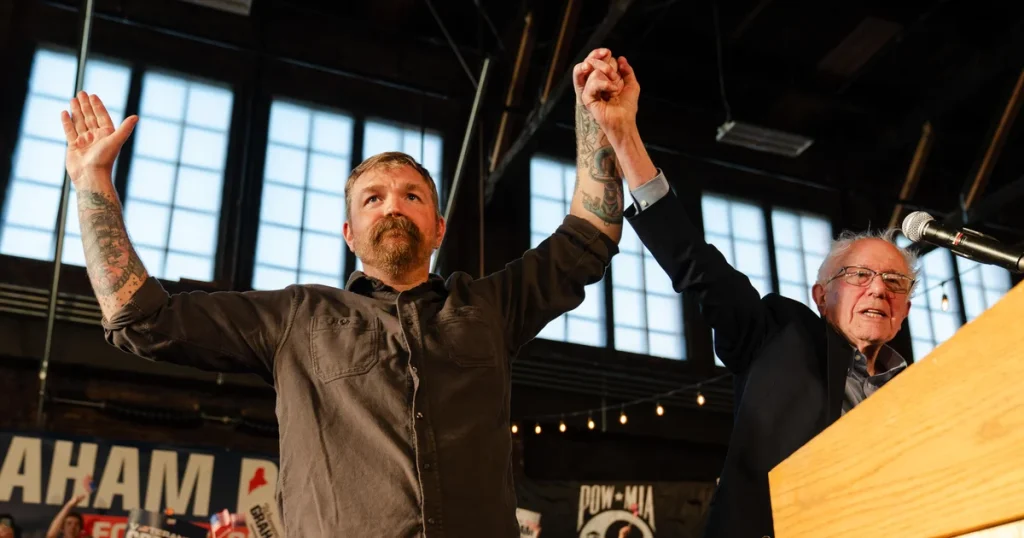
Sen. Bernie Sanders says he encouraged Graham Platner to step aside
Sen Bernie Sanders says he encouraged – Following a dramatic report that sparked significant debate, Senator Bernie Sanders of Vermont has publicly stated that he advised Graham Platner, the Maine Democratic Senate nominee, to withdraw from the race. The decision came after a bombshell accusation surfaced on Monday, alleging that Platner committed sexual assault against a Maine woman. Despite the allegation, Platner has denied the claims, maintaining his stance as the race moves toward its final stretch.
Allegations Surface Amid Political Tumult
The controversy began when Politico released a report detailing an incident involving Platner and Jenny Racicot, a woman who claimed he entered her home uninvited in late 2021 while under the influence of alcohol. According to Racicot, the encounter took place after she and Platner connected on a dating app in 2019 and engaged in consensual relationships prior to the alleged assault. The report, which emerged just days before the July 15 deadline for candidates to step down, has intensified scrutiny of Platner’s campaign.
“A Maine woman, Jenny Racicot, said Platner entered her home without permission in late 2021 when he was drunk and forced himself on her,” Politico reported. Racicot’s account has been central to the growing pressure on Platner to exit the race.
While Platner has not officially resigned, he expressed openness to reconsidering his candidacy, stating that he is evaluating “the best path forward” for Maine. His denial of the allegations, however, has not fully quelled the controversy, as the narrative continues to shape the political landscape.
Sanders’ Role in the Decision
Senator Sanders, a prominent figure in the Democratic Party, has taken a proactive role in the situation. In a statement released Tuesday, he emphasized his conversation with Platner, suggesting that his recommendation for stepping aside was rooted in the gravity of the accusations. “I have spoken with Graham Platner about the best path forward for Maine,” Sanders said, underscoring the significance of his involvement in the race.
“Considering the serious allegations, I advised him to step down,” Sanders explained. His support for Platner, though previously unwavering, now appears to be shifting in response to the mounting pressure.
Sanders’ intervention has been viewed as a pivotal moment, especially since he has long been a vocal advocate for progressive causes and a strong candidate in Maine. His endorsement of Platner had previously bolstered the nominee’s campaign, but the sexual assault allegations have created a rift among Democratic leaders. This marks a departure from the earlier unity seen in the race, as some key supporters now question Platner’s viability.
Shift in Democratic Support
The allegations have triggered a chain reaction among Democrats, with several prominent figures distancing themselves from Platner. After the report was released, several candidates who had initially backed Platner withdrew their support, signaling a collective reassessment of his candidacy. This shift has been particularly notable given the tight race against Republican Senator Susan Collins, who has held the seat since 2002.
Additionally, the Senate Democrats’ campaign arm has taken a firm stance, indicating it will not fund Platner’s campaign if he remains on the ballot. This decision has forced Platner to rely on other resources, significantly weakening his ability to compete in the November election. The Senate Majority PAC, which has traditionally provided critical financial backing, has also redirected its focus away from the Maine race, further limiting Platner’s campaign’s reach.
Despite these challenges, Platner has managed to secure his place as the Democratic nominee, having won the primary last month. However, the legal framework in Maine allows for candidates to be replaced if they withdraw by 5 p.m. on the second Monday in July. If Platner steps down before that deadline, the state’s Democratic party has two weeks to appoint a new nominee, potentially reshaping the race dynamics.
Implications for the Election
The fallout from the allegations has raised questions about the impact on Platner’s campaign, particularly as the November election approaches. With key endorsements and financial support dwindling, the nominee faces an uphill battle to regain momentum. Sanders’ recommendation adds weight to the pressure, as his influence within the party is considerable.
Meanwhile, the incident has sparked a broader conversation about accountability in political races. Critics argue that the sexual assault allegations highlight the importance of transparency, while supporters of Platner defend his character, citing his dedication to public service and his record in the state. The debate underscores the challenges of balancing personal conduct with political viability in high-stakes elections.
As the situation unfolds, the focus remains on Platner’s next move. His decision to step aside or continue the campaign will likely depend on how the allegations are perceived by voters and the broader media landscape. For now, the pressure is mounting, and the fate of the Maine Senate race hangs in the balance.
Sanders’ public endorsement of Platner’s withdrawal could also signal a strategic shift in the Democratic Party’s approach to the race. By aligning with the recommendation, he may be aiming to bolster his own chances in the November election or to set a precedent for how sexual misconduct allegations are handled in political contests. The outcome of this development will have lasting implications for both Platner’s campaign and the Democratic Party’s strategy in Maine.
Ultimately, the episode reflects the complex interplay of personal accountability and political strategy. As candidates navigate allegations, the decisions they make can ripple through the electoral process, affecting not only their own prospects but also the broader direction of their parties. For Platner, the challenge is to reconcile his campaign with the new scrutiny, while for Sanders, the opportunity to guide his supporters toward a unified front presents itself as the race reaches its critical juncture.