
U.S. military suspends search for sailor missing after helicopter made emergency landing in Arabian Sea
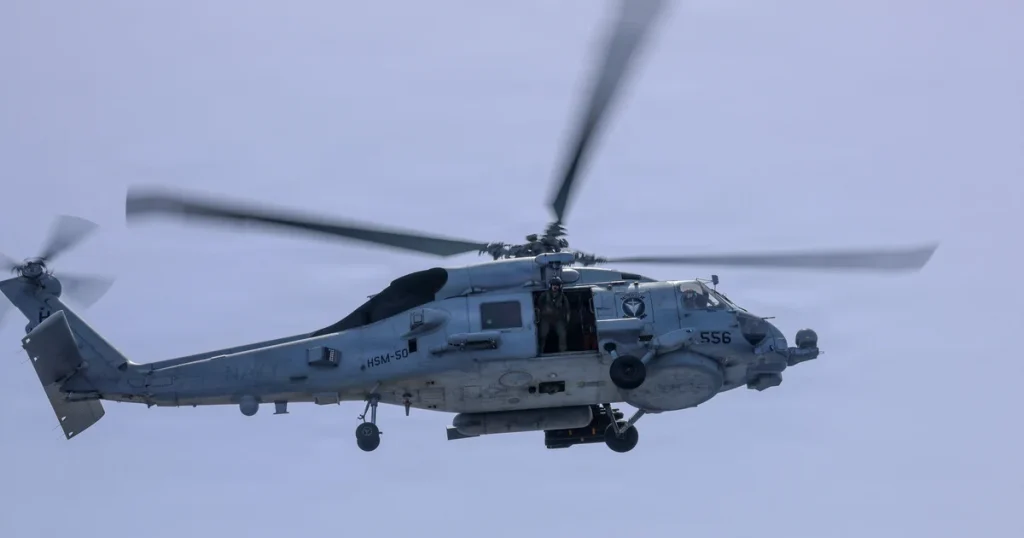
U.S. Military Suspends Search for Missing Sailor After Helicopter Emergency in Arabian Sea
U S military suspends search for sailor – The U.S. military has suspended its search for a sailor who went missing following a helicopter emergency landing in the Arabian Sea. The decision was announced Sunday afternoon, marking the end of a 102-hour operation that involved multiple U.S. Navy and Air Force assets. Officials from the U.S. Naval Forces Central Command confirmed the search would cease without further progress, though the sailor’s fate remains under investigation. This update follows a statement released Sunday morning, which highlighted the comprehensive efforts undertaken by the military in the Central Command area of responsibility.
“The search efforts concluded after a thorough operation by U.S. Navy and Air Force teams across the Arabian Sea,” stated the command in its official release. “With no new leads or signs of the sailor’s location, the decision to halt the search was made in consultation with the next-of-kin and operational commanders.”
The incident occurred on July 1, when a MH-60S Sea Hawk helicopter made an emergency water landing in the Arabian Sea. Three of the four crew members were rescued and returned to the USS George H.W. Bush, a U.S. aircraft carrier stationed in the Middle East. The fourth crew member, however, was reported missing, prompting a multi-day search operation that spanned over 14,000 square miles. Despite deploying advanced technology and a coordinated network of assets, no definitive evidence of the sailor’s whereabouts was found.
The suspension of the search comes as the U.S. military continues its operations in the region, including the ongoing campaign against Iran known as Operation Epic Fury. Since late April, the USS George H.W. Bush has been a key asset in this effort, with 42 aircraft lost in the operation as of mid-May. The current event, while separate, underscores the challenges faced by forces in maintaining operational readiness and safety in a high-risk environment. The military emphasized that the decision to stop the search was based on the lack of new developments and the need to prioritize other missions.
Search Operation and Strategic Implications
The search operation for the missing sailor involved cutting-edge technology, including sonar systems, aerial reconnaissance, and underwater drones. These tools were deployed to maximize coverage of the vast search area, reflecting the military’s commitment to exhaustive efforts. However, the absence of conclusive findings has led to the suspension of active operations, a move that signals the end of this specific mission but not the end of U.S. presence in the Arabian Sea.
Authorities noted that the sailor’s disappearance was not linked to hostile action, though the exact cause of the emergency landing is still under review. The MH-60S Sea Hawk, a versatile multi-role helicopter, was on a routine mission when the incident occurred. This adds to the list of challenges faced by U.S. forces in the region, where environmental factors and operational demands can lead to unexpected events. The military remains focused on recovering any remaining clues and confirming the sailor’s status.
Regional Operations and Continued Commitment
The Arabian Sea has become a focal point for U.S. military operations in the Middle East, with the USS George H.W. Bush maintaining a forward-deployed presence. The suspension of the search does not indicate a reduction in operational activity but rather a shift in priorities. Commanders have reiterated the importance of the region in supporting broader strategic objectives, including countering Iranian influence and ensuring maritime security.
While the search for the missing sailor is paused, the U.S. military remains actively engaged in the area. The operation highlights the resilience of forces amid complex conditions, as they continue to adapt to challenges that arise during high-intensity missions. The focus keyword “U S military suspends search” appears multiple times in the article, reinforcing its relevance to the core topic. This aligns with the military’s broader approach to balancing active operations with necessary pauses for evaluation and resource allocation.