
U.S.-Iran Latest: Trump says ceasefire with Iran over and “we’re going to hit them hard again tonight”
Geopolitical Tensions Escalate as Trump Declares U.S.-Iran Ceasefire Terminated
U S Iran Latest – On Wednesday, July 8, 2026, at 12:03 PM EDT, CBS News reported a significant development in Middle Eastern affairs. Iran has signaled its intention to maintain control over what it considers a “new nuclear weapon”—the strategically vital Strait of Hormuz. This declaration came shortly after President Trump announced that the recent ceasefire arrangement between the United States and Iran had effectively ended.
Expert Analysis on Iran’s Strategic Position
Aaron David Miller, a distinguished Senior Fellow at the Carnegie Endowment and former State Department adviser specializing in Arab-Israeli negotiations, provided crucial insights into the situation. Speaking to CBS News, Miller emphasized that Tehran would not relinquish its newly acquired leverage through the Hormuz waterway.
“Iran is not going to give up what is now their new nuclear weapon,” the Strait of Hormuz, “which is leverage and control over a choke point through which 20% of the world’s daily global oil supply transits.”
The recent crisis between the two nations erupted dramatically this week following Iran’s attack on three commercial vessels navigating the Strait of Hormuz. Tehran had previously demanded that all maritime traffic coordinate with its authorities before passing through the critical waterway. Conversely, the United States maintains that the strait should remain freely accessible to all vessels, restoring the conditions that existed prior to the joint U.S.-Israel military campaign that commenced on February 28.
Flawed Foundations of the Current Agreement
The memorandum of understanding established during mid-June outlined a 60-day period for both nations to negotiate a comprehensive peace settlement, with particular attention to resolving the Hormuz dispute. However, Miller expressed skepticism regarding this timeline, suggesting it was disconnected from practical realities.
“I think that was tethered to a galaxy far, far away, rather than the realities back on the planet,” Miller remarked regarding the proposed schedule.
He further criticized the entire framework, noting that a “flawed military campaign produces flawed memorandum of understanding, produces flawed process of implementation.”
Trump’s Stance and Iran’s Response
President Trump, who characterized Iranian leadership with harsh descriptors including “scum,” “cuckoo,” and “cancer” on Wednesday, faces considerable pressure to maintain a firm position. According to Miller, the American president “cannot leave this conflict completely humiliated when none of his objectives [have been] achieved.” He predicted that “it’s going to be very difficult for him simply to walk away.”
Meanwhile, Iran’s state-owned Press TV network reported on Wednesday that Tehran would “immediately” close the Strait of Hormuz to all maritime traffic if subjected to another military attack. An unnamed regime source indicated that Iran would respond to any U.S. strikes by targeting twice as many objectives as were initially attacked.
The escalation began when Iran struck three commercial vessels in the strait, prompting the U.S. Central Command to respond by hitting more than 80 Iranian targets. Iran subsequently launched retaliatory attacks against American Gulf allies Bahrain and Kuwait.
Conflicting Interpretations Deepen the Crisis
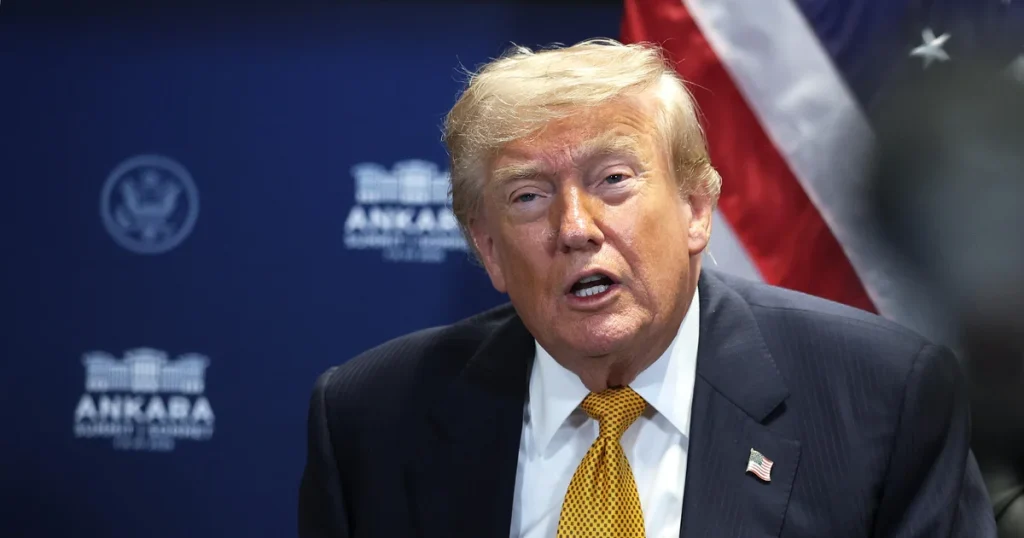
During a NATO summit held in Turkey on Wednesday, President Trump declared that the mid-June memorandum of understanding—which had extended the ceasefire between the two countries—was “over” in his assessment. Nevertheless, he indicated that negotiations could proceed despite this declaration.
“Developments over the past 48 hours have solidified Tehran’s resolve, with a new military and strategic doctrine now in place,” Press TV stated. “The memorandum of understanding signed on this matter clearly states that Iran will reopen the strait in accordance with its own arrangements. Therefore, Iran will not permit the establishment of any new route outside the framework of its own arrangements.”
The network offered its own assessment of the situation, suggesting that “Trump will gain nothing from these recent threats.” However, it warned that the American president “will certainly lose both the Strait of Hormuz and the negotiations over a final agreement. The choice is now his.”
Government sources within Iran told CBS News that the most recent U.S. strikes constituted a “serious violation” of the memorandum of understanding. This agreement, which President Trump declared “over” on Wednesday, remains at the center of the escalating tensions.
The fundamental disagreement appears to stem from divergent interpretations of the MoU’s provisions. Tehran maintains that all commercial shipping through the Strait of Hormuz must continue coordinating with Iranian authorities. Washington, however, asserts that vessels may navigate the waterway without requiring Iranian approval.
For Iran, this matter extends beyond mere maritime traffic. The nation seeks to preserve its capacity to exert influence over this critical shipping corridor in any future confrontation. Iranian officials harbor concerns that U.S. efforts to create an alternative shipping route near Oman’s coast may undermine this strategic position.
Widespread apprehension now permeates the region regarding whether this week’s sharp escalation might ultimately terminate the MoU entirely. Should Tehran conclude that Washington intends to use the agreement to diminish Iranian control over the Strait of Hormuz, additional figures within Iran’s ruling theocracy might view a return to warfare as justified.
In a poignant development, enormous crowds gathered in the streets of Najaf, Iraq, filling the courtyards of its magnificent shrine as they mourned the slain Iranian supreme leader, underscoring the human cost of these escalating tensions.