
First major 2026 Atlantic hurricane forecast predicts below-average season
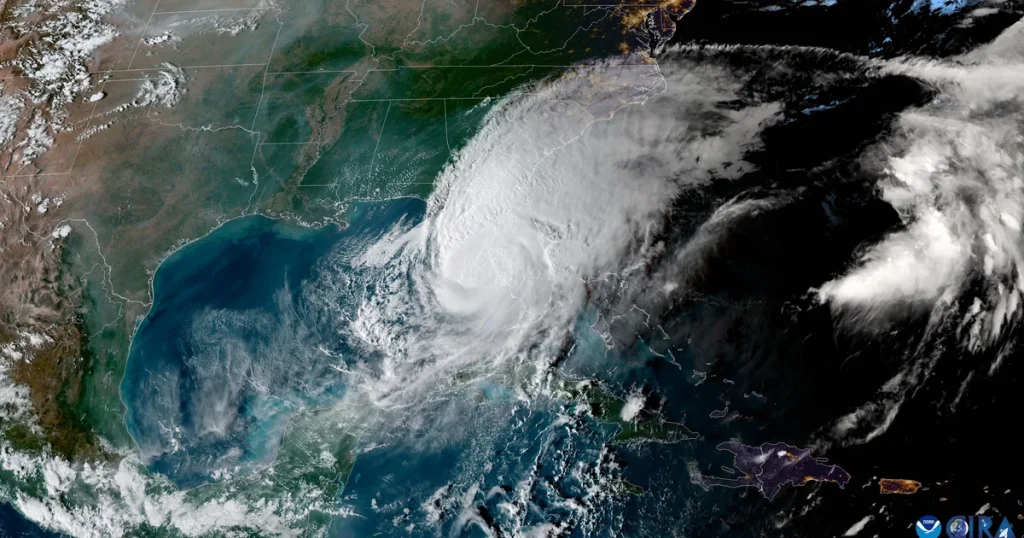
2026 Atlantic Hurricane Outlook Points Toward Quieter Season
First major 2026 Atlantic hurricane forecast – Scientists anticipate that the upcoming Atlantic hurricane season may produce fewer storms than normal, according to recent research findings. Climate patterns appear to be aligning in a way that supports reduced activity relative to what most people experience during an average year. This assessment forms the foundation of Colorado State University’s most recent seasonal hurricane prediction, which was first published back in April and subsequently refreshed on Wednesday by the university’s Tropical Cyclones, Radar, Atmospheric Modeling and Software research group.
According to the Colorado State University experts, the 2026 season is expected to generate nine named storms across the Atlantic basin. Among those, four are projected to strengthen into hurricanes, while just one is anticipated to reach major hurricane status, which means achieving Category 3 intensity or greater. These revised numbers represent a downward adjustment from the team’s initial projections, which had called for thirteen named storms, six hurricanes, and two major hurricanes.
Storms could potentially form at any time throughout the official season window, which spans from June 1 through November 30. The period between August and October typically sees the highest concentration of hurricane activity. Scientists plan to monitor various atmospheric indicators that might signal when storms are most likely to develop, recognizing that forecasts always contain a degree of uncertainty. Phil Klotzbach, who serves as the lead author of the prediction, noted during a press conference that unexpected developments could certainly arise.
Preparedness Remains Essential
This seasonal outlook will continue to be refined as hurricane season unfolds. State officials and local residents in areas susceptible to hurricanes—particularly Florida and communities situated along the Gulf Coast and Eastern Seaboard—closely track these projections each year as they make preparations for potential impacts.
The National Oceanic and Atmospheric Administration has issued its own seasonal forecast, which similarly anticipates below-average conditions. Delián Colón-Burgos, a co-author of the forecast, shared her perspective with CBS News regarding public readiness.
We always recommend, to coastal residents, to prepare the same way for every season.
According to the updated forecast, hurricane activity for 2026 is expected to fall below seventy-five percent of the long-term seasonal average. Should these projections prove accurate, this would represent a decline from the 2025 hurricane season, which produced thirteen named storms, five hurricanes, and four major hurricanes, though none of those storms made direct landfall in the United States. Federal statistics indicate that a typical season generates fourteen named storms, seven hurricanes, and three major hurricanes.
Colon-Burgos stressed that communities facing hurricane-related risks should take the season seriously regardless of numerical predictions. She highlighted that encouraging people to begin preparations early and stay vigilant is among the most critical messages the team wants to convey.
Atmospheric Drivers Shape the Outlook
A shift in atmospheric conditions that can either promote or hinder Atlantic hurricane development represents the primary factor behind the researchers’ below-average prediction, according to Colon-Burgos. This trend is largely attributed to El Niño, the warmer phase of the El Niño-Southern Oscillation cycle, which the Climate Prediction Center reports arrived during late spring. This phenomenon, characterized by changing sea surface temperatures and precipitation patterns in the Pacific Ocean, influences weather across the United States and frequently provides early indications of how active a hurricane season might become.
During El Niño periods, Atlantic hurricanes generally exhibit reduced frequency and intensity. The Climate Prediction Center has indicated that El Niño could strengthen over the coming months and persist through at least the conclusion of 2026. Meteorologists estimate there is a sixty-three percent probability that El Niño will intensify sufficiently by the end of the current hurricane season to rank among the most significant events recorded since 1950.
Another element contributing to forecast uncertainty involves fluctuations in Atlantic Ocean sea surface temperatures over the coming weeks. Colon-Burgos explained that temperature trajectories could substantially influence subsequent storm predictions.
Landfall Probabilities
The current forecast indicates a thirty-two percent likelihood that a major hurricane will make landfall somewhere along the United States coastline in 2026, with a thirty-five percent chance of such an event occurring in the Caribbean. While these percentages might appear modest, researchers caution that they do not encompass weaker storms, which can still pose significant threats. Michael Bell, another co-author of the forecast, emphasized this point in a public statement.
It takes only one storm near you to make this an active season for you.
Although no hurricanes struck the United States last year—the first such occurrence in ten years—certain Caribbean islands experienced severe impacts. Jamaica suffered particularly devastating damage from Hurricane Melissa, which arrived as a powerful Category 5 storm and effectively concluded the 2025 hurricane season.