
Record-low Danube River levels put Hungary’s only nuclear plant on brink of shutting down
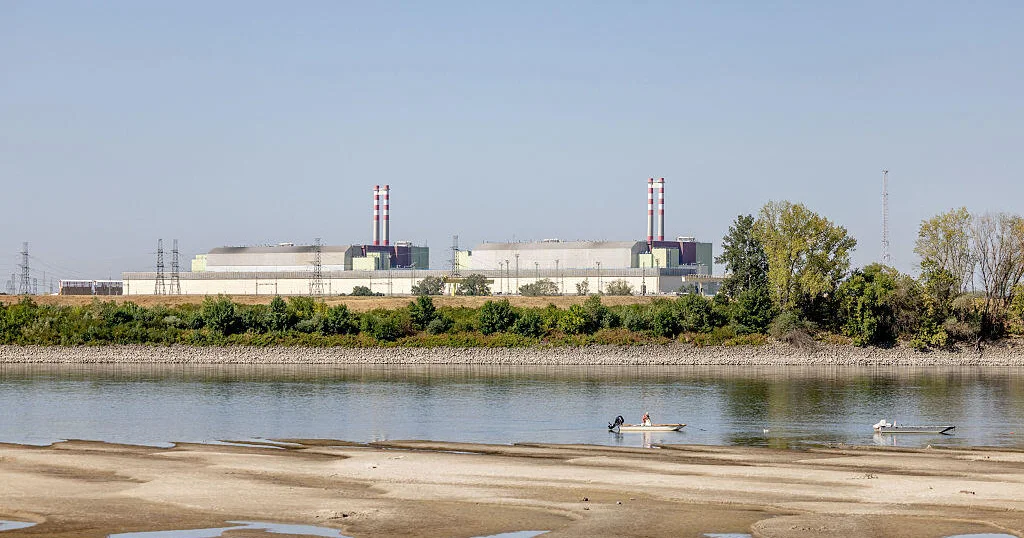
Record Low Danube River Levels Threaten Hungary’s Nuclear Power
Bizeconanalysis.com – Record low Danube River levels have placed Hungary’s only nuclear power plant on the brink of a complete shutdown. The historic drought has reduced water levels to unprecedented heights, forcing the Paks facility to operate with just one of its four reactors active. This energy crisis comes as temperatures in Budapest soar above 100 degrees Fahrenheit, creating a perfect storm for the nation’s power infrastructure.
Why Paks Is Vulnerable
Unlike nuclear plants in the United States, United Kingdom, Germany, and France that use massive cooling towers, Paks draws water directly from the Danube. The river, historically considered too substantial to ever dry completely, has now revealed ancient woolly mammoth bones in Bulgaria and sunken Nazi vessels in Serbia. Hungary’s capital has even uncovered unexploded World War II artillery pieces from the receded waters.
The Soviet-designed plant has been generating electricity for forty-four years and typically produces about half of Hungary’s total power output. Under normal circumstances, reducing operations to one reactor would be manageable. However, the drought gripping southeast Europe has persisted for more than three months, creating conditions far from ordinary.
Leadership Response and National Unity
Hungarian Prime Minister Péter Magyar visited the site on Tuesday, emphasizing the critical nature of the situation. The new leader, whose Tisza party secured a landslide victory ending Viktor Orbán’s sixteen-year tenure this spring, has only been in office for three months. This crisis represents the first substantial test for Magyar’s relatively new administration.
There are a few critical days left. Today and tomorrow are certainly that. I ask everyone to continue the national unity that has developed in the country. Let’s do what our country demands.
Magyar has appealed to all Hungarians to unite in conserving electricity during this critical period. Authorities have ordered more than three hundred government-linked buildings across Budapest to switch off their lights. Even iconic tourist destinations like Buda Castle and the Chain Bridge have seen their romantic spotlights extinguished following sunset.
Weather Outlook and Grid Management
Atmospheric conditions offer little immediate relief. Meteorologists predict virtually no precipitation for at least the next ten days, with Danube water levels expected to continue declining. Hope remains on the horizon, however. Forecasters anticipate a cold front arriving on Friday, which could help stabilize temperatures.
To compensate for reduced domestic power generation, Hungary has nearly doubled its electricity imports through the regional power grid. The country’s highly interconnected electrical network facilitates these purchases from neighboring nations. Currently, the new government is absorbing the additional costs rather than passing them to consumers.
Households have been specifically asked to avoid operating washing machines and tumble dryers between five and ten in the evening to reduce strain on the grid during peak demand hours.
A Continent Warming at Record Pace
This crisis does not occur in isolation. Europe stands as the world’s fastest-warming continent, experiencing temperature increases at twice the global average. The combination of extreme heat and reduced water availability creates compounding challenges for energy infrastructure across the region.
Frequently Asked Questions
How long can Paks continue operating at reduced capacity?
Officials indicate that today and tomorrow represent particularly critical days for the plant’s operations. The facility can maintain limited operations as long as water levels remain sufficient for cooling the active reactor.
What is the expected timeline for recovery?
Forecasters anticipate a cold front arriving on Friday, which could help stabilize temperatures. However, full recovery of Danube water levels may take several weeks depending on rainfall patterns.
How much has Hungary increased electricity imports?
Hungary has nearly doubled its electricity imports through the regional power grid to compensate for reduced domestic power generation at Paks.
Are consumers facing higher electricity bills?
Currently, the new government is absorbing the additional costs rather than passing them to consumers. Officials have emphasized that the electricity market remains stable with supply functioning without major issues.