
Colombia earthquake survivors are reliving a nightmare from 1999: “You feel a sense of powerlessness”
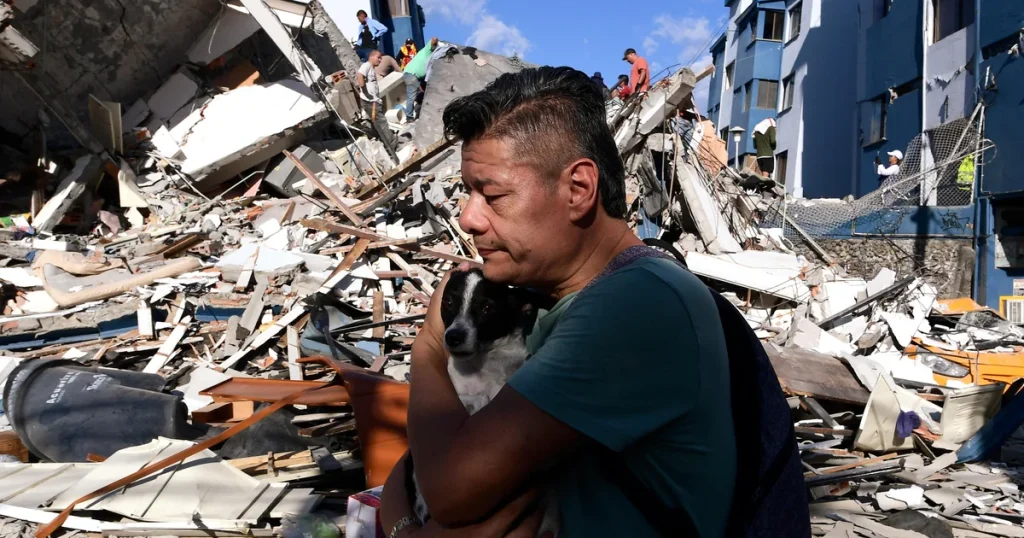
Colombia Earthquake Survivors Relive 1999 Nightmare
Bizeconanalysis.com – Colombia earthquake survivors are reliving a nightmare as dark clouds gathered over Pereira on Monday morning. Jahir Rodríguez, a 68-year-old retired urban planner, felt immediate recognition of what was coming. The familiar patterns of destruction began to unfold in the western Colombian city he calls home. Having survived a devastating seismic event decades earlier, Rodríguez understood precisely what the rumbling beneath his feet meant for his community.
His experience dates back to 1999, when a catastrophic earthquake struck Armenia, approximately 30 miles from Pereira. That disaster claimed roughly 1,200 lives and fundamentally changed how Rodríguez approached urban planning and emergency response. Three days ago, history repeated itself with a 7.4-magnitude tremor that killed at least 265 people and left hundreds trapped beneath collapsed structures across multiple Colombian states.
“You feel a sense of powerlessness,” Rodríguez said as he recalled seeing glass shattering and water seeping through the cracked and fallen walls of shaken buildings.
Lessons from Japan and Chile
Following the 1999 catastrophe, Rodríguez absorbed critical knowledge from Japanese emergency responders who had experienced their own devastating earthquake in Osaka in 1995. Their guidance proved invaluable for long-term recovery planning.
“It is a mistake to think that you will be here for days or months,” Rodríguez said they told him. “You will be here for years.”
This wisdom resonates deeply as encampments spread across Pereira’s parks. Rodríguez, who also provided assistance during the 2010 earthquake in Talca, Chile, understands that temporary solutions often become permanent realities for displaced families. The newly formed Colombian government, which assumed power just days before the latest quake, has been organizing these temporary settlements. However, Rodríguez warns this approach may prove insufficient for families requiring permanent housing solutions.
According to Rodríguez, the priority sequence must be clear: first counting survivors, then organizing their placement, and finally developing comprehensive reconstruction strategies. Getting residents to abandon damaged homes presents significant challenges. Rodríguez spent Monday evening visiting a fellow urban planner whose apartment building collapsed onto neighboring structures. Despite the danger, his friend refused to leave, fearing vandalism—a concern that intensified after the 1999 disaster.
“People are here in front of the sidewalk, watching their house,” Rodríguez said with immense sadness.
A Blueprint for Recovery
Everardo Murillo developed the foundational framework for Colombia’s post-1999 recovery efforts. President Andrés Pastrana commissioned Murillo to establish both a financial fund and organizational structure dedicated to supporting families and businesses that lost everything. Since that time, Murillo has advised numerous governments through World Bank initiatives and recently traveled to Venezuela following consecutive earthquakes that devastated portions of that nation.
In La Guaira, Venezuela’s most severely affected city, Murillo collaborated with governors, local officials, business leaders, and community members to address what he describes as the “social engineering” challenge inherent in disaster recovery.
“People lose the route of their life. It’s the hardest thing for a human being,” he said. “How do I help that family who lost everything, whose home collapsed, who lost children, and also lost their belongings inside and is now on the street?”
Murillo emphasizes that immediate disaster response requires rapid deployment of food, shelter, financial assistance, and temporary educational facilities for children. Longer-term support includes government assistance programs and loan opportunities. He particularly values hiring disaster survivors directly into recovery positions, noting that crises naturally produce new leadership within affected communities.
“The first thing that emerges from within a disaster victim when something like that happens is a new kind of leadership,” Murillo said. “Natural leaders emerge — people who step up.”
Murillo’s approach incorporates emotional support alongside practical assistance. He pairs individuals struggling with depression and anxiety against those energized by the recovery process. This solidarity, he believes, cannot be quantified but proves essential for healing.
The effectiveness of any disaster response ultimately depends on governmental reaction. Murillo, who previously consulted following Haiti’s devastating 2010 earthquake, understands that international cooperation must be coordinated with local needs. Colombia’s recovery will require both immediate action and sustained commitment over many years.
Frequently Asked Questions
What magnitude was the recent Colombia earthquake? The recent earthquake that struck Colombia measured 7.4 on the magnitude scale, causing widespread damage and casualties across multiple states.
How many people died in the 1999 Colombia earthquake? The 1999 earthquake that struck near Armenia, Colombia, claimed approximately 1,200 lives and fundamentally changed disaster response strategies in the region.
Where is Pereira located in relation to the earthquake epicenter? Pereira is located in western Colombia, approximately 30 miles from Armenia, which was the epicenter of the 1999 earthquake. The city was also significantly affected by the recent seismic event.
What is Everardo Murillo’s role in Colombia’s disaster recovery? Everardo Murillo developed the foundational framework for Colombia’s post-1999 recovery efforts and continues to advise governments through World Bank initiatives on disaster recovery strategies.
How long does disaster recovery typically take according to experts? According to Japanese emergency responders who advised Colombia after 1999, disaster recovery is not a matter of days or months but can extend for years, requiring sustained commitment and resources.