
U.S. military destroys alleged drug-smuggling boat in Pacific Ocean, killing 2 people
Two Killed as U.S. Forces Sink Suspected Narcotics Vessel in Eastern Pacific
Bizeconanalysis.com – A U.S. military strike on Sunday destroyed a vessel suspected of moving narcotics through the Eastern Pacific, killing two people aboard. The action, announced Monday by U.S. Southern Command (SOUTHCOM), marks the latest in a series of naval strikes that have drawn growing scrutiny over their legal basis, tactical effectiveness, and the broader strategic logic behind what Washington frames as a campaign against Latin American drug cartels.
The Strike and Its Aftermath
SOUTHCOM confirmed the operation in a post on X, describing the target as a vessel “operating along established narco-trafficking routes in the Eastern Pacific.” The command added that “confirmed intelligence revealed the vessel’s active involvement in narco-trafficking,” framing the engagement as a deliberate interdiction rather than a routine patrol encounter.
“This operation is a clear and decisive reminder that SOUTHCOM is taking the fight directly to the cartels,” SOUTHCOM stated.
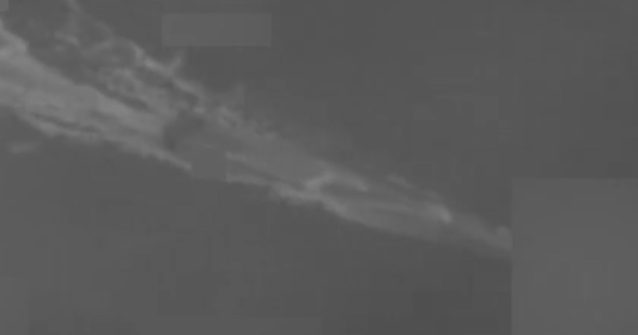
Accompanying grainy black-and-white video showed the vessel cutting through open water before a single large explosion engulfed it. The military did not specify the boat’s class, though its elongated, low-profile silhouette matches what analysts commonly call a “narco sub” — a long, semi-submersible craft designed to skim just beneath the surface and slip past radar and visual detection.
Understanding the Narco Sub
These vessels are not true submarines. They cannot dive fully underwater and rely on a shallow draft, often just a few feet below the waterline, to reduce their radar cross-section. International drug traffickers have favored them over conventional speedboats because they can traverse long oceanic distances while remaining difficult to spot from aircraft or surface ships. Their use has proliferated in the Eastern Pacific and Caribbean corridors, where cartels move fentanyl, cocaine, and other controlled substances toward North American markets.
Gen. Francis L. Donovan, commander of SOUTHCOM, issued a statement Monday outlining the command’s broader posture:
“We are committed to imposing total systemic friction on narco-terrorists — disrupting their operations, dismantling their leadership, and eliminating cartel terror across the region.”
A Widening Campaign: From Sea to Land
The Pacific strike lands just days after Defense Secretary Pete Hegseth announced that the United States would extend its offensive beyond the water onto the soil of multiple Latin American nations. Speaking during a visit to Panama, Hegseth said Colombia, Guatemala, and Honduras had agreed to host joint U.S. military operations aimed at criminal organizations operating within their borders. Guatemala’s government subsequently denied having reached any such arrangement, introducing an immediate wrinkle into the diplomatic picture.
Ecuador, meanwhile, had already launched comparable joint missions with American forces back in March, setting a precedent for the kind of bilateral military cooperation Hegseth now seeks to replicate across the region.
Operation “Southern Spear” and Its Toll
The current wave of strikes traces back to September, when the U.S. military inaugurated Operation “Southern Spear.” President Trump has characterized the effort as an effective state of war against cartels headquartered in Latin America, a framing that has intensified both support and opposition to the campaign. Since the operation began, more than 200 people have been killed in strikes across the Eastern Pacific and Caribbean Sea.
The administration has not, however, produced definitive public evidence tying each struck vessel to a specific trafficking operation. Critics have pressed this gap, arguing that the absence of corroborating documentation — seized cargo manifests, intercepted communications, or post-strike forensic analysis — undermines the stated rationale for the use of force.
Questions of Legality and Proportionality
A separate controversy has centered on a follow-on strike carried out against survivors of an earlier engagement. U.S. lawmakers demanded that the Pentagon release unedited video of that initial strike after reports surfaced that American forces returned to the scene and fired again at people already in the water. Some members of Congress have asked whether that second volley constituted a war crime under the laws of armed conflict.
The Defense Department and several congressional Republicans have maintained that the survivors may still have been combatants actively engaged in the fight, thereby justifying the follow-on action. The Pentagon’s inspector general announced in May that its office would examine whether the military adhered to an established targeting framework during the strikes. That review, however, is scoped specifically to the six-phase Joint Targeting Cycle — a procedural checklist for planning and executing engagements — and does not extend to a broader assessment of whether the strikes were lawful under international law, the IG’s office clarified.
Context: The Fentanyl Question
Part of the public debate has focused on the commodity itself. Much of the fentanyl responsible for fatal overdoses in the United States is manufactured in Mexico using precursor chemicals imported from China and India, then moved overland through trucking and rail corridors rather than by sea. Critics point to this land-based logistics chain to question whether sinking vessels in open ocean meaningfully disrupts the supply pipeline that reaches American consumers.
In June, a similar Caribbean strike killed two people aboard a boat accused of regional drug smuggling and left six survivors in the water — an outcome that reinforced calls for greater transparency and clearer rules of engagement in what has become one of the most consequential military operations of the current administration.
Related Reading
Frequently Asked Questions
What is U S military destroys alleged drug?
U S military destroys alleged drug is the main topic of this guide. The article explains the context, practical details, and next steps readers should understand.
Why does U S military destroys alleged drug matter?
U S military destroys alleged drug matters because readers are looking for a useful answer, not just a short summary. Good content should match search intent and help them decide what to do next.