
The Lindsay Clancy trial has moved from the prosecution to the defense. Here are some key moments from court.
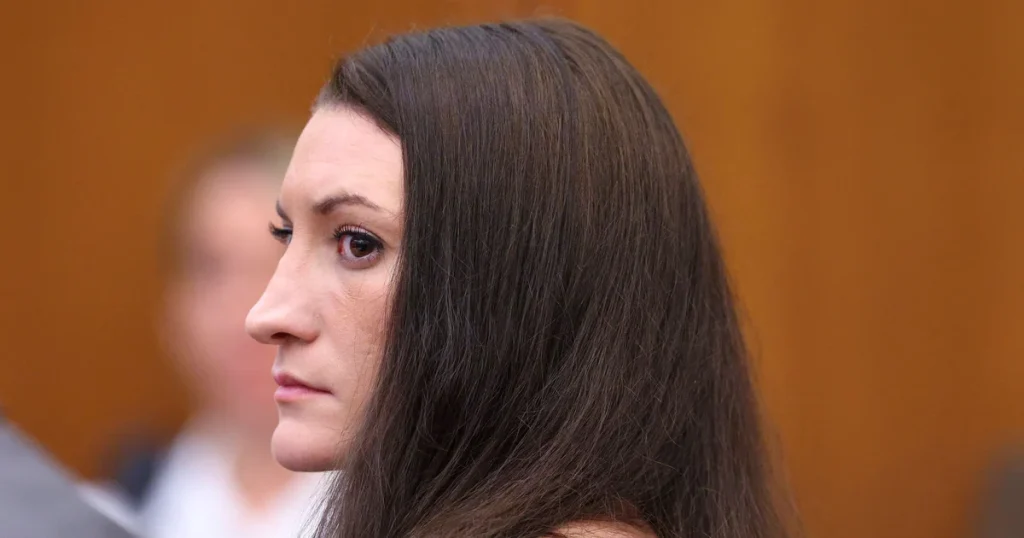
Defense Takes the Stand in Lindsay Clancy Trial as Jurors Weigh Mental Illness Against Intent
Bizeconanalysis.com – The courtroom in Duxbury, Massachusetts, entered a new phase on August 17 when prosecutors rested their case in the trial of Lindsay Clancy, a 36-year-old mother charged with killing her three small children in January 2023. After weeks of testimony aimed at establishing that Clancy deliberately murdered 5-year-old Cora, 3-year-old Dawson, and 8-month-old Callan inside the family home, the burden of proof shifted to her legal team. Clancy has maintained a not-guilty plea, yet her lawyers do not contest that she was present when the children died. Their argument centers on a different question entirely: whether a woman suffering from postpartum psychosis, bipolar disorder, and the destabilizing effects of multiple psychiatric medications can be held criminally liable for acts committed while her mind was, in their words, overwhelmed.
The prosecution, by contrast, has argued that Clancy orchestrated the killings with premeditation and then staged a suicide attempt by jumping from a second-story window, leaving her paralyzed from the waist down. The jury must now decide which narrative the evidence supports.
A Mother’s Testimony: Thoughts of Harm Before the Tragedy
Among the first witnesses called by the defense was Paula Musgrove, Clancy’s mother. She recounted a December 2022 conversation — roughly three weeks before the killings — in which Clancy sat down with Musgrove and her then-husband, Patrick Clancy, to share something troubling. According to Musgrove, her daughter appeared deeply anxious during the exchange.
“She told us that she had thoughts of harming the children,” Musgrove said.
Under cross-examination by prosecutor Jennifer Sprague, Musgrove was pressed on whether she had raised any safety concerns about the children or considered having Clancy committed to a psychiatric facility. She answered that she had not. Musgrove added that in the final days before the killings, her daughter grew paranoid and repeatedly said she could not remember anything.
“The medication was pretty much just destroying her mind, and it wasn’t her,” Musgrove recalled. “She said that, ‘This isn’t me. I just want to feel better and enjoy my kids again.'”
Phone Records and Private Writings Enter the Record
Well before the defense called its witnesses, the jury had already been exposed to Clancy’s digital trail. Massachusetts State Police Detective Timothy Chiappini read aloud diary-style entries from Clancy’s phone notes app during testimony on August 13. One passage captured her frustration with motherhood and treatment:
“I’m sad and depressed because I am not able to parent my third child like my first.”
Another entry revealed her ambivalence about psychiatric medication:
“I’m on the fence about starting a new med or not. I want to feel happy, but it would be nice to feel authentically happy and not fake.”
Chiappini also testified that four days before the killings, Clancy had searched her phone for the phrase “Can you treat a sociopath?” During cross-examination, defense attorney Kevin Reddington pointed the jury toward other searches, including “how to slit your throat to die” and “can you turn airbags off on kia sorrento” — the latter referencing the vehicle Clancy drove. He noted that searches in January 2023 included the words “schizophrenia,” “hallucinations,” and “intrusive,” suggesting a mind grappling with symptoms it could not name.
A Breakdown on the Courtroom Floor
The trial’s most visceral moment came on August 12, when a medical examiner described the injuries sustained by the three children. Clancy, seated in a wheelchair because she has been paralyzed from the waist down since the window jump, began sobbing loudly.
“I can’t do it,” she said before being wheeled out of the courtroom.
It was the second disruption that day; earlier she had cried with her head buried in her hands. Judge William Sullivan excused the jury both times and, upon their return, reminded them of their oath.
“I’m instructing you that the law says you must separate any emotional reaction on your part from the informational value and weight that the evidence produces,” Sullivan told the panel.
The Psychiatrist’s Account: Four Months of Telehealth Visits
Dr. Jennifer Tufts, a psychiatrist who conducted 14 telehealth appointments with Clancy over approximately four months, testified on August 10. Her final session fell on the day immediately before the killings. Tufts stated that Clancy never appeared psychotic during their interactions. When Reddington asked whether Tufts knew Clancy had told her then-husband about thoughts of harming the children, Tufts said she did not and added that she would have been “very concerned” had she known.
Tufts described a patient who reported feeling numb and unable to sleep. On the question of suicidal ideation, Tufts offered a nuanced answer:
“She denied feeling suicidal, but that she was close to feeling suicidal.”
Prosecutors used their questioning to underscore the extent of Clancy’s pharmacological history, noting she had cycled through at least ten different medications in an effort to manage anxiety and depression. The sheer number of trials, they implied, complicated any simple narrative of a single drug causing a psychotic break.
What the Jury Must Weigh
The case now rests with jurors tasked with separating a mother’s documented mental-health struggles from the prosecution’s theory of calculated intent. Postpartum psychosis, which affects roughly one to two women per thousand births, can produce hallucinations, paranoia, and dissociative episodes that last days or weeks. Bipolar disorder, if untreated or destabilized by medication changes, carries its own risk of impulsive or psychotic behavior. The defense will argue that Clancy’s state of mind on January 24, 2023, rendered her incapable of forming the specific intent required for murder. The prosecution will counter that the sequence of events — the timing of the killings, the subsequent window jump, and the pattern of phone searches — points to planning rather than psychosis.
With the defense case now underway, the jury will hear expert testimony on psychiatric conditions, additional family witnesses, and ultimately closing arguments before returning to deliberate on whether Lindsay Clancy will face life imprisonment or a verdict shaped by the question of what her mind permitted her to do on that winter morning in Duxbury.
Related Reading
Frequently Asked Questions
What is The Lindsay Clancy trial has moved?
The Lindsay Clancy trial has moved is the main topic of this guide. The article explains the context, practical details, and next steps readers should understand.
Why does The Lindsay Clancy trial has moved matter?
The Lindsay Clancy trial has moved matters because readers are looking for a useful answer, not just a short summary. Good content should match search intent and help them decide what to do next.