
Drastic water cuts issued for California, Nevada and Arizona from drought-stricken Colorado River
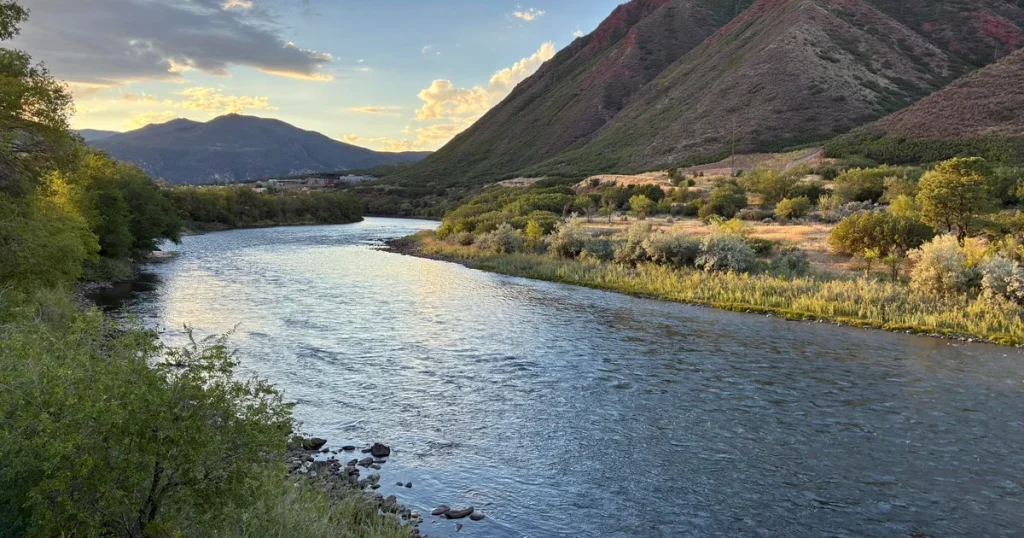
Colorado River Basin Faces Deepest Water Shortage in Decades as Federal Mandate Forces Multi-State Cuts
Bizeconanalysis.com – The Colorado River, the lifeline of the American Southwest, has entered its most constrained operational phase in modern history. On Friday, federal water managers unveiled a two-year framework requiring California, Nevada, and Arizona to slash their combined annual withdrawals by 1.25 million acre-feet — roughly enough water to fill over 3,800 Olympic swimming pools every year. The directive, issued by the Bureau of Reclamation, carries the possibility of even steeper reductions should reservoir conditions deteriorate further. Upstream states — Colorado, Utah, Wyoming, and New Mexico — are exempt from immediate cuts, while Mexico, bound by a bilateral treaty, will trim its own allocation by 250,000 acre-feet over the same window.
A 26-Year Drought With No End in Sight
The cuts land against a backdrop of relentless aridity. Andrea Travnicek, the Interior Department’s assistant secretary for water and science, framed the situation plainly:
“We’ve been in this 26-year prolonged drought period. We continue to see a prolonged drought in our future. So continuing to work together as a whole within the basin is going to be extremely important.”
That characterization is not rhetorical. The river basin’s snowpack last winter registered the lowest accumulation ever recorded for the region, compounding decades of above-average temperatures. Farmers irrigating fields from the river, industrial operators, hydropower plants, and wildlife corridors all felt the squeeze. Tens of millions of residents across seven U.S. states and two Mexican states depend on the waterway, including dozens of Native American tribal communities whose cultural and agricultural practices are tied to its flow.
Reservoirs at Historic Lows
The physical infrastructure of the river system is buckling under the strain. Lake Mead, the largest reservoir in the United States, recently fell to its lowest water mark since it began filling roughly nine decades ago. Lake Powell, its downstream neighbor in Utah, followed suit approximately one week later. Together, the two reservoirs now hold the least water they have in nearly seventy years.
The stakes at Powell are particularly acute. If its surface drops another 33 feet, the reservoir will fall below the elevation required to push water through the Glen Canyon Dam’s turbines. At that point, hydroelectric generation ceases, and the river’s downstream flow — already critically low — loses a key mechanism for moving water through the canyon system. For a basin already operating at the edge of hydraulic viability, that threshold represents a functional collapse of the delivery infrastructure.
Negotiation Deadlock and the October Deadline
The current legal framework governing Colorado River allocations is set to expire in October. Seven basin states have been unable to forge a durable, long-term consensus on how to share the river’s dwindling supply. The two-year federal mandate, therefore, functions as an interim stabilizer rather than a resolution. Tom Buschatzke, director of the Arizona Department of Water Resources, acknowledged the temporary nature of the arrangement while emphasizing its near-term value:
“For 2027 and 2028, the reductions that are now memorialized here will provide substantial stability for folks. We’ll continue to negotiate and figure out how we’re going to operate over a longer-term period, which is what we all want.”
JB Hamby, California’s chief Colorado River negotiator, described the plan as delivering “some badly needed near-term certainty at a moment of extraordinary risk,” while cautioning that it remains “a bridge, not a permanent solution.” Nevada’s officials praised the collaborative posture of their Arizona and California counterparts and reiterated that a full seven-state agreement remains the preferred long-term outcome.
Local Fallout: From Las Vegas to the Farm Belt
In Southern Nevada, the hydrological emergency is already reshaping development decisions. Kyle Roerink, senior adviser at the Great Basin Water Network, noted that proposals for a new airport, several shopping-mall projects, and certain public-land sales have stalled — a direct reflection of the dire water outlook embedded in federal planning documents. Additional cuts, he warned, could further throttle real-estate growth in the Las Vegas metropolitan area.
“When the Hoover Dam, a symbol of American fortitude and American power, drops and loses its shine, it can be scary. But it can also pose itself as a great opportunity for us to prepare for the next hundred years in a meaningful way.”
Roerink’s framing captures a broader tension now playing out across the basin: whether the crisis will be met with incremental rationing or with a fundamental rethinking of how a semi-arid region sustains urban growth, agriculture, and energy production. The river that once powered the electrification of the Southwest now carries less than a fraction of its historical flow, and every acre-foot withheld is a political, economic, and ecological decision made simultaneously by seven states, two nations, and a changing climate.
The estimated 35 million to 40 million people who draw drinking water, agricultural irrigation, and industrial supply from the Colorado River will feel the effects of these cuts in grocery prices, municipal rate structures, and the availability of water for municipal and tribal use. Whether the October deadline produces a lasting compact or another round of stopgap mandates will determine whether the basin’s next decade is defined by managed scarcity or by unmanaged collapse.
Related Reading
Frequently Asked Questions
What is Drastic water cuts issued for California?
Drastic water cuts issued for California is the main topic of this guide. The article explains the context, practical details, and next steps readers should understand.
Why does Drastic water cuts issued for California matter?
Drastic water cuts issued for California matters because readers are looking for a useful answer, not just a short summary. Good content should match search intent and help them decide what to do next.