
Charlie Kirk’s accused killer will stand trial for aggravated murder, Utah judge rules
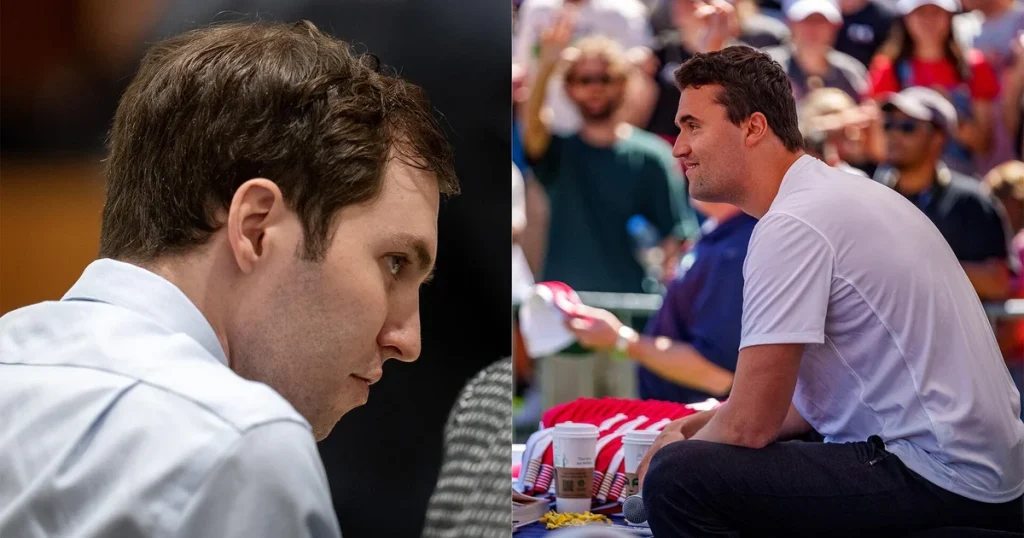
Charlie Kirk’s Accused Killer Faces Aggravated Murder Trial
Bizeconanalysis.com – A Utah judge has ruled that the man charged with fatally shooting conservative commentator Charlie Kirk will stand trial on the state’s highest homicide count. Judge Tony Graf of the Fourth Judicial District in Provo determined Tuesday that prosecutors have met the evidentiary threshold to send 23-year-old Tyler Robinson to trial for aggravated murder — a charge that permits the state to seek the death penalty, life without parole, or a sentence of 25 years to life with parole eligibility. The decision moves the case, which has drawn national attention since the September 2025 shooting at Utah Valley University, into its next judicial phase.
What the Aggravated Murder Charge Requires
Utah’s aggravated murder statute elevates a first-degree killing when the state can show the defendant knowingly placed other people in reasonable danger of death while committing the act. Prosecutors argued that Robinson deliberately aimed a high-powered rifle at Kirk while children and hundreds of spectators occupied the canopy area where the political activist was addressing a crowd on September 10, 2025. Only the aggravated designation allows a prosecutor to request capital punishment, making the preliminary hearing a critical gatekeeping step for the entire prosecution.
Graf told the court before recess that he needed additional time to review 24 pages of handwritten notes from the closing arguments of Robinson’s five-day preliminary hearing, which concluded in July. His ruling, delivered the following Tuesday, turned largely on what he called “the documented position of several individuals in and around the canopy area” where Kirk was speaking.
“These circumstances support a reasonable inference that defendant was aware that other individuals were positioned near Mr. Kirk when he fired,” Graf said.
Arguments From Both Sides
The state’s case, presented over the July hearing, centered on the claim that Robinson selected Kirk as a target because of his political beliefs and understood that children were present in the audience. Prosecutors told the court that Robinson “shot and killed Charlie Kirk because he disagreed with him and he did it by firing a high-powered rifle into a crowd of thousands,” describing the body of evidence as a “mountain” that is “overwhelming.”
Robinson’s attorneys focused their closing arguments on the enhancement factor that unlocks a capital prosecution. They contended the aggravating element — knowingly placing others at great risk of death — had not been established, reasoning that the shooter had a clear line of sight and discharged the weapon only once, over the heads of the crowd. A single, aimed shot, they argued, does not demonstrate the conscious endangerment of bystanders the aggravated charge demands.
“You can’t shoot a rifle into a crowd of 3,000 people and not know that you are posing a significant risk of death,” prosecutors countered.
Family Response and What Comes Next
Kirk’s widow, Erika Kirk, had filed a motion shortly after the preliminary hearing closed, asking Graf to render his determination by September 1. The ruling arrived just before that deadline. In an emailed statement released Tuesday, the family described the decision as “an important step in our family’s pursuit of justice” for Charlie, who was killed nearly a year earlier.
“Every step in this process carries the weight of all that Charlie’s murder has taken from his family, especially his children who will grow up without their father. We are grateful to all who have continued to pray for us, support us, and stand with us through a year of unimaginable grief.”
Beyond the aggravated murder count, Robinson also faces obstruction of justice, punishable by up to 15 years in a state correctional facility, and felony discharge of a firearm causing serious bodily injury. The next phase will involve jury selection and trial scheduling in the Provo courthouse.
Frequently Asked Questions
What is the difference between aggravated murder and first-degree murder in Utah? Aggravated murder adds the element that the defendant knowingly placed other people in reasonable danger of death. It is the only homicide count in Utah that permits a prosecutor to seek the death penalty.
When will the trial take place? No trial date has been announced. The case now moves into pretrial proceedings, including jury selection and evidentiary motions, before a date is set.
What penalties can Tyler Robinson face if convicted? Depending on the verdict, Robinson could receive the death penalty, life imprisonment without the possibility of parole, or a term of 25 years to life with parole eligibility, in addition to sentences on the obstruction and firearm-discharge counts.