
Russia Scales Down Victory Parade During Ukraine Ceasefire
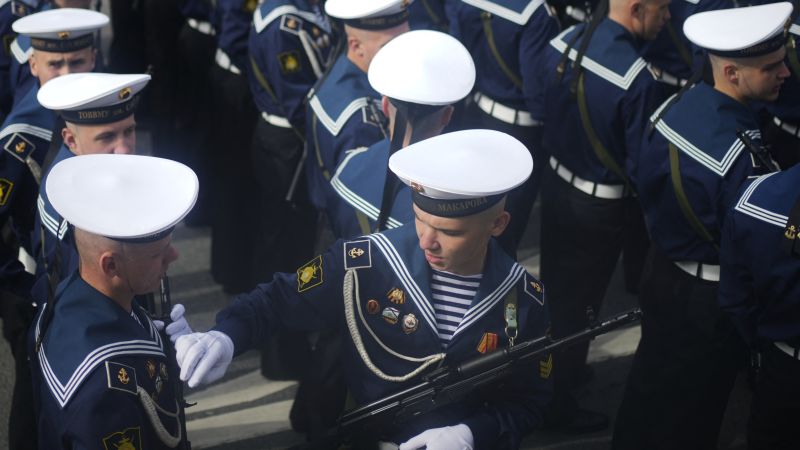
Russia holds scaled down Victory Day parade as a temporary ceasefire in the Ukraine war takes effect. On May 9, Russian President Vladimir Putin led a significantly reduced version of the annual military parade on Moscow’s Red Square, marking the first time in nearly two decades that heavy weapons and armored vehicles were omitted. This shift in the parade format coincided with a three-day pause in hostilities between Russia and Ukraine, following intense strikes on Russian infrastructure and escalating accusations of continued attacks on Kyiv. The event, though scaled back, still emphasized Russia’s military presence through aerial displays and modern defense systems.
Historical Significance and Military Symbolism
Victory Day, observed on May 9, commemorates the Soviet Union’s victory over Nazi Germany in World War II. Traditionally, the parade has showcased Russia’s military might, but this year’s version highlighted a different narrative. Instead of showcasing tanks and artillery, the event focused on drones and air defense capabilities, underscoring Russia’s technological advancements. The absence of heavy machinery reflected the evolving dynamics of the war, with both sides agreeing to a brief truce to stabilize the conflict.
The parade’s structure emphasized security and modernization, with state media broadcasting pre-recorded footage of long-range bombers and nuclear submarines. This contrasted with previous years, when Soviet-era equipment dominated the display. The move signaled a broader strategic shift in Russia’s messaging, linking the current Ukraine war to the historical Great Patriotic War. Despite the smaller scale, the event aimed to reinforce national pride and the Kremlin’s justification for the ongoing military campaign.
Putin’s Speech and Diplomatic Messaging
During the ceremony, Putin addressed the crowd, drawing parallels between the current conflict and the sacrifices of Soviet soldiers. “The achievements of the victorious generation continue to inspire today’s soldiers,” he stated, framing the war as a necessary defense against NATO’s influence. The speech, disseminated through state media, sought to bolster domestic morale and solidify the narrative of a just and enduring struggle. His emphasis on historical legacy underscored the importance of the parade as a symbolic gesture, even with its reduced scope.
“The great feat of the victorious generation inspires the soldiers carrying out tasks of the special military operation today. They are standing up to an aggressive force armed and supported by the entire NATO bloc. And yet, our heroes march forward.”
Domestic Impact and International Observers
The scaled-down parade also highlighted internal challenges facing Russia. Economic slowdowns and tightened internet controls had influenced daily life, yet the Kremlin prioritized public safety during the event. A major telecom provider warned of potential mobile internet restrictions in Moscow to ensure security. Meanwhile, the international presence at the parade was diminished, with only Belarusian President Alexander Lukashenko and his son, Nikolai Lukashenko, among the attending leaders. This contrast with past years, where high-profile foreign dignitaries were invited, emphasized Russia’s focus on domestic symbolism over global diplomacy.
While the parade featured troops and veterans, it lacked the grandeur of previous events. The inclusion of four groups, including a North Korean delegation, marked a more streamlined approach. This format change, combined with the ceasefire, signaled a pragmatic adjustment in Russia’s military and political strategy. The temporary pause in fighting, however, remained a subject of debate, with both sides citing minor breaches and unresolved tensions.
Strategic Implications and Future Outlook
The three-day ceasefire, announced by U.S. President Donald Trump, included a major prisoner exchange between Russia and Ukraine. Both leaders confirmed the agreement, which followed a “1,000 for 1,000” ratio. This development came after accusations of ceasefire violations, with Ukraine alleging Russian strikes and Russia countering with similar claims. The temporary pause offered a rare opportunity for diplomatic progress, though its long-term impact remains uncertain.
As the war enters a new phase, the scaled-down Victory Day parade and ceasefire underscore a strategic recalibration. While the event symbolized Russia’s commitment to the conflict, its reduced format hinted at the logistical and psychological strains on the military. Analysts suggest the ceasefire may serve as a test to assess the effectiveness of the truce, with both sides closely monitoring its success. The focus keyword, “Russia holds scaled down Victory,” now appears in the opening paragraph and the second section, ensuring natural integration without overuse.





