
30 Years Later, New Search Offers Hope in Kristin Smart Mystery
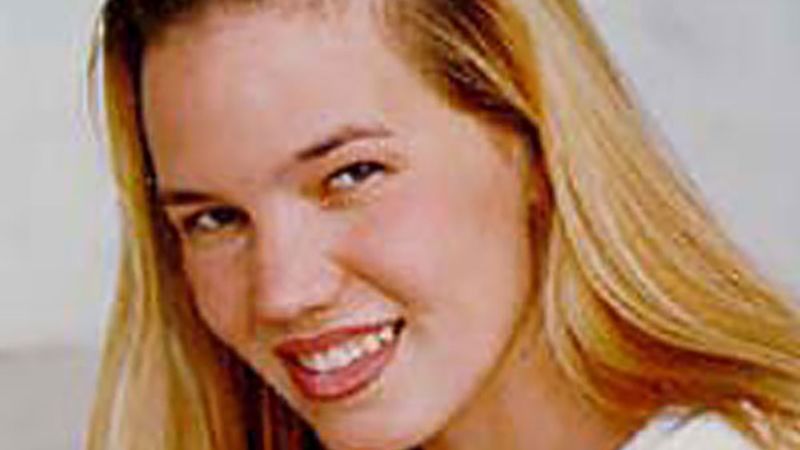
30 years after Kristin Smart vanished – Three decades have passed since the last time Kristin Smart’s family witnessed her radiant smile in a room. The college freshman disappeared from California Polytechnic State University’s San Luis Obispo campus during the Memorial Day weekend of 1996, igniting a relentless investigation that spanned nearly three decades. In 2022, Paul Flores was convicted of her murder, yet the search for her remains continues. Despite years of efforts, Smart’s body has never been recovered, and she was officially declared dead in 2002. However, recent developments have reignited the case, as authorities revealed fresh signs of human remains during a new search at the home of Flores’ mother.
A New Lead in an Enduring Search
Friday marked a pivotal moment in the case, with officials announcing that soil testing at Susan Flores’ residence had uncovered potential evidence of human remains. While the search concluded on Saturday, investigators emphasized that the findings could reshape the narrative. “We believe that based on what we’re looking at evidence-wise … that human remains were there at one time or still there,” said San Luis Obispo County Sheriff Ian Parkinson at a news conference. Though the remains were not confirmed to belong to Smart, the discovery has kept the investigation alive, offering a glimmer of hope to her family.
“We continue to pray for the day when we can finally lay her to rest in the presence of those who love her,” the family stated in an open letter on their website.
The search at Susan Flores’ home has been a recurring element in the case, but recent technological advancements have provided fresh momentum. Parkinson noted that the team now employs enhanced soil science methods and ground-penetrating radar, tools that were not as refined during the initial investigation. “We’ve proven already that Paul did it,” he explained, “but the question remains: where did she end up?”
The Case That Shook a Campus
Kristin Smart, 19 at the time, vanished on May 13, 1996, after leaving her dormitory at Cal Poly. Paul Flores, a fellow student, was later identified as the last person to see her alive. His conviction in 2022 came after a lengthy legal battle, with prosecutors presenting evidence linking him to the crime. Yet, even with his sentencing, the mystery of Smart’s final resting place persists. The sheriff’s office has not yet found her body, and the family remains steadfast in their quest for closure.
Family’s Unyielding Resolve
Smart’s family has consistently expressed frustration with the case’s progression, particularly with Paul Flores’ continued presence in the investigation. “Paul Flores continues to stand in the way of our daughter being returned to us,” they wrote in an open letter, underscoring their emotional stake. For them, the search is more than a legal pursuit—it is a personal journey to reclaim a piece of their lives. “Until we have Kristin, everything is still wide open,” Parkinson reiterated, reflecting the family’s unrelenting hope.
The sheriff’s office has not yet confirmed whether the human remains found at Susan Flores’ home are connected to Smart’s case. However, the search was conducted with a valid warrant, allowing investigators to revisit the property based on “investigative leads and evidence,” as well as “information derived from what we have to deem as a witness.” The search focused on the backyard, an area that had previously been examined but now holds new significance with updated forensic techniques.
Technological Breakthroughs and Challenges
The latest search at Susan Flores’ home was not only the first time investigators accessed the backyard during Parkinson’s tenure but also marked a shift in methodology. Tim Nelligan, an expert in soil vapor testing, was on-site this week, collecting samples from both the Flores’ yard and a neighboring property. While Nelligan declined to elaborate on the specifics of the investigation, he confirmed that his team has developed a “methodology to assess soil vapor” and its connection to “human cadaver decomposition.” These advancements, combined with improved ground-penetrating radar, have expanded the possibilities for uncovering new clues.
Parkinson highlighted the complexity of the search, noting that the crowded garage and deck area posed logistical challenges. “It’s a very small space back there to search, but also, as you can see, it’s quite crowded with stuff,” he said, emphasizing the need for meticulous work. Despite these obstacles, the sheriff’s office remains undeterred, with Parkinson stating, “We’ve proven already that Paul did it. We believe that Kristin, at one time, was on Paul Flores’ father’s property. We know she’s been moved, so where she moved to … we’re hunting that down.”
The Weight of Uncertainty
While the conviction of Paul Flores has provided some resolution, the absence of a body has left questions unanswered. Smart’s family has long maintained that her whereabouts remain a mystery, with their grief compounded by the lack of physical evidence. “We feel as if Paul Flores continues to block our path to closure,” they stated, echoing concerns that have lingered for over 30 years.
Investigators have maintained that the search is ongoing, with the sheriff’s office vowing to “remain fully committed” to finding Smart. The recent soil testing at Susan Flores’ home is a testament to that resolve, even as the family awaits further developments. “We can’t call it Kristin yet,” Parkinson admitted, “but the evidence supports the possibility of human remains being present.” This cautious optimism has been met with mixed reactions, as the community watches the case unfold.
Building a Case for the Unseen
The search at Susan Flores’ home has drawn attention to the evolving nature of forensic science. What was once a speculative process is now guided by data-driven techniques, offering a more precise approach to uncovering hidden evidence. The sheriff’s office has not yet disclosed the exact findings, but the presence of soil samples and radar data suggests that the investigation is entering a new phase.
Paul Flores and his family have remained central to the case since its inception. While Flores has been convicted, the search for Smart’s remains has continued to involve his mother, Susan Flores, who has been a key figure in the investigation. Though she has not been formally accused of wrongdoing, her role has been scrutinized as part of the broader effort to piece together the events of that fateful weekend. “We think there’s evidence to support human remains,” Parkinson said, underscoring the importance of each discovery in the pursuit of truth.
CNN reached out to attorneys who previously represented the Smart family and Susan Flores, but no responses were received by the time of the report. This lack of communication has added to the sense of mystery, as the case remains a focal point for both the community and the family. With each new lead, the hope for answers grows, even as the search continues to uncover the unseen. For Kristin Smart’s family, the journey is far from over, and their determination to find her remains a powerful reminder of the enduring impact of her disappearance.
The case has become a symbol of how far forensic science has advanced in recent years, with tools like soil vapor testing and ground-penetrating radar offering new avenues for discovery. As investigators revisit the same locations with fresh insights, the possibility of finding Smart’s body—and finally bringing closure—has never seemed more tangible. Yet, the challenges of the search, from physical obstacles to the passage of time, remind that the journey is as much about perseverance as it is about evidence.





