
Trump stands by decision to name Pulte to intel role, despite revolt in Congress that could block spy powers renewal
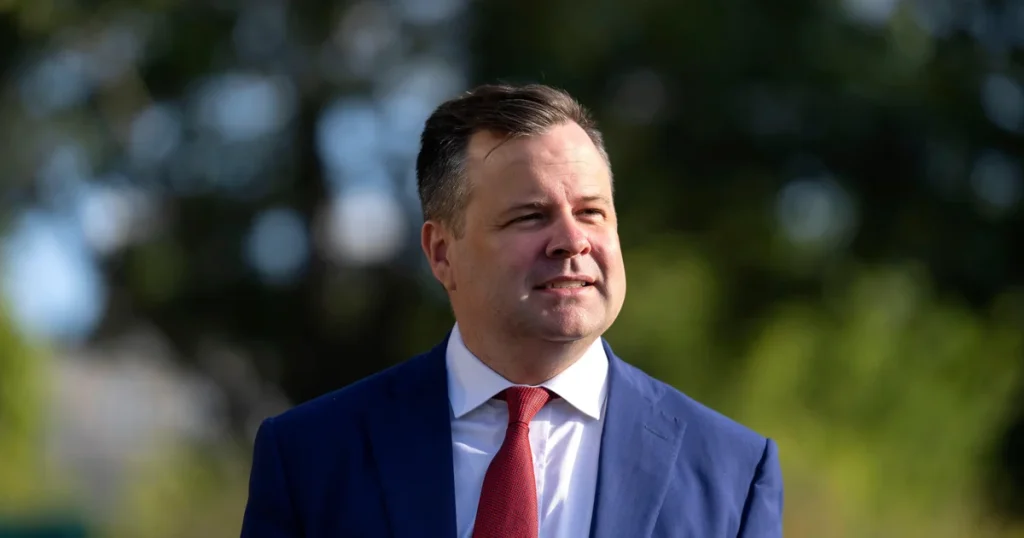
Trump Defends Bill Pulte’s Intelligence Appointment Amid Congressional Pushback
Trump stands by decision to name – President Donald Trump has publicly endorsed his choice to appoint Bill Pulte as acting director of national intelligence, despite growing opposition from lawmakers who fear the move could jeopardize the renewal of critical spy powers. The decision, announced on Tuesday, sets Pulte to assume leadership of the intelligence community by June 19, a week-and-a-half from now. This timeline accelerates his transition from his current role as head of the Federal Housing Finance Agency (FHFA), where he has overseen mortgage giants Fannie Mae and Freddie Mac.
The choice of Pulte has sparked significant controversy, particularly in the Senate, where bipartisan efforts to extend Section 702 of the Foreign Intelligence Surveillance Act (FISA) are now in jeopardy. Section 702 grants the government the authority to monitor communications of noncitizens abroad without a warrant, a provision that has been central to national security strategies. However, Democrats have expressed concerns about Pulte’s qualifications, citing his limited experience in national security and his history of accusing political opponents of mortgage fraud while serving at the FHFA.
Outgoing Director of National Intelligence Tulsi Gabbard was initially expected to remain in her position until the end of June, but Trump’s announcement appears to shift the focus to Pulte. The president has stated that Pulte will not receive Senate confirmation for the permanent director role, leaving him to continue leading the FHFA. This decision has drawn sharp criticism from both sides of the aisle, as it threatens the reauthorization of Section 702, which is set to expire on Friday.
The Political Crossroads
The contentious appointment coincides with a critical moment in congressional negotiations. Lawmakers from both parties have been racing to secure an extension of Section 702, which is vital for tracking foreign threats such as terrorism, cyberattacks, and espionage. However, the process has become increasingly complicated, with Democrats signaling their willingness to withdraw support if Pulte remains in the intelligence role.
Senate Minority Leader Chuck Schumer, a vocal critic of Trump’s leadership, slammed Pulte’s appointment as a move that undermines the bipartisan agreement. In a recent statement, he accused the president of selecting someone with a “record of abusing his office to attack Mr. Trump’s political enemies,” adding that the timing of the announcement could not be worse. Schumer’s remarks highlight the deepening divide over the surveillance law, which has long been a point of contention between security-focused officials and civil liberties advocates.
Meanwhile, some Republicans have also raised concerns. Sens. John Cornyn, Bill Cassidy, and Thom Tillis voiced their disapproval, suggesting that Pulte’s tenure could stall the reauthorization. Cornyn noted that the Senate’s Democratic leaders are demanding that Trump withdraw the appointment as a condition for passing Section 702. This dynamic has created a standoff, with the intelligence community’s future hanging in the balance.
Before Pulte’s appointment, the Section 702 reauthorization had already faced hurdles. A House extension passed in late April included safeguards to limit data collection on Americans, with 42 Democrats joining the majority in favor. The Senate, however, had stalled the bill due to a separate debate over a proposal to block the creation of a central bank digital currency. Now, Pulte’s elevation has introduced new uncertainty into the process.
The Senate recently rejected an extension of Section 702, with seven Republicans and nearly all Democrats voting against it. This rejection has weakened the momentum for reauthorization, forcing lawmakers to reassess their positions. Rep. Jim Himes, a top Democrat on the House Intelligence Committee, criticized the move in a Sunday interview with “Face the Nation with Margaret Brennan,” calling it “one of the worst and most dangerous” appointments in Trump’s tenure. Himes warned that the lack of Section 702 authority could leave the country vulnerable to attacks, stating, “He doesn’t like to back down, but he’s also not going to like the terrorist attacks that might happen if there is no 702 collection authority.”
Legislative Tensions and Civil Liberties Concerns
Section 702 remains a focal point for debates over surveillance and privacy. Proponents argue that the law is essential for intercepting foreign communications and disrupting global threats, while critics warn that it could inadvertently collect data on Americans without proper oversight. The law’s expansion has been a point of contention, with calls for reforms to protect citizens’ rights.
The Republican chairs of the Senate Intelligence and Judiciary committees recently sent a letter to Secretary of State Marco Rubio, urging him to prepare for the potential loss of authority to monitor certain foreign targets. The GOP lawmakers emphasized that their Democratic counterparts were “walking away” from a three-year reauthorization deal, which would have provided stability to the intelligence community’s operations. This shift in stance has left the Senate in a precarious position, with no clear path forward.
Senate Majority Leader John Thune has called for a resolution to the impasse, stating that the White House should consider naming a permanent director of national intelligence. Thune criticized Democrats for their “incredibly irresponsible” stance, but acknowledged the need for compromise between the parties. His comments reflect the pressure mounting on both sides to find common ground before the law’s expiration.
House Speaker Mike Johnson met with Trump and senior officials at the White House on Tuesday, during which he indicated that the president is “very close” to appointing a full-time director of national intelligence. This development could signal a pivot in strategy, as Trump seeks to balance his loyalty to Pulte with the demands of Congress. The reauthorization of Section 702, however, remains a top priority for lawmakers, with the outcome potentially shaping the future of intelligence operations in the United States.