
Supreme Court won’t hear Trump’s appeal of E. Jean Carroll sexual abuse case
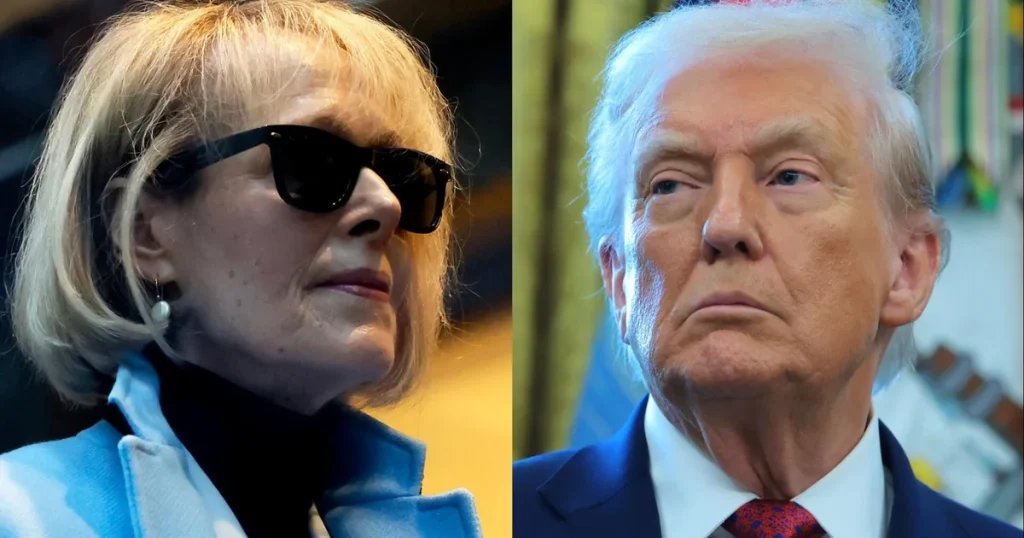
Supreme Court Won’t Hear Trump’s Appeal in E. Jean Carroll Sexual Abuse Case
Supreme Court won t hear Trump – The Supreme Court has decided not to grant President Donald Trump a hearing on his appeal of the E. Jean Carroll sexual abuse case, a decision that will leave the jury’s verdict intact. This ruling means Trump’s legal team cannot challenge the civil trial outcome, which found him liable for sexually abusing and defaming Carroll. The case, centered on allegations of misconduct dating back to the 1990s, has drawn significant attention for its implications on sexual assault claims against public figures. With the Supreme Court’s refusal to intervene, the focus shifts to the broader impact of the verdict on legal precedents and gender-based accountability in high-profile cases.
Unanimous Verdict and Trial Dynamics
The federal jury, composed of six men and three women, delivered a unanimous decision after just under three hours of deliberation. The verdict was based on evidence from the 2023 trial, including testimonies from witnesses who recounted the incident in a New York City department store. Carroll alleged that Trump had digitally assaulted her during a confrontation, and the jury found him liable for both the sexual abuse and the subsequent defamation. The inclusion of the “Access Hollywood” clip, where Trump joked about grabbing women’s genitals, further reinforced the jury’s perception of his behavior as deliberate and offensive.
Carroll’s legal team argued that the trial’s evidence was compelling and that Trump’s absence from the courtroom—along with his decision not to call any witnesses—undermined his ability to defend himself. The strategy of not presenting additional testimony was seen as a critical factor in the jury’s decision, as it relied heavily on Carroll’s account and the testimonies of others who corroborated her claims. This approach highlighted the strength of the evidence and the credibility of the witnesses, making it difficult for Trump’s defense to challenge the narrative effectively.
Legal Strategy and Judicial Review
Trump’s legal team initially sought to overturn the verdict in the Second Circuit Court of Appeals, which rejected their appeal in December 2024. They also attempted to secure an en banc review in June 2025, but this request was denied, leaving the Supreme Court as the final option. The court’s decision not to hear the case means Trump’s arguments about the “implausibility” of the evidence will not be addressed, preserving the jury’s finding of liability. This move aligns with the trend of the Supreme Court avoiding intervention in civil cases, particularly those involving sexual misconduct and defamation.
In his appeal, Trump emphasized the lack of direct evidence to support Carroll’s allegations, arguing that the jury had been swayed by “implausible” claims. However, his legal team failed to present new arguments that would have weakened the jury’s decision. Carroll’s attorneys, on the other hand, stressed that the testimony from other women accused of inappropriate sexual conduct was a key element in establishing a pattern of behavior. This pattern, they claimed, supported the conclusion that Trump’s actions were part of a calculated strategy to belittle and control women.
The Supreme Court’s denial of the appeal also has broader implications for how sexual misconduct cases are adjudicated in the future. By not taking up the case, the court signals its willingness to defer to lower courts’ rulings in civil trials, especially when the evidence is deemed sufficient. This decision may influence similar cases, as it reinforces the idea that public figures can be held accountable for their actions through the legal system. The final verdict, which included an $83 million award for defamation, underscores the financial stakes involved in such high-profile lawsuits.
“This ruling affirms once and for all the jury’s unanimous verdict that President Donald J. Trump sexually assaulted and defamed E. Jean Carroll,” said Roberta Kaplan, Carroll’s attorney. “His multiple efforts to appeal that verdict have all failed, and today’s decision ends his quest to avoid accountability for his actions.” Kaplan’s statement highlights the significance of the Supreme Court’s choice, which could set a precedent for future cases involving sexual misconduct and reputational damage.