
Supreme Court says states can count mail ballots that arrive after Election Day
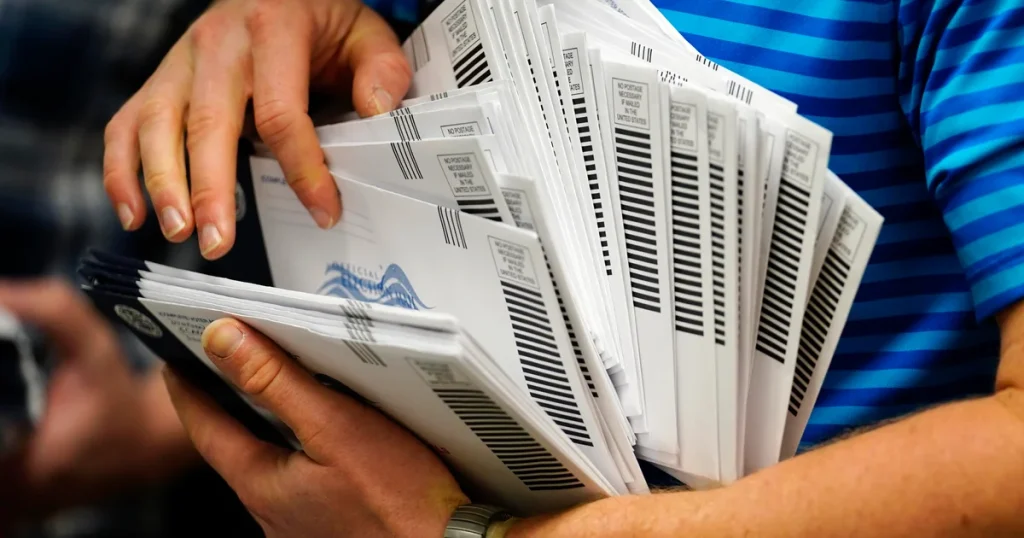
Supreme Court Rules States Can Count Mail Ballots Post-Election Day
Supreme Court says states can count mail ballots that arrive after Election Day, marking a pivotal decision in the ongoing debate over voting procedures. The ruling, issued on Monday, sided with Mississippi’s law allowing ballots to be counted if they are postmarked by Election Day but received up to five days later. The 5-4 decision clarified that federal statutes setting Election Day as the Tuesday after the first Monday in November do not impose a strict deadline for ballot delivery. This outcome could reshape mail voting policies in over a dozen states, where postmarked ballots are accepted even beyond the official election date.
Legal Framework and Judicial Rationale
The case, Watson v. Republican National Committee, challenged Mississippi’s policy, which permits late receipt of ballots as long as they are postmarked on time. The Supreme Court’s conservative majority, led by Chief Justice John Roberts and Justice Amy Coney Barrett, upheld the law, arguing that federal election laws grant states flexibility in managing voting timelines. “The Framers of the Constitution recognized the difficulty of creating universally applicable election rules,” Barrett wrote, stressing that states should retain control over ballot deadlines rather than the federal judiciary.
Barrett’s majority opinion emphasized that the statutes defining Election Day do not specify when ballots must be received. “Congress chose to set Election Day as a Tuesday, but left the timing of ballot receipt to the states,” she noted. This reasoning supports the idea that states can implement their own deadlines, including allowing ballots to be counted after the official date. The decision, however, left unresolved whether states must strictly adhere to Election Day for ballot delivery or if they can accept later submissions.
Implications for Voting Policies
Supreme Court says states can count mail ballots post-Election Day, which has significant implications for election integrity and voter access. While the ruling affirmed state flexibility, it did not eliminate the potential for stricter deadlines. For instance, some states may still require ballots to be received on Election Day itself, while others, like Mississippi, allow a grace period. This distinction could impact the number of mail ballots counted in future elections, depending on how states choose to apply the decision.
The decision aligns with the broader trend of states adopting flexible voting rules. In 14 states and the District of Columbia, ballots postmarked by Election Day are accepted even if they arrive later. Meanwhile, 29 states and D.C. permit military and overseas voters to submit ballots by a later deadline. The Supreme Court’s ruling reinforces that these variations are constitutional, giving states autonomy to balance voter convenience with election administration needs.
Political Reactions and Legislative Efforts
President Trump, a vocal critic of mail voting, reacted to the decision by pushing for legislative changes. His administration backed the RNC’s challenge, arguing that Election Day should serve as the final cutoff for ballot receipt. Trump claimed that mail voting creates opportunities for fraud, though he has yet to provide substantial evidence to support this claim. The ruling, however, allows him to advocate for stricter rules, such as requiring ballots to be received on Election Day.
Mississippi Attorney General Lynn Fitch, a Republican, praised the decision as a validation of state power. She stated that the Supreme Court’s ruling “affirms the bedrock constitutional principle of federalism,” and called for lawmakers to remove the post-Election Day deadline for mail ballots. This sentiment reflects the political divide over whether states should have the authority to set their own voting timelines or if federal oversight is necessary to standardize the process.
Broader Impact on Election Law
The Supreme Court’s decision in Watson v. Republican National Committee may influence other states considering similar ballot policies. By upholding Mississippi’s law, the court signaled that states can adjust deadlines to accommodate voter behavior without violating federal law. This flexibility could encourage more states to adopt extended timelines, potentially increasing voter participation in mail ballots.
However, the ruling also leaves room for future legal challenges. While it confirmed that Election Day is not a strict deadline for ballot receipt, it did not explicitly endorse or reject the idea of states imposing stricter rules. This ambiguity means that the decision could be used to argue for both expanded and limited ballot access, depending on the political priorities of the states and the federal government.