
Read the 14 points of the agreement between Iran and the U.S.
Read the 14 Points of the Agreement Between Iran and the U.S.
Read the 14 points of the agreement – Washington, D.C. – Senior U.S. officials unveiled the 14-point memorandum of understanding (MOU) between the United States and Iran on Wednesday, sharing the agreement’s text with reporters via a phone call. The officials spoke on the condition of anonymity, emphasizing the strategic nature of the deal. While Iran has not officially released the document, the MOU outlines a framework for cooperation aimed at easing tensions and fostering economic and political stability in the region.
Key Elements of the Memorandum of Understanding
The agreement stipulates that both nations will cease all military actions across various fronts, including in Lebanon, permanently and immediately. This includes a mutual commitment to avoid initiating any conflict or military operation against each other, as well as refraining from threatening the use of force. The termination of hostilities in Lebanon is highlighted as a critical step in establishing lasting peace in the region.
Iran is set to resume oil exports immediately following the signing of the memorandum, marking a significant step toward economic normalization. This move is expected to bolster Iran’s oil revenue and reduce financial pressure, while also signaling a shift from prior sanctions-driven restrictions. The MOU also mandates that Iran will make arrangements to ensure the safe passage of commercial vessels through the Strait of Hormuz for a 60-day period, free of charge, between the Persian Gulf and the Sea of Oman. These arrangements will be reciprocal, allowing ships to travel in both directions without additional fees.
As part of the deal, the U.S. and its regional allies will collaborate on a $300 billion reconstruction initiative designed to revitalize Iran’s infrastructure and economy. The implementation of this plan will be finalized as part of the final agreement, with all necessary financial licenses and permissions granted by the U.S. government to facilitate the process. This provision underscores the commitment to long-term investment in Iran’s development, despite past adversarial relations.
Iran reaffirms its dedication to not acquiring or producing nuclear weapons, a core condition of the agreement. The MOU includes a clause requiring both sides to resolve the disposition of stockpiled enriched uranium, ensuring its management aligns with international safeguards. U.S. sanctions against Iran will be lifted according to the timeline outlined in the final agreement, contingent upon the country’s compliance with nuclear-related commitments. The agreement allows for a 60-day window to finalize the comprehensive pact, with both nations retaining the option to extend negotiations if needed.
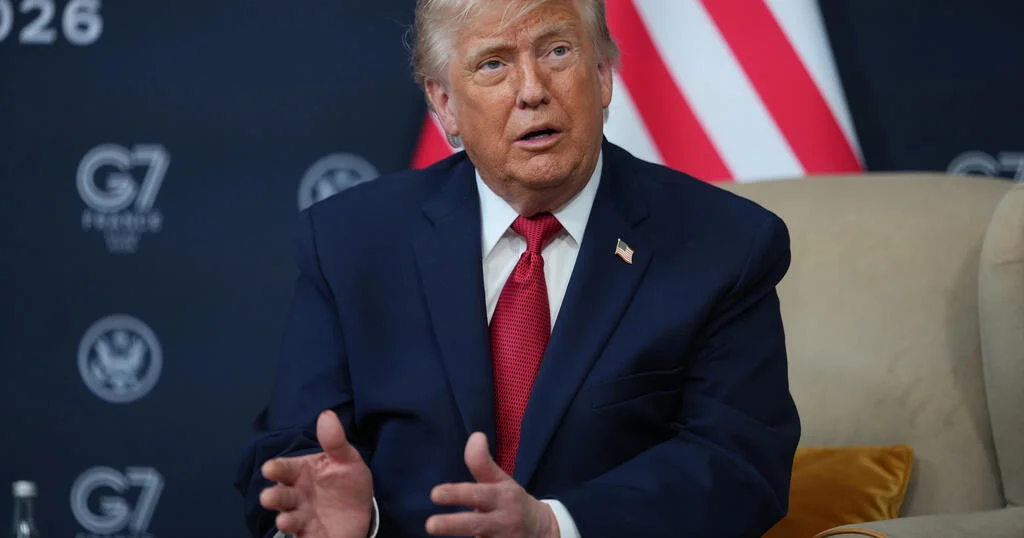
“If it doesn’t get done in 60 days, that’s all right. We go back to bombing,” President Trump stated at the G7 summit in France. “I don’t want to do that, because it’s so good, but we might have to, because we’re never going to let them have a nuclear weapon.”
Details of the MOU Paragraphs
The MOU’s first paragraph declares the immediate and permanent end to military operations on all fronts, including in Lebanon, by both the U.S. and Iran. The agreement further commits the parties to avoid any threat of force or conflict, ensuring the territorial integrity and sovereignty of Lebanon. This section sets the foundation for the broader peace process, with the final deal expected to solidify these commitments.
In another paragraph, the U.S. and Iran agree to respect each other’s sovereignty and territorial integrity, pledging to refrain from interfering in domestic affairs. This mutual recognition of authority is seen as a key diplomatic achievement, fostering trust and cooperation between the two nations. The commitment to negotiate the final agreement within 60 days, with the possibility of extensions, reflects a balance between urgency and flexibility in the process.
Upon signing the MOU, the U.S. will begin removing its naval blockade and any disturbances or obstacles against Iran, with a full resolution of the blockade to be completed within 30 days. During this transition period, commercial vessel traffic will be adjusted to match pre-war levels, as Iran works to restore maritime activity in the region. The U.S. also agrees to withdraw its forces from the vicinity of Iran within 30 days after the final agreement is finalized, signaling a reduction in military presence.
Iran’s responsibility to facilitate safe commercial shipping is outlined in a separate paragraph. The country will prioritize the unimpeded movement of vessels through the Strait of Hormuz for 60 days, with technical and military obstacles to be removed within 30 days. This process involves coordination with Oman and other Gulf states to define the future administration and maritime services in the strait, in accordance with international law and the rights of coastal nations.
Implications and Broader Context
The MOU represents a strategic pivot in U.S.-Iran relations, aiming to address decades of hostility through concrete actions. By ending military operations and lifting sanctions, the agreement seeks to create a stable environment for economic growth and regional diplomacy. However, the success of the deal hinges on Iran’s continued adherence to nuclear compliance, which remains a contentious issue. The U.S. has historically imposed sanctions to pressure Iran into limiting its nuclear program, and this MOU ties those sanctions to specific milestones.
Regional partners, including countries in the Gulf Cooperation Council, are integral to the reconstruction effort. Their involvement highlights a collective approach to rebuilding Iran’s infrastructure, which has suffered significant damage over the years. The $300 billion plan is projected to fund critical projects such as energy infrastructure, transportation networks, and healthcare systems, though the exact allocation details are still under discussion.
The naval blockade removal is another pivotal element, with immediate benefits for Iran’s access to international trade routes. By ending the blockade, the U.S. allows Iran to resume exports of oil and other goods, which could stabilize its economy and improve its global standing. However, the 30-day timeline for full implementation requires swift action from both sides to ensure seamless maritime operations.
The agreement also includes a commitment to resolve the status of enriched uranium stockpiles, a major point of contention in previous negotiations. This step is intended to address concerns about Iran’s nuclear capabilities while maintaining its right to enrich uranium within limits. The U.S. and Iran will work together to determine the fate of these stockpiles, ensuring transparency and compliance with international standards.
Ultimately, the MOU serves as a temporary framework for broader cooperation, with the final agreement to be negotiated within the specified 60-day period. This provision allows for adjustments based on evolving circumstances, ensuring the deal remains adaptable to new challenges. The inclusion of Oman in discussions about the Strait of Hormuz underscores the importance of regional collaboration in managing critical maritime passages.
While the MOU offers a path to peace, its effectiveness depends on the willingness of both nations to uphold their commitments. The U.S. emphasizes the importance of nuclear compliance as a prerequisite for lifting sanctions, while Iran seeks to demonstrate its ability to manage the region’s security and economic stability. The