
What is the price of silver today?
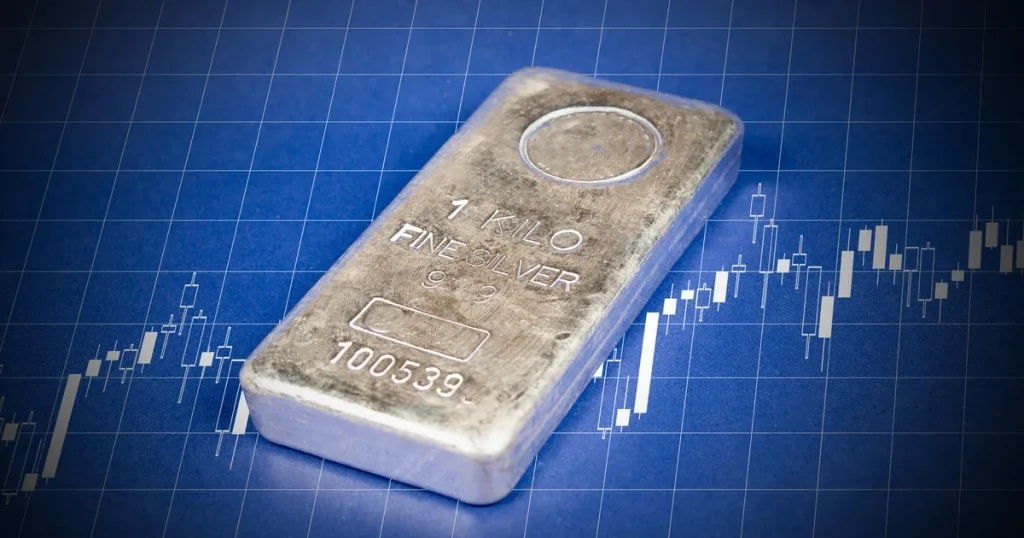
What Is the Price of Silver Today? Key Levels and Outlook
Bizeconanalysis.com – For most of the past century, the question “what is the price of silver” was a footnote to the far louder conversation about gold. Retail investors reached for the yellow metal by default whenever inflation ticked upward or central banks eased policy. That hierarchy has inverted. With gold now trading above the $5,000-per-ounce mark and pricing out much of the retail base, capital has rotated toward the cheaper, industrially anchored metal. Silver’s eighteen-month rally has turned a once-marginal question about what is the price of silver into a front-page topic for allocators across every asset class.
Where the Market Stands Right Now
As of August 28, 2026, the spot benchmark sits at $70.75 per troy ounce. Measured against the roughly $31 level recorded in January 2025, that represents a gain exceeding 200 percent in under two years. No comparable appreciation has been observed in the metal’s modern trading history, placing the current episode in a distinct statistical category within the precious-metals complex.
The move is not an isolated anomaly. Sustained inflationary pressure, elevated short- and long-end rates that have compressed fixed-income yields, and broad equity-market uncertainty have collectively redirected flows into finite, tangible stores of value. Silver’s lower per-ounce entry cost relative to gold made it the natural recipient of that redirected capital, and the resulting price action now rivals—and at times exceeds—the volatility profile of its pricier counterpart.
Industrial Demand as a Structural Floor
Gold is consumed almost entirely for jewelry, sovereign reserves, and speculative positioning. Silver occupies a fundamentally different niche: it is the most electrically conductive element known, a property that renders it indispensable in photovoltaic cells, printed circuit boards, contact switches, and a widening array of electronic components. The global buildout of solar capacity, electric-vehicle manufacturing, and next-generation telecommunications infrastructure locks in a structural demand floor that gold simply lacks.
Because of that industrial underpinning, the metal’s price is not driven purely by monetary sentiment. Even if inflation fears were to cool sharply, physical consumption in manufacturing would continue to absorb supply. Analysts tracking the supply-demand balance have flagged persistent deficits over recent years—a condition that, historically, has supported sustained multi-year price appreciation.
Portfolio Mechanics: Hedge, Diversifier, and Limit
For the individual investor, silver’s primary utility mirrors gold’s: it functions as a largely non-correlated asset that tends to hold or increase value during episodes of currency debasement and economic stress. A portfolio heavily weighted toward equities, investment-grade bonds, or domestic real estate benefits from even a modest allocation to physical or exchange-traded silver, because the metal’s price drivers are orthogonal to those asset classes.
That said, percentage swings in silver are sharper than in gold. The smaller market capitalization of the silver complex amplifies moves in both directions. Investors who cannot tolerate short-term drawdowns of 15 to 25 percent should size positions accordingly. Most financial planners recommend capping total precious-metal exposure—silver included—at roughly 10 percent of portfolio value, a ceiling that preserves diversification benefits without crowding out other allocations.
Even if inflation fears were to cool, the physical consumption of silver in manufacturing would continue to absorb supply. The industrial demand pipeline and finite mine supply argue against an indefinite wait-and-see posture.
Practical Considerations for New Entrants
The $70.75 spot figure is a benchmark, not a transaction price. Dealers and mints apply mark-ups that can add several dollars per ounce, and premium products such as bullion coins or bars carry additional premiums over raw melt value. Prospective buyers should compare quotes across multiple reputable dealers, confirm assay certifications, and factor in storage or insurance costs before committing capital.
Timing the entry is another recurring question. Because the metal’s long-run trajectory has been upward over most multi-decade windows, waiting for a pullback has historically proven costly. A temporary dip of 10 or 15 percent, if it occurs, may present a more favorable entry point, but the absence of such a dip does not invalidate the underlying thesis.
Frequently Asked Questions
What is the price of silver right now?
The spot benchmark as of August 28, 2026, is $70.75 per troy ounce. Actual transaction prices at dealers will be higher due to mark-ups and product premiums.
How much has silver risen since early 2025?
From roughly $31 per ounce in January 2025 to $70.75 in late August 2026, the metal has gained more than 200 percent in under two years.
Is silver a good hedge against inflation?
Silver functions as a non-correlated asset that tends to hold or increase value during currency-debasement episodes. However, its smaller market cap produces sharper percentage swings than gold, so position sizing matters. Most planners cap total precious-metal exposure at around 10 percent of portfolio value.
Why does silver have a structural demand floor that gold does not?
Silver is the most electrically conductive element known and is indispensable in photovoltaic cells, printed circuit boards, contact switches, and other electronics. The global buildout of solar, electric-vehicle, and telecommunications infrastructure creates ongoing physical consumption independent of monetary sentiment.