
Trump temporarily waives higher beef tariffs in bid to lower prices
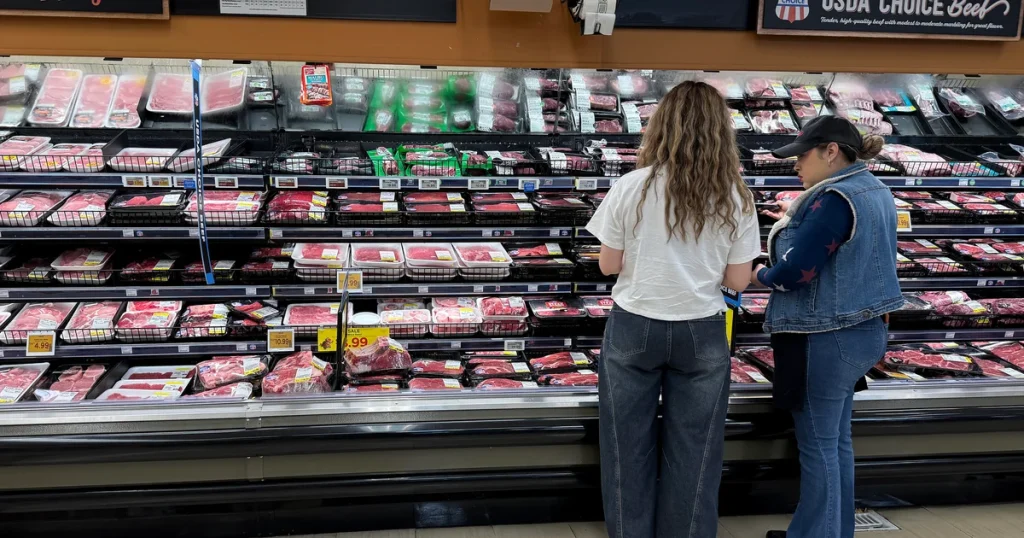
White House Pauses Premium Ground Beef Tariffs as Grocery Bills Soar
Bizeconanalysis.com – Consumers across the country have been watching their grocery receipts swell for months, and beef has become one of the most painful line items at the checkout counter. On Friday, President Donald Trump announced a temporary suspension of elevated tariffs on imported ground beef, aiming to inject short-term relief into a market where prices have climbed to levels unseen in decades. The move allows up to 300,000 metric tons of ground beef to enter the United States over the next 90 days without triggering the additional out-of-quota duties that would normally apply once trade volumes exceed a set threshold established under World Trade Organization rules.
The announcement came via the president’s Truth Social platform, where he framed the decision as both a consumer-protection measure and a strategic pause that would give domestic producers room to rebuild supply.
“We have a commitment that this beef will be sold at 25 percent below current market prices,” the president wrote. “This deal will reduce prices for Americans while giving space for our Great American Beef Herd to grow again.”
How the Tariff Mechanism Works
Under the existing trade framework, the United States permits a defined volume of beef imports each year at a lower base duty rate. Once shipments exceed that quota, a substantially higher out-of-quota tariff kicks in, effectively making additional imports prohibitively expensive. By waiving the premium layer for ground beef specifically, the administration is creating a narrow window in which foreign suppliers can ship product into American supermarkets at a lower landed cost. The 90-day timeframe and the 300,000-metric-ton ceiling are designed to be temporary and bounded, limiting the duration of any competitive pressure on domestic packers and processors.
The Price Problem Behind the Policy
The urgency of the decision is underscored by hard data. As of July, the average retail price of ground beef stood at $6.89 per pound, a figure that represents a 57 percent increase over what consumers paid five years earlier, according to data compiled by the Federal Reserve Bank of St. Louis from federal labor statistics. Beef has outpaced nearly every other food category in terms of inflation. The latest Consumer Price Index report showed ground beef up 9 percent year over year in July, while beef steaks climbed 9.6 percent over the same period — rates well above the broader food-inflation trend.
For households already stretched thin by housing, energy, and transportation costs, a nearly dollar-per-pound jump in the price of a staple protein translates into real monthly budget pressure, particularly for families that rely on ground beef as a lower-cost protein source for everyday meals.
Government and Industry Reactions
A spokesperson for the U.S. Department of Agriculture characterized the tariff pause as a direct response to consumer hardship, saying the action would
“help address the affordability of beef” during a period of record-high consumer demand.
The spokesperson added that the administration is simultaneously
“cutting regulations for our farmers and ranchers and rebuilding our nation’s cattle supply.”
The White House did not immediately respond to a separate request for comment seeking additional detail on implementation timelines or enforcement mechanisms.
Structural Drivers: Shrinking Herds and Drought
The tariff waiver addresses a symptom, but the underlying supply crunch has been building for years. American cattle herd sizes have contracted steadily over multiple decades, driven by a combination of land-use changes, rising feed costs, and sustained consumer demand that outpaces production capacity. Worsening drought conditions across major ranching regions have reduced available pasture, forcing operations to purchase more expensive grain-based feed or, in severe cases, to cull portions of their herds entirely, per USDA assessments.
The contraction reached a visible milestone in July, when the national beef cow herd dropped to 28.5 million head — a record low for that month, as tracked by the American Farm Bureau Federation, the trade association representing agricultural producers. Fewer cows mean fewer calves, fewer feedlot placements, and ultimately fewer pounds of beef reaching retail shelves in the months and years ahead.
Previous Import Pushes and Expert Skepticism
This is not the first time the Trump administration has attempted to cool beef prices through trade channels. In February, the president signed an executive order expanding imports from Argentina by an additional 80,000 metric tons, a move intended to supplement domestic supply during peak demand seasons. Economists and trade analysts have voiced doubts about the efficacy of such measures, noting that even substantial import volumes represent a modest slice of total U.S. beef consumption — roughly a few percent of annual throughput — and therefore may lack the scale needed to move retail prices in any meaningful direction.
Industry groups representing cattle producers have consistently opposed expanded import quotas, arguing that even temporary price suppression from foreign supply can discourage domestic investment in herd rebuilding at precisely the moment the industry needs capital to expand. The National Cattlemen’s Beef Association did not immediately respond to a request for comment on the latest waiver.
Whether the 90-day window produces measurable shelf-price relief, or whether it simply delays the next round of price escalation as domestic supply continues to tighten, will become apparent in the coming weeks as importers finalize shipments and retailers adjust pricing. For now, the administration is betting that a short, targeted dose of foreign supply can buy time for American ranchers to rebuild herds while easing the immediate squeeze on household budgets.
Related Reading
Frequently Asked Questions
What is Trump temporarily waives higher beef tariffs?
Trump temporarily waives higher beef tariffs is the main topic of this guide. The article explains the context, practical details, and next steps readers should understand.
Why does Trump temporarily waives higher beef tariffs matter?
Trump temporarily waives higher beef tariffs matters because readers are looking for a useful answer, not just a short summary. Good content should match search intent and help them decide what to do next.