
Transcript: Rep. Don Bacon on “Face the Nation with Margaret Brennan,” June 7, 2026
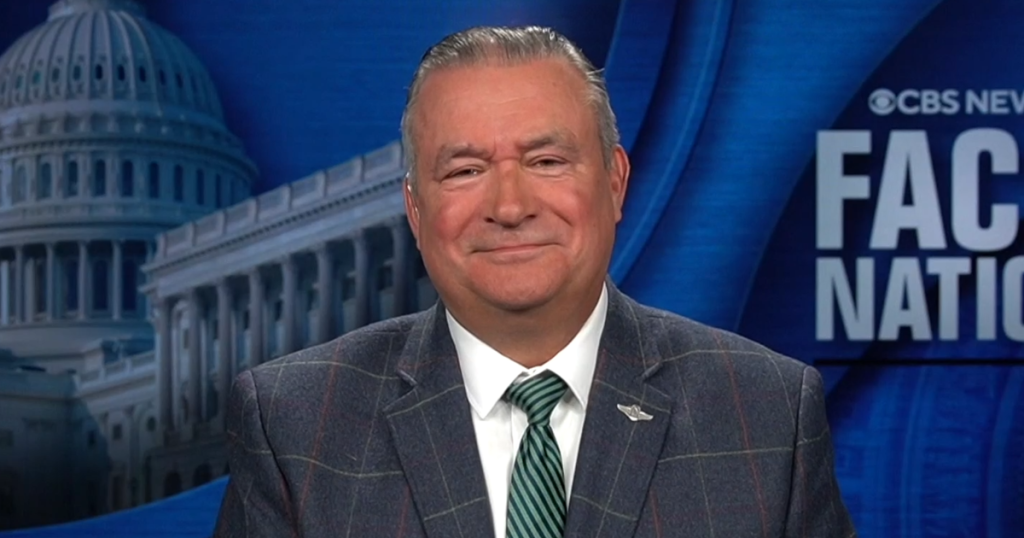
Transcript: Rep. Don Bacon on “Face the Nation with Margaret Brennan,” June 7, 2026
Political Decisions and Candidate Quality
Transcript – On June 7, 2026, Republican Congressman Don Bacon from Nebraska participated in an interview with Margaret Brennan on “Face the Nation.” The discussion focused on key political issues, including the quality of candidates and the impact of endorsements in the ongoing election cycle.
Brennan began by addressing the recent selection of Ken Paxton as the Texas Republican Senate nominee. Despite Paxton’s history, including his impeachment by the Republican-led House in 2025 for abuse of office and bribery charges, as well as his wife’s divorce citing adultery, he was still chosen over sitting Senator John Cornyn. This decision sparked debate about the role of character versus political backing in the nomination process.
MARGARET BRENNAN: Before we get to national security, I want to ask you about politics and candidate quality. Last month, Texas Republicans chose to make Ken Paxton their Senate nominee, despite the fact, as Texas AG, he was impeached by the Republican-controlled House on multiple charges of abuse of office, including bribery. His wife is divorcing him on what she called biblical grounds because of adultery, and he was indicted in 2015 on securities fraud charges that were later dropped. Despite all this, the President backed him over sitting Senator John Cornyn, and so did Texas Republicans. For your party, does Trump’s favor carry more weight than character?
Rep. Don Bacon acknowledged the influence of Trump’s endorsement but emphasized its potential drawbacks. “I think in many cases it does,” he said, noting that Trump’s support often sways primary elections. “His endorsement in a primary is often what decides the outcome.” Bacon also highlighted the personal stakes for candidates like Cornyn, who had long been a key fundraiser for the party and supported numerous Republican victories across the nation. “There’s a lot of loyalty to John Cornyn,” he added, “and I know him personally. I admire the guy.”
Bacon argued that the decision to prioritize Trump’s backing over Cornyn’s experience may have weakened the Republican position. “Texas Republicans nominated someone who is probably the most vulnerable in a general election,” he stated. “That puts the seat up for grabs, and I don’t think it was a wise move.” He also pointed out that the Democratic nominee in the state was similarly lacking in strength, suggesting that both parties faced challenges in securing qualified candidates. “They both nominated people who might struggle in a general election,” Bacon concluded, “but John Cornyn could have won that seat easily. Now, the Republicans will have to spend heavily to defend it.”
Explaining the Nation’s Policies
Brennan then shifted the conversation to Bacon’s approach to communicating with voters, especially regarding economic and policy issues. Bacon, who announced his retirement from Congress, was asked how he would persuade constituents if he were still running for office. He responded by outlining his strategy of transparency and alignment with voters’ priorities.
MARGARET BRENNAN: I know you have chosen to retire, but if you were having to campaign and explain all this, including the higher gas prices, how would you persuade voters?
Bacon explained that he would focus on delivering consistent messages grounded in evidence. “I try to show what’s right,” he said, whether supporting Trump’s policies or opposing them. “I just try to look voters in the eye and say, ‘Hey, I support Ukraine. I think tariffs are a mistake. I have votes to back it up.’” He also highlighted his commitment to specific issues, such as border security and foreign policy in Iran, which he described as a long-standing adversary. “I support the fact that we secured the border,” he stated, “and I support, generally, what we’re doing in Iran because they’ve been waging war against us for 47 years.”
Bacon emphasized the importance of integrity in political discourse. “I try to call balls and strikes,” he said, “and I try to be honest. Once I’m elected, I want to ensure I deliver on my promises.” This approach, he argued, would help bridge the gap between policy and public trust, especially in a climate where voters are increasingly concerned about economic impacts like rising gas prices.
European Alliances and Ukraine
After a commercial break, Brennan returned to the conversation, this time addressing the recent remarks by Secretary of Defense Kyle Hegseth at a Normandy summit. Hegseth had drawn a comparison between the D-Day landings and modern immigration challenges, suggesting that European countries face an “invasion” of ideologies from various regions. The analogy, however, left some questions about its clarity and relevance.
MARGARET BRENNAN: I’m not sure who the allies were in that analogy, but I wonder what you make of Hegseth’s remarks.
Bacon provided a critical perspective on Hegseth’s comments. “Normandy is a time to celebrate a great day,” he said, referencing his own visit to Omaha Beach. “That’s where the focus should have been. We lost about 3,000 troops on that beach in one day—something that deserves our attention.” He questioned whether the analogy detracted from the historical significance of D-Day by framing it as a metaphor for current immigration issues. “It’s a chance to celebrate with our allies,” Bacon added, “but this administration, particularly the Pentagon, has been overly critical of Europe. They’re harsh on the EU, NATO, and even the countries that make up NATO itself.”
Bacon pointed out a key inconsistency in the administration’s stance. “You never hear them criticize Russia,” he noted, “even though Russia’s actions in Ukraine are central to the current conflict.” This, he argued, highlighted a broader weakness in the administration’s foreign policy. “Why are they so weak on Russia?” he asked, “when that directly affects their Ukraine strategy?” Bacon’s comments underscored the importance of unity among European allies and the need for a coherent approach to global challenges.
The interview concluded with Brennan encouraging Bacon to continue offering his insights on the other side of the break. Bacon’s reflections on candidate quality, voter communication, and international relations provided a comprehensive view of the political landscape in 2026. His emphasis on integrity, clear messaging, and strategic alignment with voters suggested a balanced approach to navigating the complexities of modern politics.
Summary and Key Takeaways
The discussion revealed several critical themes: the influence of Trump’s endorsements on Republican primaries, the trade-offs between loyalty and competence in candidate selection, and the need for a unified approach to foreign policy. Bacon’s candid remarks offered a nuanced take on these issues, blending personal experience with broader political analysis. His focus on transparency and alignment with voters’ values, coupled with his critique of the administration’s stance on Europe and Russia, highlighted the challenges facing the Republican Party in shaping its narrative for the upcoming elections.
By addressing both domestic and international concerns, Bacon demonstrated his ability to connect policy decisions to real-world impacts. His remarks on the vulnerability of the Texas Senate race and the Democratic nominee reflected a strategic understanding of electoral dynamics. Meanwhile, his critique of Hegseth’s analogies emphasized the importance of clarity in political messaging, particularly when linking historical events to contemporary issues.
As the interview wrapped up, it underscored the ongoing debate within the Republican Party about how to balance loyalty to Trump with the need for strong, principled candidates. Bacon’s insights provided a valuable perspective on these tensions, offering a glimpse into the challenges and opportunities facing the party in the lead-up to the next election cycle.