
Will Gov. Newsom veto the high-speed rail oversight bill that his own watchdog calls essential?
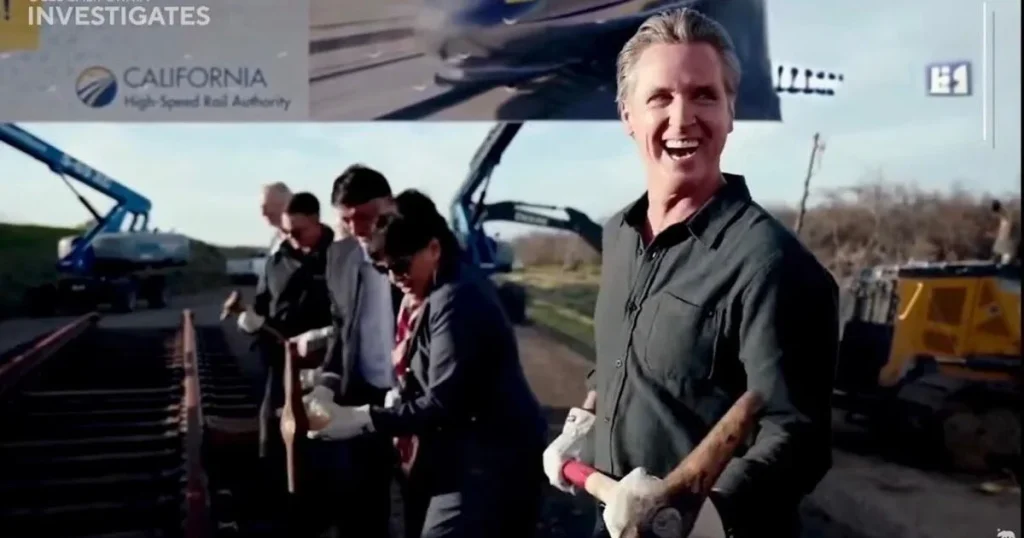
California’s Bullet Train Watchdog Says He Needs Tools. The Governor Who Appointed Him Wants to Take Them Away.
Bizeconanalysis.com – Ben Belnap was placed in charge of auditing California’s most ambitious infrastructure project by the very administration now moving to strip his office of the authority he says it requires to do the job. The inspector general of the California High-Speed Rail Authority — a role created in 2023 to scrutinize contracts, probe fraud, and surface problems before they metastasize into cost overruns — has told lawmakers that without additional powers, his team cannot fulfill its mandate. Yet Governor Gavin Newsom’s office is preparing to veto the remaining provisions of Assembly Bill 1608, the measure designed to deliver those powers, according to multiple insiders with direct knowledge of the back-channel negotiations.
The bill, drafted by Assemblymember Lori Wilson, cleared both chambers of the state Legislature. On September 1, 2026, it passed the state Senate without a single dissenting vote and now sits on the governor’s desk awaiting signature or veto.
The Project Behind the Oversight
California’s bullet-train initiative, the first of its kind in the United States, has been defined less by progress than by slippage. More than a decade into construction, the program has exceeded budget after budget and missed deadline after deadline. Internal records indicate the state never purchased the rolling stock it publicly pledged to acquire, and the inspector general has warned that without fresh financing the project could exhaust its funds as early as December 2027. Newsom has pointed to a $4 billion federal funding cut under the Trump administration as a primary driver of the shortfall, though the state’s own procurement failures compound the problem.
Against that backdrop, the oversight question is not academic. A program that has already burned through billions and squandered years of schedule margin demands rigorous, independent financial scrutiny — precisely the function Belnap’s office was chartered to perform.
The Twist: Half the Bill Is Already Law
What makes the veto threat particularly confusing is that the most contentious element of AB 1608 is already in force. Those provisions grant the inspector general the ability to temporarily withhold sections of his reports when they reveal security vulnerabilities, gaps in fraud detection, or pending litigation. Critics at the time labeled the language “anti-transparency,” arguing it let a watchdog selectively publish findings.
Newsom’s administration enacted those provisions not through standalone legislation but by embedding them in a state budget trailer bill — a companion measure that travels alongside the annual budget on an expedited track, receiving far less public scrutiny than a free-standing bill. The controversial language thus became law quietly, folded into the plumbing of fiscal governance.
The governor is now moving to veto the rest of the bill: the purchase authority and job-classification upgrades that Belnap identifies as prerequisites for hiring competent auditors and procuring basic software without bureaucratic labyrinth.
What the Watchdog Says He Cannot Do Without the Bill
Belnap’s office, by his own account, operates at roughly half its intended staffing level. Experienced auditors who would qualify for the work do not fit the current low-level job classifications, a mismatch the Legislature’s own analyst flagged two years before the bill was introduced. Belnap says he has been forced to turn away candidates he describes as
“fabulous”
because the pay grades and titles available to him simply do not match their credentials. The bill would let him hire qualified personnel immediately rather than waiting years for the state’s reclassification machinery to catch up.
The operational consequences are already visible. Because of the staffing gap, the inspector general’s team has not yet been able to audit the rail authority’s change-order process — the mechanism by which contract modifications are approved. Records indicate that process is costing California taxpayers hundreds of millions of dollars in unexamined modifications.
There is also a procurement episode that underscores the administrative drag. The office spent two years and $1.15 million attempting to acquire $300,000 worth of standard software and still does not have it. Agency-mandated fees, consultant engagements, and redirected staff time have pushed the effective cost toward an additional $2 million — a figure that, in the inspector general’s view, could have been avoided entirely had the bill been signed into law.
Why the Veto Threat Matters Beyond One Bill
The episode raises a broader question about how California’s executive branch treats independent oversight of its own signature projects. Newsom appointed Belnap. Newsom’s administration enacted the most politically sensitive portion of the oversight bill through a fast-track budget vehicle. And now, according to sources familiar with the discussions, the same administration is preparing to veto the operational provisions that would let the watchdog actually staff, equip, and execute its mandate.
The governor’s office declined to answer specific questions about the veto calculus, responding only:
“We don’t typically comment on pending legislation.”
That silence, combined with the bipartisan support the remaining provisions have drawn from lawmakers across the aisle and from independent oversight bodies, leaves the question of motive unresolved. What is clear is that a project already running late, already over budget, and already flagged for potential insolvency within eighteen months is precisely the kind of endeavor where functional, well-staffed, well-equipped oversight is not a luxury but a precondition for accountability.
For Californians who have watched the bullet-train promise stretch across more than a decade of broken timelines and ballooning costs, the stakes of a single signature — or veto — on a desk in Sacramento may prove larger than the bill’s page count suggests.
Related Reading
Frequently Asked Questions
What is Will Gov Newsom veto the high?
Will Gov Newsom veto the high is the main topic of this guide. The article explains the context, practical details, and next steps readers should understand.
Why does Will Gov Newsom veto the high matter?
Will Gov Newsom veto the high matters because readers are looking for a useful answer, not just a short summary. Good content should match search intent and help them decide what to do next.