
Hurricane warning issued for western Hawaii as Lowell approaches
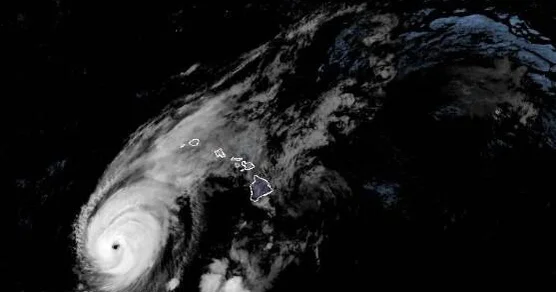
Category 3 Hurricane Lowell Bears Down on Western Hawaii, Prompting Widespread Warnings
Bizeconanalysis.com – Residents across the Hawaiian archipelago faced an early Monday morning of heightened alert as Hurricane Lowell, packing sustained winds of 115 mph, closed in on the western islands. The storm’s approach triggered a formal hurricane warning covering Kauai and Niihau, while the National Hurricane Center simultaneously placed Oahu under a tropical storm watch. For a chain of islands accustomed to tropical weather but rarely to a direct hurricane strike, the combination of warnings represented an unusual and serious escalation in threat level.
What the Warnings Mean for Each Island
The hurricane warning for Kauai and Niihau signals that hurricane-force conditions — sustained winds of 74 mph or greater — are expected within the next 36 hours. Oahu’s tropical storm watch indicates that tropical storm conditions, with sustained winds of 39 to 73 mph, are possible within roughly 48 hours. The distinction matters to residents: a hurricane warning typically prompts mandatory shelter-in-place guidance, while a watch calls for preparation and monitoring. Across the islands, utilities, emergency managers, and local officials moved to activate response protocols as the storm drew nearer.
The Monument in the Storm’s Path
Lowell’s trajectory also carried it through waters belonging to the Papahanaumokuakea Marine National Monument, one of the largest protected ocean areas in the United States. Spanning nearly 583,000 square miles and encompassing ten of Hawaii’s islands, the monument stretches from the main Hawaiian chain northward toward the Midway Atoll. The hurricane warning extended into portions of this vast marine sanctuary, meaning that the storm’s winds, waves, and rainfall would sweep across waters where marine life, cultural sites, and research stations operate. Forecasters indicated that Lowell’s center would pass over segments of the monument as it tracked west of the populated islands.
Forecast Track and Timing
The Miami-based National Hurricane Center projected that Lowell’s eye would pass just west of the main Hawaiian Islands, skimming near Niihau on Monday night before the system decelerated by early Wednesday. The storm was not expected to make direct landfall on a populated island, but its proximity would still deliver sustained hurricane-force winds to the western chain.
“Gradual weakening is expected through Tuesday. However, Lowell is forecast to remain a hurricane as it passes near the Hawaiian Islands,” the center stated.
At peak intensity, hurricane-force winds radiated outward up to 60 miles from the storm’s center, meaning that even islands not directly in the eye’s path would experience dangerous sustained winds, gusts, and wind-driven rain.
Rainfall, Flooding, and Landslide Risk
Perhaps the most consequential hazard for Hawaii’s terrain was not wind but water. Forecasters estimated that Kauai could receive between 6 and 10 inches of rainfall, with localized totals potentially reaching 16 inches in the island’s windward and elevated zones. The Big Island was projected to accumulate 4 to 8 inches, with isolated pockets possibly hitting 12 inches. Oahu and Maui County faced similar ranges of 4 to 8 inches, with upper-end estimates of 10 inches depending on where the storm’s heaviest bands made contact.
Hawaii’s volcanic topography, steep valleys, and saturated soils make even moderate rainfall events capable of triggering rapid runoff. The center emphasized that such totals could produce “significant” flash flooding and mudslides, particularly in Kauai County and across portions of the Big Island where previous storms have left hillsides destabilized. Residents in low-lying drainage areas and near stream channels were urged to monitor local waterways and heed evacuation advisories if issued.
Storm Surge and Coastal Hazards
Along the coastlines, Lowell threatened to push a storm surge of up to 4 feet into Kauai County’s harbors and low-lying shorelines. Oahu, though farther from the storm’s center, could still see roughly a foot of surge叠加 onto already elevated surf. The center warned of “life-threatening surf and rip current conditions across many of the Hawaiian islands,” a designation that typically prompts beach closures and advisories against entering the water entirely. For communities that depend on coastal access for daily life and tourism alike, such conditions close beaches and marinas for extended periods.
Tornado Threat in the Wake
Adding another layer of complexity, forecasters identified the potential for several tornadoes near Kauai and Niihau from Monday afternoon through Monday night. A smaller number of tornadoes were deemed possible across the remainder of the Hawaiian Islands. Tornadoes in Hawaii, while far less common than in the continental United States, can still produce localized damage to structures, vegetation, and power lines, particularly when they form in the outer rain bands of a tropical system.
Why This Storm Matters for Hawaii
Hawaii sits in the central North Pacific, a region where tropical cyclones form less frequently than in the Atlantic or western Pacific basins. When a hurricane does approach the islands, the combination of high terrain, dense population centers, limited inland escape routes, and aging infrastructure amplifies the impact of even a near-miss. The western islands, in particular, have historically borne the brunt of tropical systems that track westward across the Pacific. Lowell’s Category 3 strength at closest approach made this event a significant test of preparedness across the chain, from emergency shelters and hospital surge capacity to power-grid hardening and coastal flood defenses.
As Monday progressed, residents across Kauai, Niihau, Oahu, Maui, and the Big Island were advised to secure outdoor items, charge portable electronics, fill water containers, and monitor official channels for evolving guidance through the storm’s passage and its gradual weakening expected by Wednesday.
Related Reading
Frequently Asked Questions
What is Hurricane warning issued for western Hawaii?
Hurricane warning issued for western Hawaii is the main topic of this guide. The article explains the context, practical details, and next steps readers should understand.
Why does Hurricane warning issued for western Hawaii matter?
Hurricane warning issued for western Hawaii matters because readers are looking for a useful answer, not just a short summary. Good content should match search intent and help them decide what to do next.