
Will Trump’s Venezuela oil deal lower U.S. gas prices? Here’s what experts say.
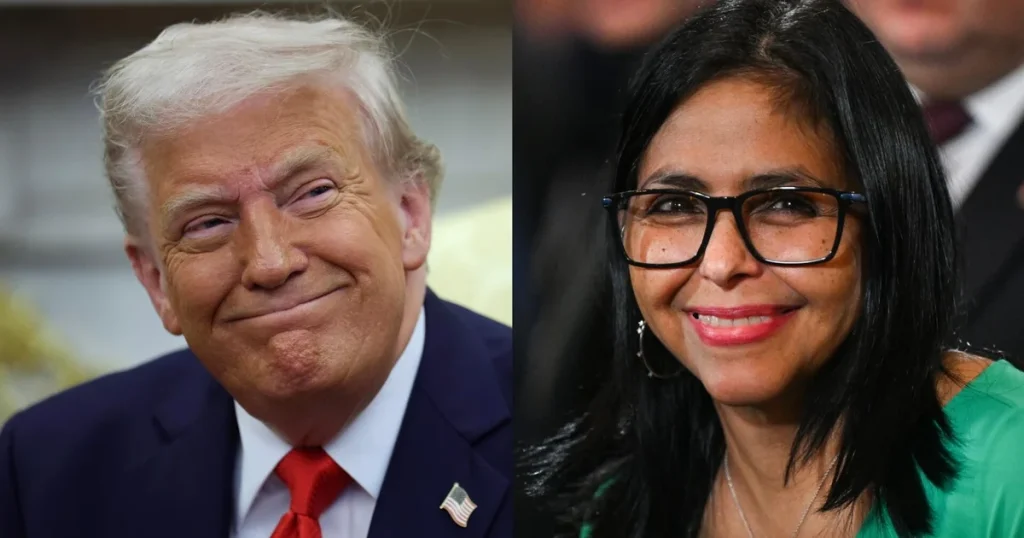
Trump’s Venezuela Oil Deal: Will Gas Prices Drop?
Bizeconanalysis.com – With the national average at the pump already topping four dollars per gallon, the question on every driver’s mind is whether Will Trump’s Venezuela oil deal will actually deliver cheaper fuel. The White House framed the announcement as a historic energy pact meant to tap Venezuela’s staggering underground reserves and pass savings straight through to American households. Energy-market veterans, however, are far less sanguine about the timeline.
“Will substantially lower gas prices for all Americans, long into the future.”
That was the administration’s pitch on Friday. Commodity traders, investment-bank strategists, and independent petroleum analysts have since pushed back, arguing that the distance between a signed concession and an extra gallon on a U.S. shelf spans years rather than weeks.
What the Deal Actually Covers
Venezuelan state channels outlined the arrangement over the weekend: a private joint venture spanning seventeen strategic fields that hold roughly sixty-five billion barrels of proven crude. For context, the U.S. Energy Information Administration pegs America’s own proven inventory below fifty billion barrels, while Venezuela’s total national stockpile exceeds three hundred billion — the largest proven reserve base anywhere on Earth.
President Delcy Rodríguez confirmed a one-hundred-year concession over those seventeen fields. A senior U.S. official told reporters that Washington will retain a fifty-five percent equity stake, paired with the right to lift crude at cost. Secretary of State Marco Rubio, in a Friday social-media post, projected that the venture would attract close to one hundred billion dollars of private capital and sustain thousands of jobs.
Why Consumers Won’t Feel Relief Soon
Global Energy Monitor, a nonprofit that tracks energy infrastructure worldwide, points out that newly discovered fields typically need around fifteen years before crude begins flowing. That estimate already assumes a stable geopolitical backdrop and ignores the fact that much of the Orinoco Belt’s output is a heavy, high-sulfur grade demanding more complex refining than lighter American refinery configurations were built to handle.
Tracy Shuchart, chief executive of Hilltower Resource Advisors, placed a five-to-fifteen-year window on when Venezuelan volumes could become large enough to register on domestic pump prices. Patrick De Haan, a petroleum analyst at GasBuddy, issued a Monday research note calling the White House move “a signal that the administration remains concerned about elevated fuel prices,” while cautioning that any benefits “will take years to fully materialize and are unlikely to move the needle in the near term.”
Venezuela’s sector has endured decades of underinvestment. Industry estimates put the capital needed merely to restore existing fields to full operating capacity at no less than one hundred billion dollars. Output did climb this year, reaching approximately 1.1 million barrels per day in the second quarter versus roughly 941,000 barrels per day in 2025, per the latest OPEC data. Yet UBS analysts, in a report dated August 31, warned that even that modest gain should not be read as a green light for rapid expansion, noting that output was up by just one hundred to two hundred thousand barrels per day from a very low base roughly eight months after Nicolás Maduro’s removal from office.
Bob McNally, who served as an energy adviser in the George W. Bush White House, told The Associated Press that the deal effectively opens a door for private-sector investment in Venezuela’s hydrocarbon sector. The door, however, has been shut before. After Hugo Chávez nationalized the industry, ExxonMobil and other majors walked away, and the scars of that episode still shape how foreign capital views Caracas.
Frequently Asked Questions
How soon could the Venezuela oil deal affect U.S. pump prices? Most analysts cited in the reporting place the window at five to fifteen years. Heavy crude from the Orinoco Belt also requires refinery upgrades before it can be processed at scale, adding further delay.
What percentage of the venture does the U.S. government hold? Washington retains a fifty-five percent equity stake plus the right to draw crude at cost, according to a senior official briefed on the arrangement.
How large are the reserves involved? The seventeen fields under concession hold roughly sixty-five billion barrels of proven crude. Venezuela’s total national proven stockpile exceeds three hundred billion barrels, making it the largest proven inventory in the world.
Is the deal already producing additional barrels? No. Current output sits near 1.1 million barrels per day, up modestly from 2025 levels. The concession structure is newly established, and no incremental volumes attributable to the deal have yet reached the market.