
Live Updates: Iran war hits 6-month mark with no end in sight
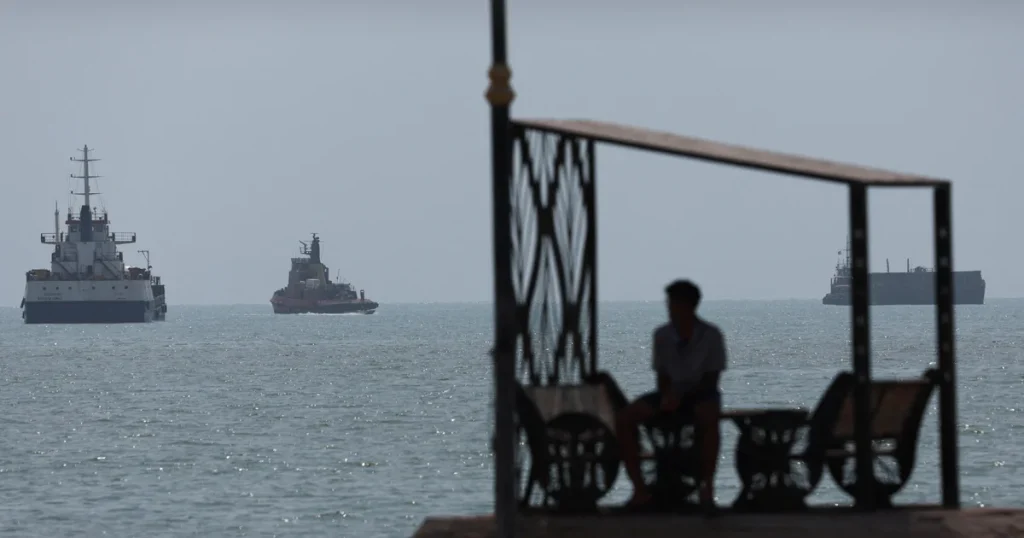
Strait of Hormuz Crisis Enters Second Quarter as Thousands of Sailors Remain Stranded
Bizeconanalysis.com – Half a year after the United States and Israel jointly opened hostilities against Iran on February 28, the human toll of the maritime blockade continues to mount. Approximately 6,000 seafarers aboard some 400 vessels are still unable to depart the Strait of Hormuz, according to figures released Friday by the United Nations’ International Maritime Organization. The organization marked the six-month anniversary of the war with a statement underscoring that the conflict has produced cascading disruptions to global fuel supply chains and commodity flows.
IMO Secretary-General Arsenio Dominguez framed the situation in stark terms, noting that thousands of mariners in the region continue to endure “conditions of heightened risk and uncertainty.” He added that the broader deterioration of maritime security — stretching from the Black Sea through the Red Sea to the Gulf of Aden — poses dangers to every nation that depends on sea lanes.
“But it is particularly distressing for the thousands of innocent seafarers affected,” Dominguez said.
At least 19 mariners have lost their lives in the region since the war began. Despite the IMO’s announcement of a large-scale rescue and evacuation plan for trapped vessels, only 136 ships and roughly 2,900 seafarers have been extracted so far. No further evacuations have taken place since the end of June, when the operation was suspended amid renewed exchanges of fire between Iranian and American forces.
Sanctions Escalation and Tehran’s Diplomatic Pushback
On the diplomatic front, Iran’s foreign ministry issued a new statement on Friday branding the latest round of U.S. sanctions as “economic terrorism” and an assault on the country’s sovereignty. The ministry accused Washington of violating the United Nations Charter, a position Tehran has reiterated over several days.
“The US abuse of the dollar as a tool to intimidate other countries in order to force them to follow its interventionist policies, which violate international law, in relation to Iran, constitutes a violation of the national sovereignty and right to self-determination of all member states of the United Nations,” the statement read. “US sanctions against Iran, due to both their nature and consequences, constitute a flagrant violation of the UN Charter.”
Foreign Minister Abbas Araghchi had made parallel arguments in a letter addressed to U.N. Secretary-General Antonio Guterres earlier in the week, urging the international body to formally condemn American actions against Iranian sovereignty. The ministry’s Friday text went further, lamenting what it described as the indifference of the U.N. system and its member states toward what it called “flagrant violations of international law by the United States and [Israel].”
“Unfortunately, the indifference and appeasement of the United Nations system and its member states toward the flagrant violations of international law by the United States and [Israel] have led to the emergence of an extremely dangerous pattern of lawlessness and the commission of the gravest international crimes by them, the consequences of which have placed the entirety of human civilization under an unprecedented threat,” the statement continued.
As of Friday, China stands as the only major power to have publicly endorsed Iran’s position that the sanctions contravene U.N. law and to have declared it will not comply with them. The statement closed with a rallying passage invoking Iran’s civilizational heritage and religious traditions, asserting that the nation would “repel the malignity of its evil enemies and will increase the power and strength of our homeland day by day.”
Russia–Iran Gas Pipeline: A Workaround for the Blockade
With the Strait of Hormuz effectively closed to Iranian maritime traffic under the U.S. blockade, Tehran has accelerated efforts to find overland alternatives for moving hydrocarbons. This week, Iran’s ambassador to Russia, Kazem Jalali, told IRNA — the state-run news agency — that talks between Iran’s Ministry of Petroleum and Russia’s state-owned Gazprom had produced “very good progress” on transferring Russian gas into Iran via a pipeline running through Azerbaijan.
The two sides agreed on an initial throughput of 150 million cubic meters per day, a volume Jalali noted equates to just under one million barrels of oil per day. For perspective, the U.S. Energy Information Administration estimates that roughly 21 million barrels of oil transited the Strait of Hormuz daily before the war disrupted the waterway. The pipeline deal, while meaningful, would therefore cover only a small fraction of the flow that once passed through the strait.
“We have reached an understanding on all these issues. Therefore, we are no longer at the initial stages of this project; rather, we have made very good progress,” Jalali told IRNA, adding that “one or two” issues remained to be resolved.
What the Six-Month Mark Signals
The absence of any visible endgame after six months underscores how deeply entrenched the conflict has become. The blockade of the Strait of Hormuz — one of the world’s most critical chokepoints for petroleum transport — has transformed a regional military confrontation into a global economic event, straining energy markets, shipping insurance rates, and supply chains from Asia to Europe. The continued detention of thousands of sailors, the stalled evacuation effort, and the diplomatic standoff over sanctions suggest that neither side is close to a negotiated resolution. For the mariners still aboard those 400 vessels, each additional week in the strait compounds both the physical danger and the psychological toll of an indefinite standoff.
Related Reading
Frequently Asked Questions
What is Live Updates: Iran war hits 6-month mark with no end in sight?
Live Updates: Iran war hits 6-month mark with no end in sight is the main topic of this guide. The article explains the context, practical details, and next steps readers should understand.
Why does Live Updates: Iran war hits 6-month mark with no end in sight matter?
Live Updates: Iran war hits 6-month mark with no end in sight matters because readers are looking for a useful answer, not just a short summary. Good content should match search intent and help them decide what to do next.