
Trump puts autistic kids in the spotlight and cuts agencies built to protect them
Autism Takes Center Stage in Washington While the Safety Net for Affected Children Shrinks
Bizeconanalysis.com – The second Trump administration has made autism a recurring theme of its public agenda, yet the very federal structures designed to shield autistic students from discrimination are being dismantled or starved of resources. The result is a paradox: the condition receives unprecedented presidential attention even as the mechanisms that protect children with the diagnosis are weakened or eliminated.
A Third-Grader’s Fight for a Seat in Class
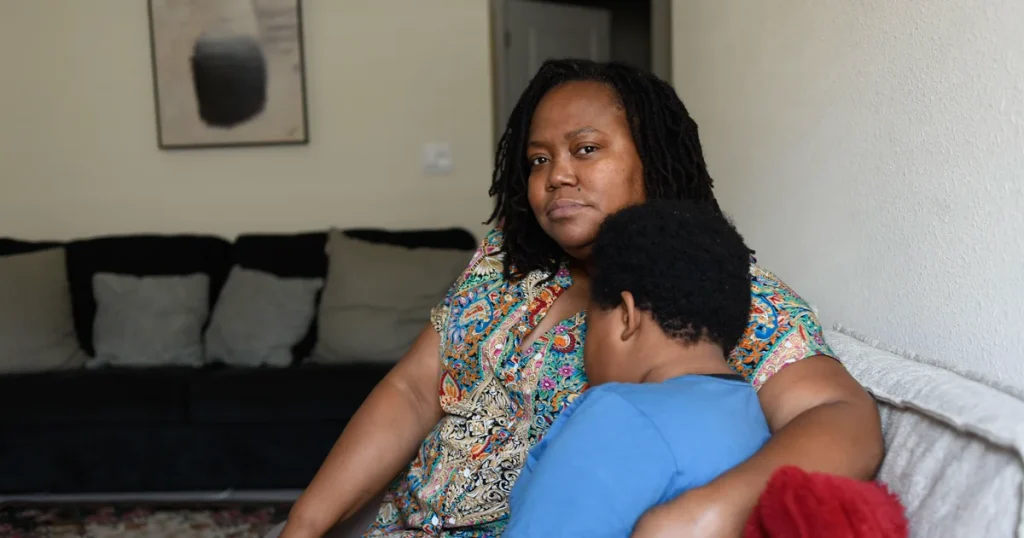
In Winter Haven, Florida, a boy named Ethan spends his days at Chain of Lakes Elementary School doing what brings him joy — building things, working through math problems, exploring science. But those moments are increasingly interrupted. Ethan, now nine, carries diagnoses of autism and attention-deficit/hyperactivity disorder. His autism was identified in kindergarten after family members noticed persistent pacing, arm-flapping, and an intense fixation on narrow subjects like Martin Luther King Jr. and dachshunds.
When the school convened a team to draft his individualized education program — the legally binding document that specifies what supports a student needs — administrators agreed Ethan required a trained paraprofessional aide to help him manage emotions and stay engaged in class. According to formal complaints filed by his mother, Josette Smith, that aide was never provided. Instead, the school repeatedly pulled him out of instruction, issued suspensions, and, during his third-grade year, summoned police to his classroom.
Smith, who teaches seventh-grade science, first lodged grievances with the local district and the state education department. When those channels failed to resolve the situation, she escalated to the U.S. Department of Education’s Office for Civil Rights, the federal body charged with adjudicating complaints of discrimination in schools. Her federal filing alleged that the school discriminated against Ethan on the basis of both his disability and his race, deploying pressure tactics aimed at pushing her Black son out of the public system. In May, the office confirmed it would investigate several of those allegations.
The Federal Backstop, Undermined
For families who believe a school violated their child’s rights on grounds of race, disability, or gender, the Office for Civil Rights has long served as a critical last resort. That role is now in jeopardy. The White House has shuttered offices within the agency and curtailed its capacity to pursue cases to completion. Funding streams that supported research into how people of color face barriers in obtaining disability diagnoses and services have also been slashed.
In March 2025, Trump signed an executive order directing the dismantling of the Department of Education itself. Seven of the Office for Civil Rights’ twelve regional offices were closed under that order. By June, the administration had moved further to reduce the department’s operational footprint, leaving families like Smith’s with fewer avenues for recourse.
Who Gets Diagnosed — and Who Doesn’t
As of 2022, roughly one in every 31 American children by age eight had received an autism spectrum disorder diagnosis. Yet the path to that diagnosis is far from uniform. A recent study out of the State University of New York at Albany’s Institute for Social and Health Equity examined fourth-graders across the span from 2003 to 2022 and found that students of color, girls, low-income students, and multilingual learners remained less likely than their peers to be identified with autism in school settings, even as overall diagnosis rates climbed among historically marginalized groups.
A larger, forthcoming study by the same research team identified the widest gaps among overlapping identities. Black and Hispanic girls, in particular, were markedly less likely to receive an identification. These disparities matter because early identification unlocks services, accommodations, and legal protections under the Individuals with Disabilities Education Act. Without timely diagnosis, children like Ethan may spend years without the supports their IEP is supposed to guarantee.
Vaccine Claims and Stigmatizing Rhetoric
The administration’s spotlight on autism has not been confined to education policy. In early August, Trump signed an executive order aimed at reducing routine childhood immunizations, while publicly linking vaccines to autism — a connection that mainstream medical science does not support. He framed the issue as a personal priority and described it as one of
“the most alarming public health developments in history.”
Health and Human Services Secretary Robert F. Kennedy Jr. went further in April 2025, calling autism a
“tragedy” that “destroys families.”
Kennedy has also lent public credibility to ungrounded causal theories, including unfounded associations between childhood vaccines and Tylenol taken during pregnancy. Such framing risks deepening stigma at precisely the moment families need institutional support.
Official Responses and the Silence of the White House
HHS spokesperson Emily Hilliard told reporters by email that Kennedy’s spring remarks were meant to
“emphasize the need for increased research into environmental factors contributing to the rise in autism diagnoses, not to stigmatize individuals with autism or their families.”
She characterized the agency’s restructuring as
“about making federal support systems work better for children and families.”
White House spokesperson Kush Desai did not respond to a request for comment. The Department of Education’s press office likewise offered no reply.
What Families Face Now
Camille Proctor, founder and executive director of The Color of Autism Foundation, summed up the mood among advocates:
“This administration is taking us backwards.”
For parents navigating an IEP dispute, the practical implications are stark. With regional civil-rights offices closed and research funding curtailed, the federal complaint pathway that Smith relied upon is narrower than it was even a year ago. Schools that once faced the prospect of a federal investigation may now encounter a system with diminished capacity to follow through. Meanwhile, the rhetoric surrounding autism’s causes — vaccines, Tylenol, environmental factors — continues to circulate in official channels, potentially shaping how communities and school boards perceive children who need accommodations.
The tension at the heart of this moment is simple: a condition affecting millions of American children is being elevated into presidential discourse while the institutional architecture built over decades to protect those children is being taken apart. Whether the administration’s stated goal of “making systems work better” translates into tangible safeguards for students like Ethan remains, for now, an open question.
Related Reading
Frequently Asked Questions
What is Trump puts autistic kids in the spotlight?
Trump puts autistic kids in the spotlight is the main topic of this guide. The article explains the context, practical details, and next steps readers should understand.
Why does Trump puts autistic kids in the spotlight matter?
Trump puts autistic kids in the spotlight matters because readers are looking for a useful answer, not just a short summary. Good content should match search intent and help them decide what to do next.