
U.S. set to impose 50% tariffs on Canada after failed talks; Canada to match them “dollar for dollar”
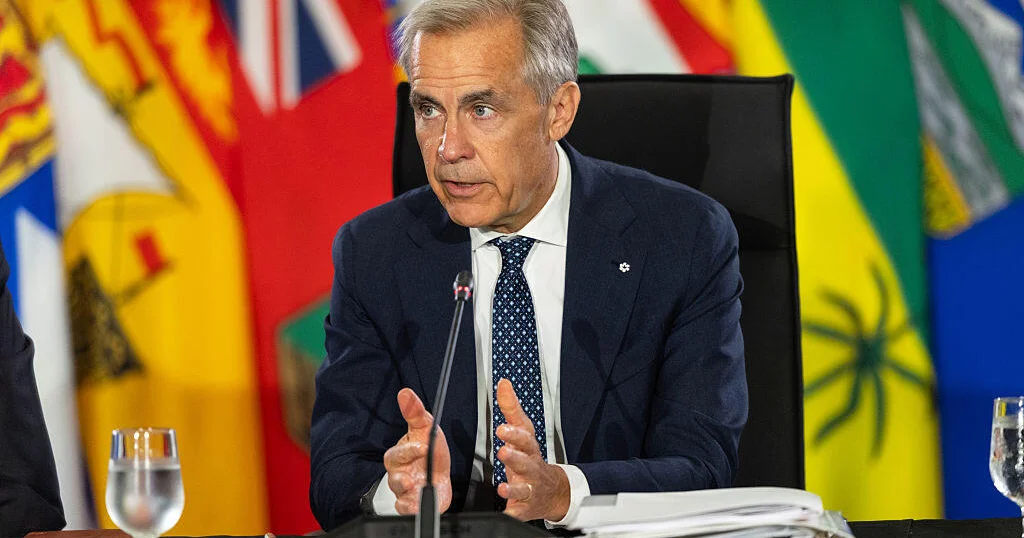
U.S. Set to Impose 50% Tariffs on Canada
Bizeconanalysis.com – The U.S. is set to impose 50 percent tariffs on approximately $20 billion in Canadian exports after last-minute negotiations between Washington and Ottawa broke down early Saturday. Prime Minister Mark Carney responded by ordering Canada to mirror the rate “dollar for dollar” on comparable American goods, cementing a reciprocal escalation that both governments now describe as unavoidable. The move affects roughly five percent of the merchandise Canada ships across the border each year and lands on top of a 10 percent baseline duty already in place on non-exempt imports.
The collapse followed a three-day extension President Donald Trump granted in hopes of salvaging a compromise. That window closed without agreement. By late Friday, officials in both capitals had concluded the gap was unbridgeable and began activating retaliatory protocols.
Statements from Both Capitals
U.S. Trade Representative Jamieson Greer told reporters in a Friday phone briefing that Ottawa declined to finalize the arrangement under terms the two sides had tentatively outlined earlier in the week. In Greer’s telling, Washington had tabled its final position and Canada chose not to accept it.
Carney framed the impasse differently, assigning responsibility to the American side for failing to offer meaningful concessions on existing Trump-era duties covering steel, aluminum, autos, and lumber. A senior administration official briefed on the talks confirmed that Washington was unwilling to move on those categories.
“The progress made in the negotiations has not been enough to meet our objectives for Canadians,” Carney said. “As a result, this evening, I have decided to suspend trade negotiations with the U.S. and have directed Canada’s negotiators to return to Ottawa. Canada will match those tariffs dollar for dollar to protect our workers and businesses.”
He added that the final American proposals constituted an unfair, uneconomic shift of terms at the eleventh hour, calling into question the reliability of any resulting deal.
Scope, Stakes, and Downstream Effects
The product list subject to the new 50 percent duties spans an unusually wide slice of Canadian manufacturing — hockey sticks, lumber, small medical items such as tongue depressors — underscoring how deeply integrated the two supply chains remain. Last year, bilateral trade in goods and services totaled roughly $880 billion, making Canada the United States’ second-largest trading partner behind only Mexico. Most of that flow currently enters duty-free under the United States–Mexico–Canada Agreement, a trilateral pact signed during Trump’s first term.
For exporters in lumber, automotive, and metals, the jump from the existing 10 percent baseline to 50 percent on a targeted subset risks rendering certain shipments uncompetitive overnight. On the American side, manufacturers and consumers reliant on Canadian inputs face higher input costs, feeding inflationary pressure into construction, transportation, and adjacent sectors.
A Wider Fracture in the Relationship
The tariff standoff sits atop months of friction spanning NATO burden-sharing, a long-running dispute over a proposed bridge project in the Detroit area, and the president’s repeated public suggestions that Canada might become a fifty-first state. Earlier in the week, Carney had offered a more optimistic read — “substantial progress has been made, although there is important work still to be done” — but that tone evaporated once final terms were laid out. The recall of the Canadian negotiating team to Ottawa signals a domestic regrouping before any further engagement.
With both governments now publicly committed to matching tariffs dollar for dollar, the immediate question is whether either side will seek a de-escalation path or whether the standoff hardens into a longer-term structural break.
FAQ
When do the 50 percent tariffs take effect? They rolled into effect early Saturday morning, following the failure of final-round talks and the expiration of a three-day extension granted by the White House.
What products are covered? Approximately five percent of Canadian merchandise exports, spanning categories from lumber and hockey sticks to small medical supplies. The affected value is roughly $20 billion annually.
Will Canada actually match the rate? Prime Minister Carney has directed that Canada will match the tariffs “dollar for dollar” on equivalent American goods, and the Canadian negotiating team has been recalled to Ottawa pending further instruction.
How does this interact with USMCA? Most Canadian imports currently enter duty-free under the United States–Mexico–Canada Agreement. The new 50 percent duties apply to a targeted subset of products outside that exemption, stacking on top of the existing 10 percent baseline tariff on non-exempt goods.
Is there a path back to negotiations? Carney has suspended talks and recalled his team. No timeline for resumption has been announced. Both sides remain publicly committed to the matching-tariff posture, making near-term de-escalation uncertain.