
Trump nominates policy aide Dr. Heidi Overton as next FDA commissioner
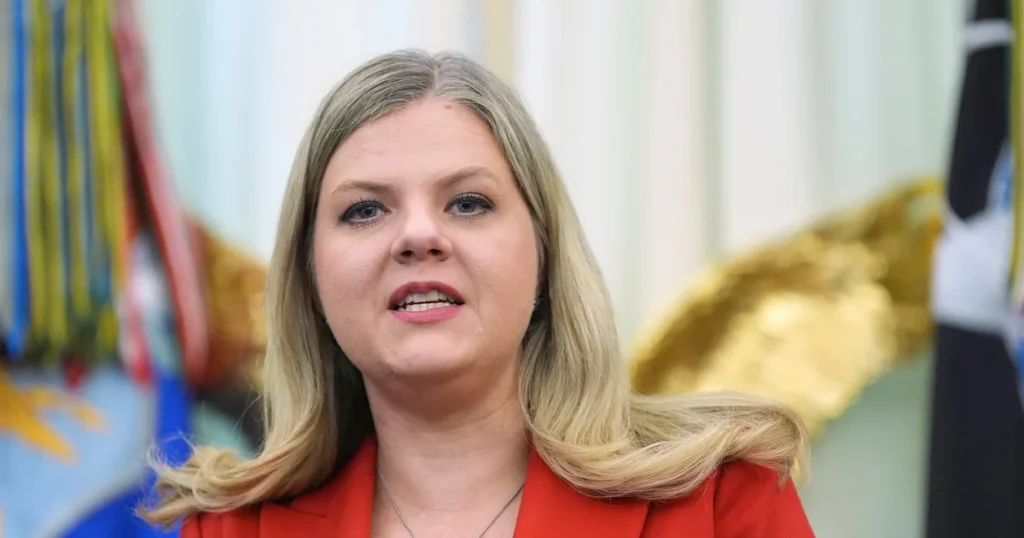
White House Names New FDA Commissioner in Move Reshaping Federal Drug and Food Oversight
Bizeconanalysis.com – The Food and Drug Administration, the agency responsible for reviewing new medicines, monitoring food safety, and regulating medical devices across the United States, is set to receive a new permanent leader. President Donald Trump announced on Wednesday that he will nominate Dr. Heidi Overton, a practicing physician currently serving as deputy assistant to the president for domestic policy, to fill the commissioner’s seat. The appointment, if confirmed by the Senate, would place a longtime White House insider at the helm of one of the most consequential regulatory bodies in American public health.
A Physician Deeply Embedded in the Administration’s Health Agenda
Overton earned her medical degree from the University of New Mexico and completed a general surgery residency at Johns Hopkins University School of Medicine. Before entering the current administration, she served as a White House fellow during Trump’s first term, giving her a decade-plus familiarity with the inner workings of presidential policy-making. In her present role, she has operated at the intersection of domestic policy and health governance, working alongside Health and Human Services Secretary Robert F. Kennedy Jr. and Dr. Mehmet Oz, who leads the Centers for Medicare and Medicaid Services.
The nomination signals that the White House intends to keep its most trusted domestic-policy operatives close to the levers of drug approval, clinical-trial design, and pharmaceutical pricing. Overton was present in the Oval Office earlier this month when the president signed an executive order recommending modifications to childhood vaccination schedules, placing her at the center of one of the administration’s most publicly debated health initiatives.
Trump’s Case for the Nomination
In a lengthy post on Truth Social, the president framed the selection as a matter of national scientific competitiveness and patient access to treatments.
“She is known to take on the HARDEST issues, and bring me solutions that work best for the Country,” Trump wrote. “Heidi is ‘ALWAYS RIGHT,’ Secretary Kennedy recently said in the Oval Office! We need her leadership at the FDA now to ensure that the U.S. remains the WORLD LEADER for Scientific Discovery and CURES.”
The president went on to outline the policy priorities he expects the new commissioner to pursue.
“Dr. Heidi will work with Secretary Kennedy and Dr. Oz to RAPIDLY deliver on my priorities of FASTER Cures, INCREASED American Innovation, MAJOR Clinical Trial Reforms, LOWER Drug Prices, and even more MAHA WINS!”
Those stated goals — accelerating approval timelines, restructuring how clinical trials are designed and conducted, and reducing out-of-pocket drug costs — represent a significant departure from the incremental, evidence-accumulation approach that has characterized FDA review processes over the past several decades. How quickly and how far the agency moves in those directions will depend in large part on the commissioner’s willingness to challenge existing internal protocols.
The Leadership Vacuum and the Flavored E-Cigarette Controversy
The FDA has operated without a confirmed commissioner since May, when Dr. Marty Makary stepped down amid internal friction over the agency’s handling of flavored e-cigarette products. At the time, a source familiar with the departure told reporters that Makary objected to approving the flavored varieties but felt compelled to sign off under pressure from other members of the administration. Critics of flavored e-cigarettes have long warned that sweet and fruit-flavored products serve as a gateway for young smokers, and the episode underscored how quickly a single product decision can become a flashpoint for agency leadership.
Since Makary’s exit, Kyle Diamantas has served as acting commissioner, keeping day-to-day operations running while the administration searched for a permanent replacement. The prolonged interim period has left some industry stakeholders uncertain about the pace and direction of pending reviews, from new biologics to updated tobacco-product regulations.
What Confirmation Looks Like and Why It Matters
Overton’s nomination now moves into the Senate confirmation process, where she will appear before the Senate Health, Education, Labor, and Pensions Committee before a full-floor vote. Past FDA commissioners have faced questions ranging from pharmaceutical industry relationships to the agency’s role in balancing speed of approval against post-market safety surveillance. Given the administration’s stated emphasis on “faster cures” and “major clinical trial reforms,” senators from both parties are likely to probe how the nominee would handle situations in which expedited approval and rigorous long-term safety data pull in opposite directions.
The FDA oversees roughly 250,000 food products, 200,000 dietary supplements, and every new drug and biologic marketed in the United States. Its decisions affect everything from the antibiotics a farmer uses to the experimental gene therapies entering phase-one trials. Placing a physician with direct access to the president’s domestic-policy team at the agency’s top post suggests the White House views drug-approval speed, trial-design reform, and price negotiation not as separate regulatory questions but as a single, coordinated national-priority agenda.
Whether that agenda translates into concrete rule changes, guidance updates, or enforcement shifts will become visible in the months following confirmation. For patients awaiting new therapies, for pharmaceutical companies planning trial pipelines, and for public-health advocates watching the agency’s tobacco and food-safety dockets, the identity of the next commissioner is not a bureaucratic formality. It is the single variable that will determine how aggressively the FDA pursues the administration’s stated goals — and how carefully it guards against the unintended consequences of moving too fast.
Related Reading
Frequently Asked Questions
What is Trump nominates policy aide Dr Heidi?
Trump nominates policy aide Dr Heidi is the main topic of this guide. The article explains the context, practical details, and next steps readers should understand.
Why does Trump nominates policy aide Dr Heidi matter?
Trump nominates policy aide Dr Heidi matters because readers are looking for a useful answer, not just a short summary. Good content should match search intent and help them decide what to do next.