
Several homes on Hawaii’s Big Island destroyed by mudslide triggered by former Hurricane Lala
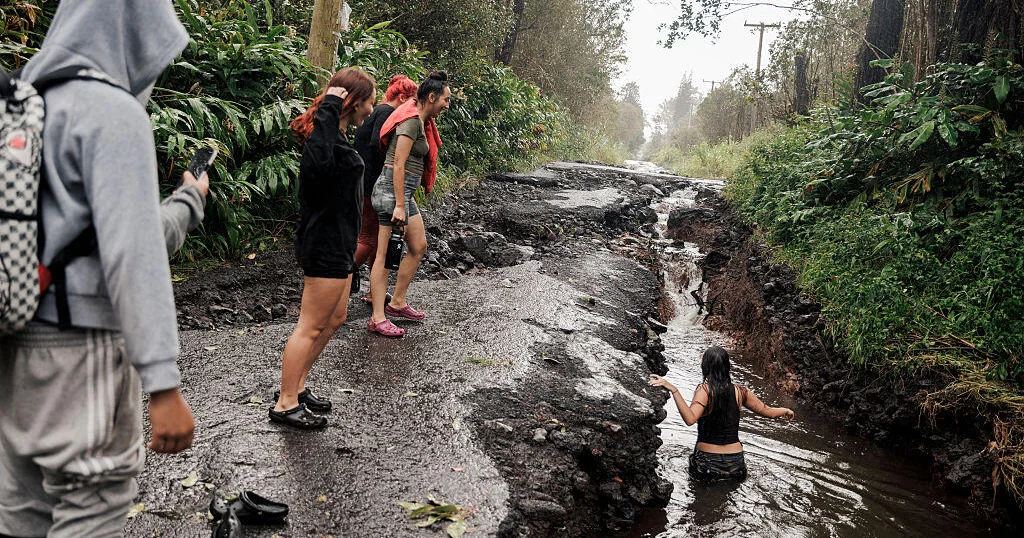
Waiohinu Rebuilds After Mudslide Flattened a Dozen Homes in Hawaii’s Big Island
Bizeconanalysis.com – In the quiet fishing village of Waiohinu, perched on the southernmost tip of Hawaii Island, the weekend brought a catastrophe that erased an entire neighborhood in minutes. A wall of mud, debris, and boulders tore through the community, leveling roughly a dozen homes and severing the settlement from the rest of the island. Residents who survived the slide found themselves stranded with no outside contact, no emergency responders, and no reliable supply lines — forced to depend on one another for water, fuel, and basic sustenance.
The devastation was the direct consequence of Tropical Storm Lala, which had tracked across the Hawaiian archipelago over the weekend. Though the system had already weakened from hurricane status by the time it passed the islands, its remnants dumped extraordinary volumes of rain onto already-saturated terrain, triggering the kind of catastrophic slope failure that engineers warn becomes increasingly likely as Pacific storm tracks shift southward.
Voices from the Slide Zone
Alice Birnbaum, a Waiohinu resident, described the moment the earth gave way. She recalled the sheer mass of rock cascading down the hillside above the village.
“The boulders that were coming down were so heavy they were like shaking the ground.”
Birnbaum noted that the news crew that reached the village represented the first outsiders anyone had encountered since the storm passed. The isolation was total. Her plea for basic necessities underscored how quickly a small coastal community can become an island unto itself when roads and bridges vanish.
“We need water. We need, people need propane, people need gas, people need food.”
Another resident recounted a harrowing escape: a family with a small child managed to flee their home just before the structure was swept away entirely. Without fire departments, ambulances, or utility crews able to reach the area, neighbors became the sole safety net.
The Storm That Brought the Rain
Lala’s eye passed approximately 30 miles offshore from the Big Island’s coast over the weekend. At that closest approach, the system was still a Category 1 hurricane, driving sustained wind gusts exceeding 80 mph and unleashing torrential downpours. Some locations on the island recorded more than three feet of rainfall in a matter of days. On Maui, the Kapalua area logged 48 inches of precipitation over the weekend — a figure that dwarfs the island’s typical monthly total and explains why landslides and flash flooding cascaded across multiple counties simultaneously.
The broader infrastructure toll was severe. Bridges on the Big Island were washed out, cutting off several communities from roads, hospitals, and supply depots. As of Monday, utility data indicated that more than 100,000 customers across the Hawaiian Islands remained without electricity. In a state where nearly all power generation depends on imported fuel and where transmission lines span exposed ridgelines, prolonged outages compound every other emergency: refrigeration fails, medical equipment falters, and communication networks degrade.
Government Shutdown and Response
State officials ordered a sweeping closure for Monday: all Hawaii state and county offices, every public school under the state Department of Education, public charter schools, courts, and judiciary offices were shut down. The decision reflected both the physical inaccessibility of many areas and the need to redirect personnel toward search-and-rescue and infrastructure-assessment operations.
What Comes Next for Lala
By Monday, Lala had shed its hurricane designation and was classified as a tropical storm with maximum sustained winds of 65 mph — a modest uptick from earlier readings that day. The system continued moving westward across the open Pacific. Forecasters at the National Hurricane Center indicated the storm could regain hurricane strength over open water by late Tuesday, though at that point it would be far enough west to pose no further threat to the Hawaiian islands.
A Rare Event in a Changing Climate
The last time a hurricane made direct landfall in Hawaii was Iniki in September 1992, a Category 3 storm that devastated Maui. For more than three decades, residents had grown accustomed to tropical storms brushing the islands without the full force of a hurricane’s eye. Lala’s near-miss — with its eye passing just 30 miles out — reminded the archipelago that the gap between a “close call” and a direct hit can be measured in tens of miles, and that the consequences of extreme rainfall do not require landfall to be catastrophic.
For Waiohinu, the immediate task is survival and stabilization: clearing debris, restoring water and fuel access, and determining which structures can be salvaged. For the wider island, the challenge is rebuilding bridges, restoring power, and reopening roads that connect remote communities to the medical and logistical infrastructure they depend on. The slide that erased a dozen homes in a single afternoon will require months of reconstruction, and the question of how to manage slope stability in a village built on volcanic terrain will shape planning decisions for years to come.
Related Reading
Frequently Asked Questions
What is Several homes on Hawaii s Big Island?
Several homes on Hawaii s Big Island is the main topic of this guide. The article explains the context, practical details, and next steps readers should understand.
Why does Several homes on Hawaii s Big Island matter?
Several homes on Hawaii s Big Island matters because readers are looking for a useful answer, not just a short summary. Good content should match search intent and help them decide what to do next.