
Judge calls multiple breaks after Lindsay Clancy sobs, says “I can’t do it” amid gruesome murder trial testimony
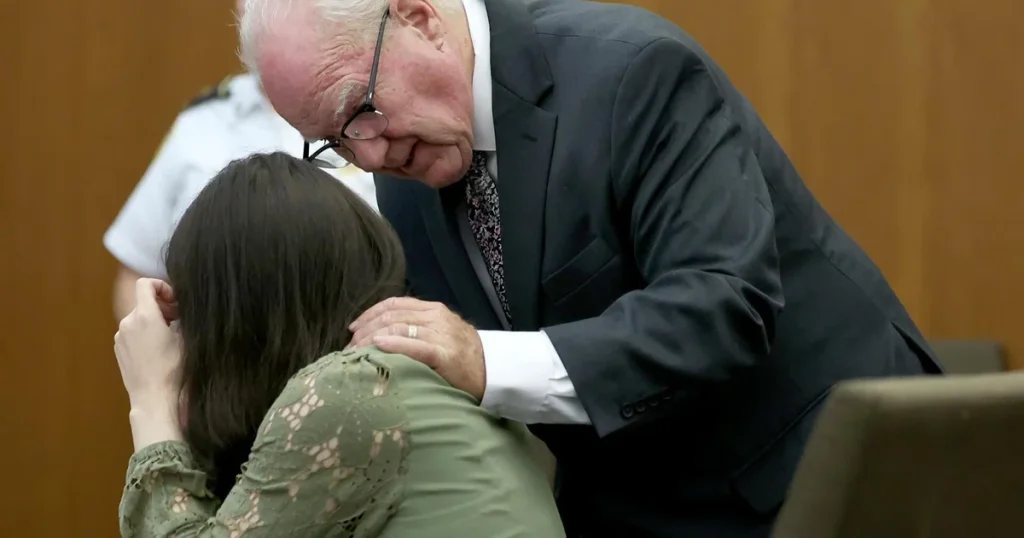
Emotional Courtroom Scenes Mark Day Twelve of Lindsay Clancy Murder Trial
Bizeconanalysis.com – The proceedings in the highly publicized murder case of Lindsay Clancy were interrupted several times on Wednesday as the defendant broke down during testimony regarding the fatal injuries sustained by her three young children. The 36-year-old mother was observed weeping openly and vocalizing her distress, at one point declaring to the courtroom that she could not continue with the proceedings.
Jurors were dismissed from the courtroom on two separate occasions as Clancy’s emotional responses intensified during the presentation of evidence. The trial, which centers on the deaths of her children in their Duxbury residence, has drawn significant attention due to the complexity of the defense and the heartbreaking nature of the testimony.
Charges and Prosecution’s Case
Clancy faces first-degree murder charges in connection with the deaths of her three children: five-year-old Cora, three-year-old Dawson, and eight-month-old Callan. The tragic events occurred on January 24, 2023, within the family’s home in Duxbury, Massachusetts. The defendant has entered a not guilty plea to all charges.
Prosecutors Jennifer Sprague and Shanan Buckingham have presented their case that Clancy deliberately planned the killings of her children and subsequently staged a suicide attempt to create confusion about the circumstances surrounding the deaths. The prosecution’s theory suggests premeditation rather than a spontaneous act driven by mental illness.
Medical Examiner Testimony Reveals Grave Injuries
Dr. Renee Stonebridge of the Office of the Chief Medical Examiner in Boston provided crucial testimony regarding the physical injuries documented during autopsies of the three children. Her direct examination by the prosecution lasted less than ten minutes, and Clancy’s defense attorney, Kevin Reddington, did not cross-examine the witness.
The medical examiner’s findings were presented while Clancy could be seen crying throughout the proceedings. As the prosecution prepared to call the next witness, Judge William Sullivan called for a recess when Clancy’s sobbing became particularly loud, with her head resting in her hands. WBZ-TV reporter Penny Kmitt, present in the courtroom, noted that Clancy’s father was also visibly emotional during this portion of the trial.
Judge Reminds Jurors to Separate Emotion from Evidence
Following a fifteen-minute recess, Judge Sullivan addressed the jury with a specific instruction regarding their role in the proceedings. The judge emphasized that while emotional reactions to testimony are natural, jurors must base their verdict solely on the factual weight of the evidence presented.
Members of the jury, I just kind of want to revisit an instruction I’ve given you a few times, I think, during the course of this trial. It’s important to understand, remember sometimes as evidence is presented in the trial that creates an emotional reaction, but as jurors who have taken an oath to follow the law, I’m instructing you that the law says you must separate any emotional reaction on your part from the informational value and weight that the evidence produces.
The judge continued by clarifying that the verdict must not be influenced by sympathy, anger, passion, or prejudice. This instruction is particularly relevant in cases where the defendant’s emotional state during testimony may affect jurors’ perceptions.
Second Medical Examiner and Continued Emotional Responses
Medical Examiner Dr. Barbara Olsen then took the stand to provide additional testimony. Shortly after beginning her examination, Clancy began crying again and was heard on the courtroom microphone saying, “I can’t do it.” Judge Sullivan once again sent the jurors out of the room to allow Clancy time to compose herself.
When proceedings resumed, Olsen continued her testimony while Clancy sobbed and eventually laid her head on the table. Defense attorney Reddington objected several times during this period, at one point stating that it was obvious what his client wanted. His visible frustration suggested he was seeking to protect Clancy from further emotional distress during the testimony.
The court session concluded around 4 p.m. as scheduled, with Olsen having completed her testimony.
Mental Health Counselor Details Clancy’s Condition
Earlier in the day, Latiesha Dukes, a mental health counselor who worked with Clancy at South Shore Hospital, testified for approximately two hours. Dukes first met with Clancy in late November 2022 and continued their sessions into early December of that year, conducting a total of four meetings.
Dukes, who collaborated closely with psychiatric nurse practitioner Rebecca Jollotta, described Clancy’s presenting concerns as including anxiety, sleep deprivation, suicidal ideation, and thoughts of no longer wanting to live. The counselor characterized Clancy’s diagnosis as postpartum anxiety, noting that Clancy did not typically experience anxiety about most aspects of her life.
Dukes recommended outpatient therapy, continued medication use, and weekly therapy sessions. On December 5, 2022, following Clancy’s report of a difficult weekend and intrusive thoughts about dying, Dukes recommended partial hospitalization. By December 19, 2022, Dukes observed that Clancy appeared more engaged during a telehealth visit, was able to smile and laugh, and seemed to be enjoying time with her family.
During their final visit, Dukes noted that Clancy showed improvement in mood and ability to connect with others. Importantly, Clancy did not exhibit signs of mania, delusions, paranoia, or psychosis according to Dukes’s assessment. On cross-examination, Reddington explored Clancy’s reluctance to take medications, a point that supports the defense’s position regarding overmedication.
Defense Strategy and Trial Implications
Kevin Reddington, Clancy’s attorney, has articulated a defense strategy that acknowledges his client killed her children but argues she should not bear criminal responsibility. The defense contends that Clancy was overmedicated and suffering from postpartum psychosis at the time of the deaths. This distinction is legally significant, as it suggests that while Clancy committed the acts, her mental state may have impaired her ability to form the necessary intent for first-degree murder.
The trial’s progression through multiple emotional episodes and detailed medical testimony has provided the jury with a comprehensive view of both the physical evidence and the psychological context surrounding the case. As proceedings continue, the jury must weigh the prosecution’s theory of planned murder against the defense’s argument of diminished responsibility due to mental health conditions and medication effects.
The case has resonated with the local community and beyond, highlighting complex questions about maternal mental health, the legal system’s handling of postpartum conditions, and the intersection of medical science and criminal justice. With the medical examiner and mental health professional testimony now complete, the trial moves toward its next phase, where additional witnesses and closing arguments will further illuminate the circumstances of this tragic case.
Related Reading
Frequently Asked Questions
What is Judge calls multiple breaks after Lindsay?
Judge calls multiple breaks after Lindsay is the main topic of this guide. The article explains the context, practical details, and next steps readers should understand.
Why does Judge calls multiple breaks after Lindsay matter?
Judge calls multiple breaks after Lindsay matters because readers are looking for a useful answer, not just a short summary. Good content should match search intent and help them decide what to do next.