
Yemen’s “Spider-Man” climber Al-Qaqa Ibn Antar dies in 400-foot fall into a volcanic crater
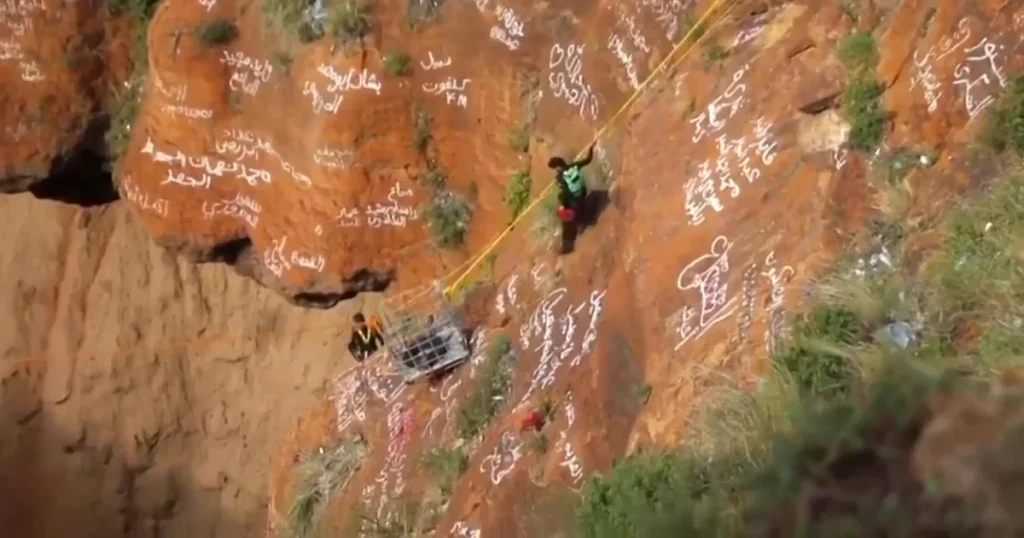
Yemen’s ‘Spider-Man’ Climber Al-Qaqa Ibn Antar Dies in 400-Foot Fall into Volcanic Crater
Yemen s Spider Man climber Al Qaqa – On Friday, a free climber celebrated as Yemen’s ‘Spider-Man’ tragically lost his life after plummeting into a volcanic crater during an exhibition of his extraordinary skills. Al-Qaqa Ibn Antar, a 30-year-old adventurer, succumbed to the fall, which took him from a height of approximately 400 feet into the depths of the crater. His death has sparked a wave of tributes and reflections on the dangers of the sport he embodied.
Antar was renowned for his audacious climbs and acrobatic feats, all performed without the use of ropes or harnesses. His approach to free climbing, which emphasizes total reliance on physical prowess and mental fortitude, had made him a local legend. The incident occurred at the Hardah Dam crater, situated near the southern city of Damt. This geological marvel, about 390 feet deep, had become a favored location for his daring demonstrations.
The climber’s final ascent was captured in a short video that spread rapidly online. The footage shows Antar suspended on the crater’s edge, defying gravity with his signature confidence. He had repeated this routine numerous times at the site, which had become a symbol of his fearless spirit. However, this particular day marked a dramatic change as he unexpectedly slipped from the wall. The impact of the fall sent him spiraling into the crater’s depths, where the sulfur-rich waters awaited.
Rescue Efforts and Environmental Challenges
The Yemeni Civil Defense Authority announced on Saturday that Antar’s body was retrieved from the crater lake after a prolonged and intricate search operation. The recovery, which lasted four hours, involved navigating the volatile environment of the crater. His remains were found about 65 feet beneath the surface of the lake, a depth that underscores the peril of the location.
“The conditions were extremely challenging due to the presence of potent gases from underground vents and the high temperatures of the crater lake,” stated the authority in a statement. “The sulfur-rich waters, which can reach temperatures between 100 and 140 degrees, added to the complexity of the recovery process.”
The crater, a natural spectacle, is not only a site of beauty but also a hidden hazard. The combination of sulfuric gases and scalding water creates an inhospitable environment for anyone venturing too close. The search team had to employ specialized equipment and techniques to extract Antar’s body from the depths, highlighting the risks that even rescue operations entail.
Antar’s demise has prompted mixed reactions across social media. While many expressed heartfelt condolences, others questioned the risks he willingly undertook. Supporters, however, highlighted his motivation, stating that his desire to escape the poverty he faced often drove him to push the limits of human capability. “He climbed not just for the thrill, but to share his story and inspire others,” one fan wrote online.
The Cultural Impact of Free Climbing
Free climbing, a discipline that requires climbers to ascend without any form of aid, has gained international recognition in recent years, thanks to social media platforms. Antar’s feats, though localized, exemplify how this sport has captured global attention. His ability to perform on natural features like volcanic craters has brought Yemen into the spotlight as a region with unique climbing opportunities.
While Antar’s death is a somber moment for the climbing community, it also underscores the growing popularity of free climbing. The sport’s rise has been fueled by daredevils who use social media to document their exploits, often in breathtaking and perilous locations. This trend has transformed free climbing from a niche activity into a mainstream spectacle, drawing audiences and participants from all corners of the world.
Among the notable figures in this field is Alex Honnold, an American free climber who gained fame for scaling the 1,667-foot Taipei 101 tower in January without any ropes. His live-streamed ascent captivated millions, showcasing the potential for free climbing to transcend geographical boundaries. Similarly, Balin Miller, a popular climber from Alaska, met his end in a tragic accident last summer while attempting a route on El Capitan in Yosemite National Park.
Antar’s legacy, however, remains deeply rooted in Yemen. His actions have inspired a new generation of climbers in the country, where the natural landscape offers a myriad of challenges. The crater near Damt, once a mere geological formation, now serves as a poignant reminder of both the beauty and the danger of Yemen’s terrain. His final climb, though fatal, has cemented his status as an icon of courage and innovation in the world of extreme sports.
The Yemeni Civil Defense Authority has issued warnings to visitors, urging them to exercise caution when exploring natural attractions. Officials emphasized the importance of staying away from the edges of craters and steep slopes, as well as adhering to safety protocols. “Climbers must be aware of the unpredictable nature of these environments,” the agency cautioned, highlighting the need for vigilance in the face of natural hazards.
As the world mourns Antar’s passing, the incident also serves as a testament to the human spirit’s drive for adventure. His death has sparked discussions about the balance between risk and reward in free climbing, with many acknowledging the sacrifices made by those who pursue it. Despite the dangers, Antar’s story continues to resonate, reminding us of the thrill and peril that define this extreme sport.